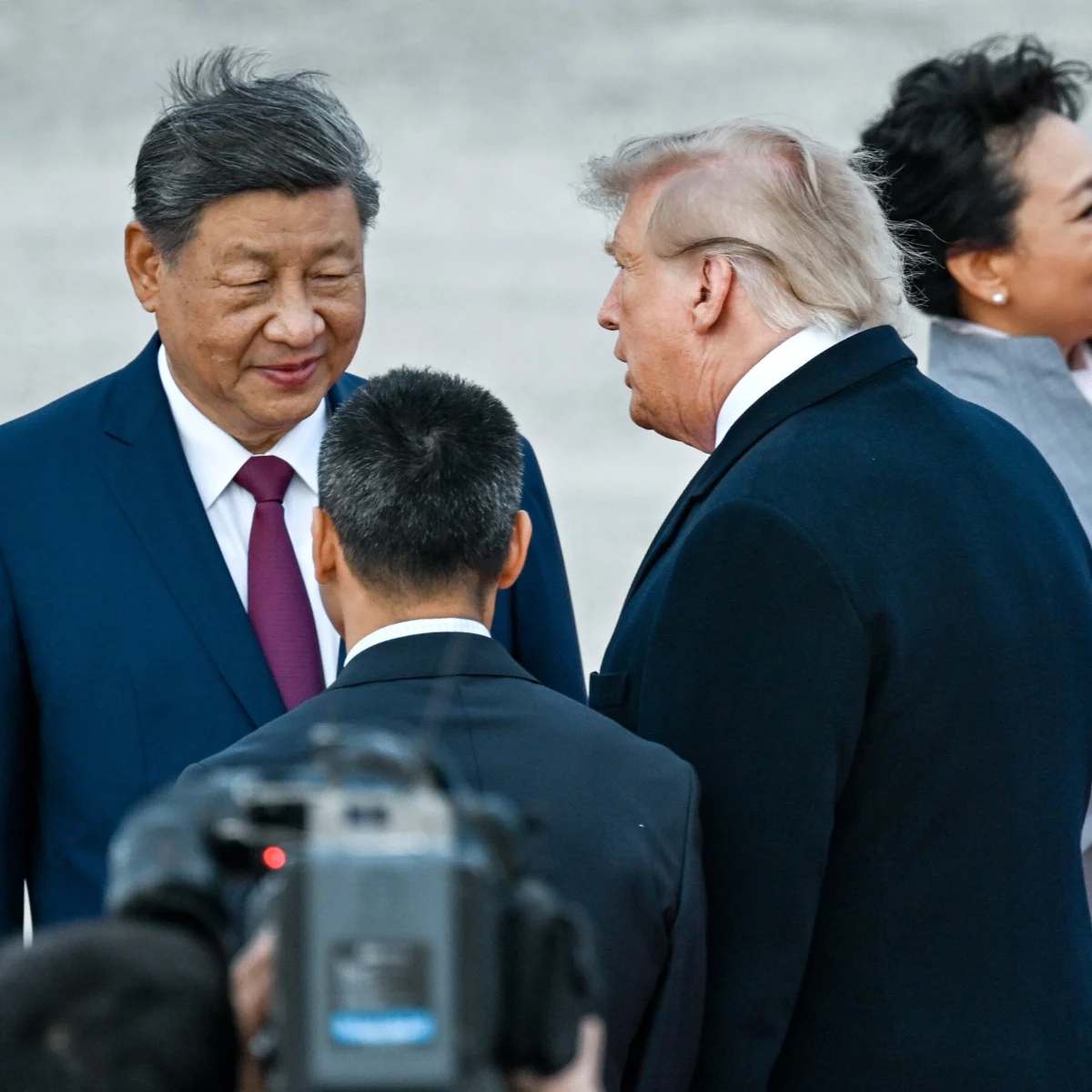
President Trump offered to sell arms to China during a discussion with Chinese leader Xi Jinping, according to David Perdue, the U.S. ambassador to China. The offer reportedly came as the administration considers a major arms sale to Taiwan worth roughly $14 billion, which remains pending. The ambassador’s comments raise questions about U.S. policy toward arms sales in the Pacific, where the United States traditionally supports Taiwan’s self-defense despite Beijing’s objections.
The reported Trump initiative appears to contrast with long-standing U.S. policy of providing defensive arms to Taiwan under the Taiwan Relations Act, a statute passed in 1979 after the United States shifted diplomatic recognition from Taipei to Beijing. Selling offensive or advanced weaponry directly to China would likely face strong scrutiny from Congress and regional allies, given security concerns. The ambassador’s account underscores ongoing tension in how the United States balances strategic competition with China against its commitments to democratic partners in the Pacific.
KEY FACTS
- Trump offered to sell arms to China, per U.S. ambassador David Perdue.
- The offer was made to Chinese leader Xi Jinping.
- Trump is withholding a $14 billion arms package to Taiwan.
The Reported Trump Initiative
David Perdue, the U.S. ambassador to China, said President Trump raised the possibility of a weapons sale to China during a conversation with Xi Jinping. Such a move would depart from traditional U.S. practice, since China is typically viewed as a strategic competitor rather than a recipient of American military equipment. Arms transfers to China could complicate existing trade talks and raise concerns among regional allies such as Japan and South Korea.
The context involves a separate, large-scale package of defensive arms earmarked for Taiwan. Per the summary, Trump is holding back a roughly $14 billion deal whose value has been widely reported in prior administrations. That package likely includes fighter jets, missile systems, and other defensive materiel consistent with U.S. law. The ambassador’s disclosure suggests internal debate over whether to proceed with the Taiwan sale while simultaneously entertaining a proposal for the mainland.
If accurate, the reported offer reflects a transactional approach to diplomacy, where security cooperation is linked to broader negotiation objectives. Analysts often note that Trump has blended commercial and strategic goals, pressing for trade concessions alongside security arrangements. The disclosure also highlights how sensitive diplomatic communications sometimes surface through envoys rather than formal statements.
What Happens Next?
Congressional notification procedures typically govern major arms sales, and any formal proposal to China would trigger review by both chambers. The Taiwan package, meanwhile, remains subject to internal deliberation even as officials weigh reactions from Beijing. Regional security experts say clarity on both tracks—whether sales proceed, are delayed, or restructured—will shape defense planning across the Pacific.
Because the claims stem from a single official account, confirmation would depend on additional documentation or corroboration from other U.S. officials. The Taiwan arms package has historically required interagency clearance, so shifts in its status could signal adjustments in overall China strategy.
Stakeholders including Congress, the Pentagon, and Taiwan’s defense establishment are likely monitoring next steps closely. Past delays or accelerations of arms sales have carried diplomatic weight, making procedural developments worth watching even when details remain limited.
WHAT WE KNOW / WHAT WE DON’T
Verified by the source:
- David Perdue, U.S. ambassador to China, said President Trump offered to sell arms to China.
- The offer was made to Xi Jinping, China’s leader.
- Trump is withholding a $14 billion arms package to Taiwan.
Still unconfirmed:
- No exact date, time, or location of the reported Trump–Xi conversation.
- No specification of which systems or quantities were discussed in the proposed China sale.
- No confirmation of Trump’s stated rationale or conditions for the offer.
The reported Trump initiative touches on a long-running element of U.S. foreign policy: balancing ties with China against commitments to self-governed Taiwan. Since 1979, the United States has maintained official recognition of Beijing while pledging to provide Taiwan with sufficient defensive capacity, creating a delicate equilibrium in the Pacific. Arms sales under the Taiwan Relations Act often provoke sharp reactions from China, which views them as interference in its sovereignty.
Broadly, the story matters because it illustrates how security cooperation is intertwined with economic and diplomatic negotiations, particularly as the United States and China compete for influence. A verified Trump initiative to sell arms to China would mark a notable departure from decades of policy, while changes to the Taiwan package could affect regional stability.
Meta description: U.S. ambassador says Trump offered China an arms sale while withholding a $14 billion package to Taiwan, raising questions about Pacific policy.
WHAT TO WATCH
Officials have yet to release further details, so additional statements from the State Department or Pentagon may clarify whether a formal China arms proposal is being prepared. The timing and outcome of the Taiwan package will also signal shifts in U.S. strategic alignment.
For ongoing coverage of Pacific security and diplomatic developments, see war-geopolitics and politics. Follow up reporting will be logged as new information verifies or refutes the ambassador’s account.