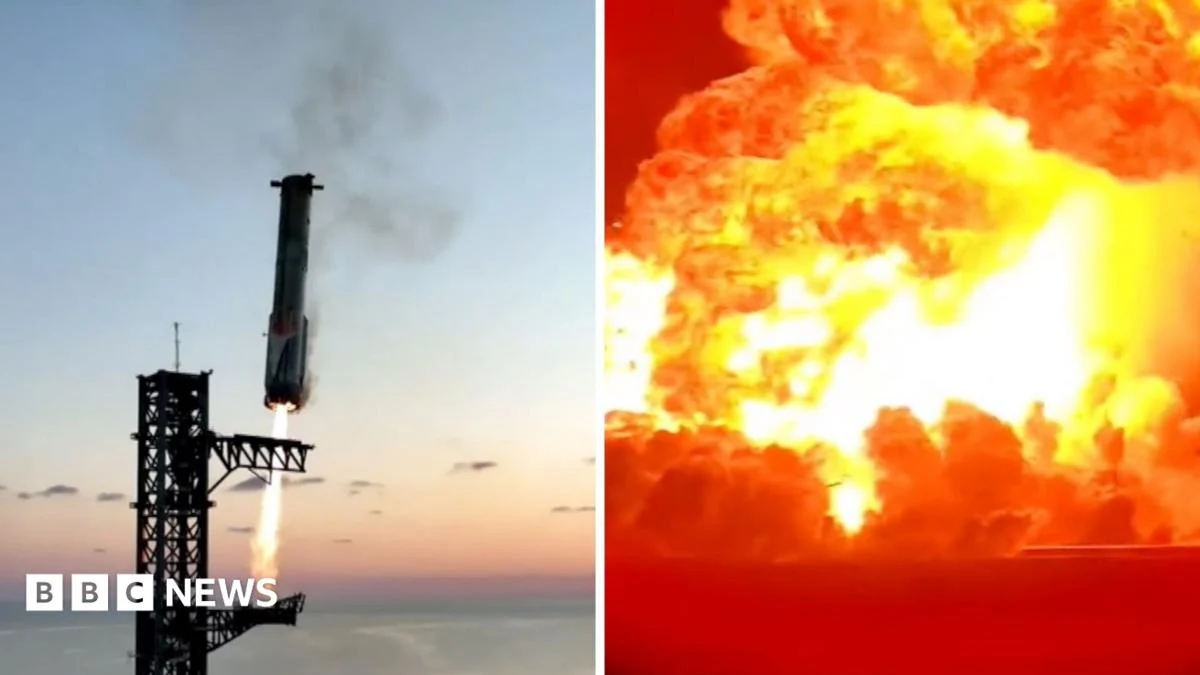
SpaceX has carried out 13 Starship test flights, each with its own mix of achievements and failures. BBC News correspondent Ricky Boleto examines how those previous SpaceX Starship tests went, offering a timeline of the program’s evolution.
The video review highlights both breakthroughs and setbacks, showing how the reusable rocket system has advanced through iterative testing. Viewers get a breakdown of milestone moments alongside explosions and aborted attempts that have marked the SpaceX Starship test campaign.
KEY FACTS
- BBC News reviewed 13 SpaceX Starship test flights.
- Ricky Boleto presented the video review.
- The review covered both successes and failures.
- The video was published by BBC News.
- The flights used the Starship launch system.
SpaceX Starship tests: How progress unfolded
The SpaceX Starship program relies on rapid, iterative testing to develop a fully reusable launch system. Each SpaceX Starship test flight is designed to push the vehicle higher, faster, and farther than the last. BBC News traced how these goals translated into real-world flight outcomes, from smooth ascents to dramatic mid-air losses.
Early tests focused on low-altitude hops, while later missions attempted orbital or near-orbital profiles. The program’s culture of learning through controlled failure means that even explosive endings can count as data-gathering steps forward. BBC News emphasized that the number itself—13 flights—reflects an aggressive cadence of evaluation.
What happened next in each mission?
No two SpaceX Starship tests unfolded identically. Some flights reached key altitudes before engine shutdowns or guidance corrections cut them short. Others made it farther, deploying test hardware or executing planned ocean landings. Failures ranged from booster misfires to upper-stage anomalies, with debris scattering across training areas or ocean zones.
The review did not claim any single flight as definitive proof of readiness. Instead, it portrayed SpaceX Starship tests as snapshots in an ongoing engineering process. BBC News noted that public reactions—from celebration to concern—often mirrored whether a flight survived or broke apart.
Why the world watches SpaceX Starship tests
The program matters because Starship is marketed as a vehicle for lunar missions and eventual Mars colonization. Governments and private companies follow each flight closely for signs of reliability. Failures raise safety and cost questions, while successes fuel confidence in ambitious timelines.
SpaceX Starship tests are not just technical events—they are symbolic markers of humanity’s broader push beyond Earth. The public visibility of explosions and recoveries makes them rare moments where space development feels immediate to everyday observers.
What We Know — and What We Don’t
Verified by the source:
- BBC News produced a video reviewing 13 SpaceX Starship test flights.
- Ricky Boleto is identified as the BBC presenter of the review.
- The flights included moments of success and failure.
- The review was distributed via BBC News platforms.
- The Starship vehicle is the subject of all reviewed tests.
Still unconfirmed:
- Exact dates, times, or altitudes of each flight.
- Names of any SpaceX officials or engineers involved.
- Specific reasons behind individual failures or successes.
- Total damage costs or recovery success rates.
Why it matters
The pace and transparency of SpaceX Starship tests influence how quickly humanity expands its footprint beyond Earth. Each public failure or triumph shapes investor confidence, regulatory decisions, and public opinion about commercial spaceflight. BBC News coverage ensures audiences can follow the technical drama without needing a background in aerospace engineering.
What To Watch
BBC News may continue documenting future SpaceX Starship test flights as the program moves toward operational use. Updates depend on whether upcoming missions achieve new milestones or require another round of redesign.
Meta description: BBC News reviewed 13 SpaceX Starship test flights, highlighting success, failure, and progress in the reusable rocket program.