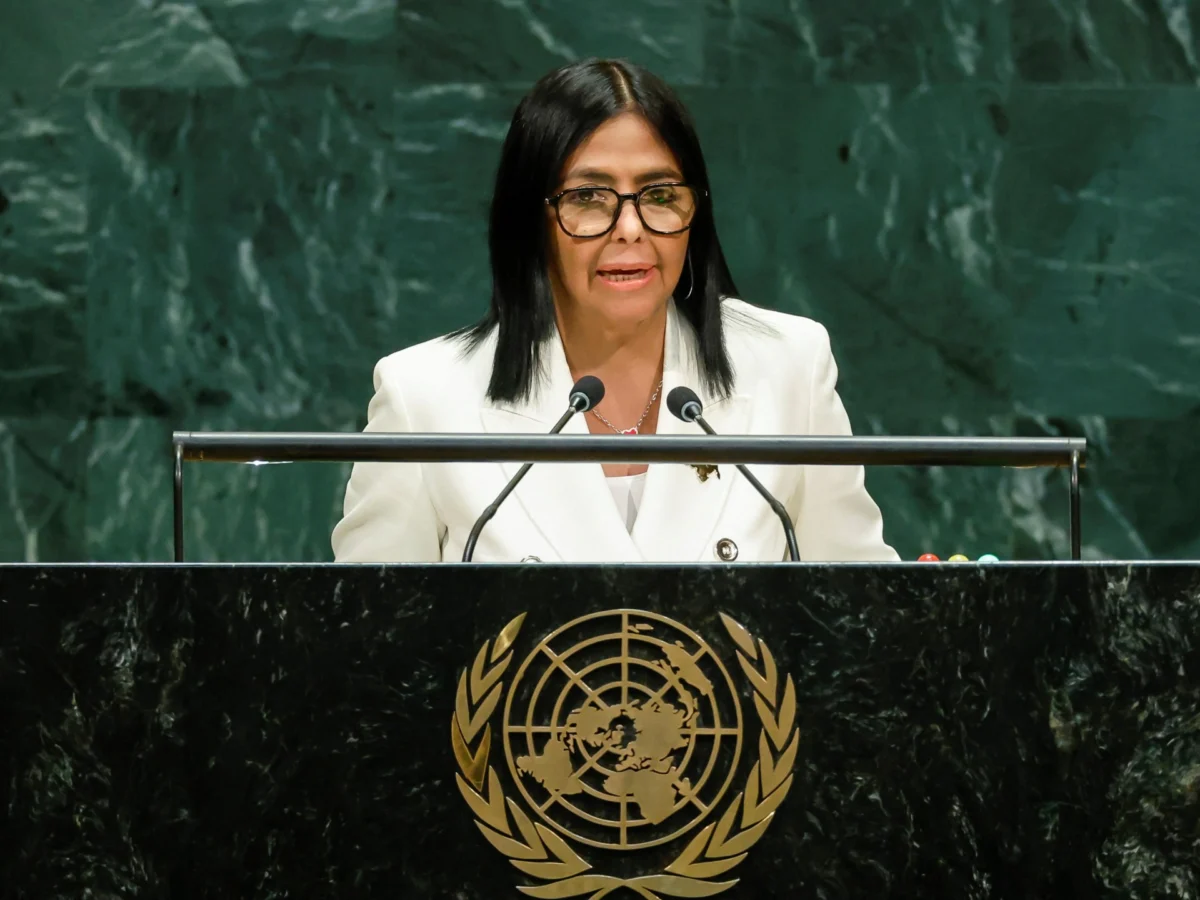
Lede: Venezuela’s interim president Delcy Rodriguez made a notable shift in her United Nations General Assembly speech, thanking the very figure she once warned against. Seven years after publicly criticizing U.S.-led regime change efforts, she expressed gratitude toward the individual who carried out that intervention. The moment highlights how geopolitical relationships evolve amid shifting regional dynamics.
The change in tone comes during a period of intense scrutiny over Venezuela’s political future and its international standing.
KEY FACTS
- Delcy Rodriguez addressed the UNGA as Venezuela’s interim president.
- Her speech marked a reversal from her stance seven years prior.
- She thanked the man responsible for delivering the intervention.
• She previously warned against U.S. regime change.
The Story
What happened at the UNGA?
In her latest appearance before the United Nations General Assembly, Venezuela’s interim president Delcy Rodriguez struck a markedly different tone compared to her earlier addresses. Whereas she had once condemned foreign interference, particularly from the United States, her recent remarks included acknowledgments of cooperation. Analysts note that such shifts often reflect changing diplomatic realities or internal pressures within the country.
While no formal details were provided about the exact content of her speech, the contrast underscores how Venezuela’s foreign policy rhetoric can adapt depending on context and audience.
Who is affected by this shift?
Venezuela’s domestic population remains deeply divided along ideological lines, with some viewing any engagement with former adversaries as pragmatic and others seeing it as a betrayal of sovereignty principles. International observers also watch closely as these interactions influence trade, migration flows, and regional stability across Latin America.
How did we get here?
Rodriguez’s evolving position mirrors Venezuela’s broader trajectory since global powers began mediating its economic and political crises. Initially resistant to external involvement, the government has gradually engaged with various actors—including those once viewed with suspicion—in pursuit of relief from sanctions and access to aid. Her current role as interim president places her at the center of negotiations affecting millions both inside and outside Venezuela.
WHAT WE KNOW — AND WHAT WE DON’T
Verified by the source:
- Rodriguez spoke at the UNGA as Venezuela’s interim president.
- She thanked someone linked to past U.S. intervention.
Still unconfirmed:
- Exact wording of her speech or specific names mentioned.
- Reason behind the change in tone or political implications.
Why It Matters
This apparent pivot by Venezuela’s leadership reflects ongoing uncertainty in its relationship with global powers. As the nation grapples with recovery efforts and diplomatic recognition challenges, statements like these may signal readiness for reconciliation—or simply tactical maneuvering on the world stage.
What To Watch
Future speeches and bilateral talks could reveal whether this represents a lasting realignment or temporary diplomatic posturing.
Related reading in politics and war-geopolitics.