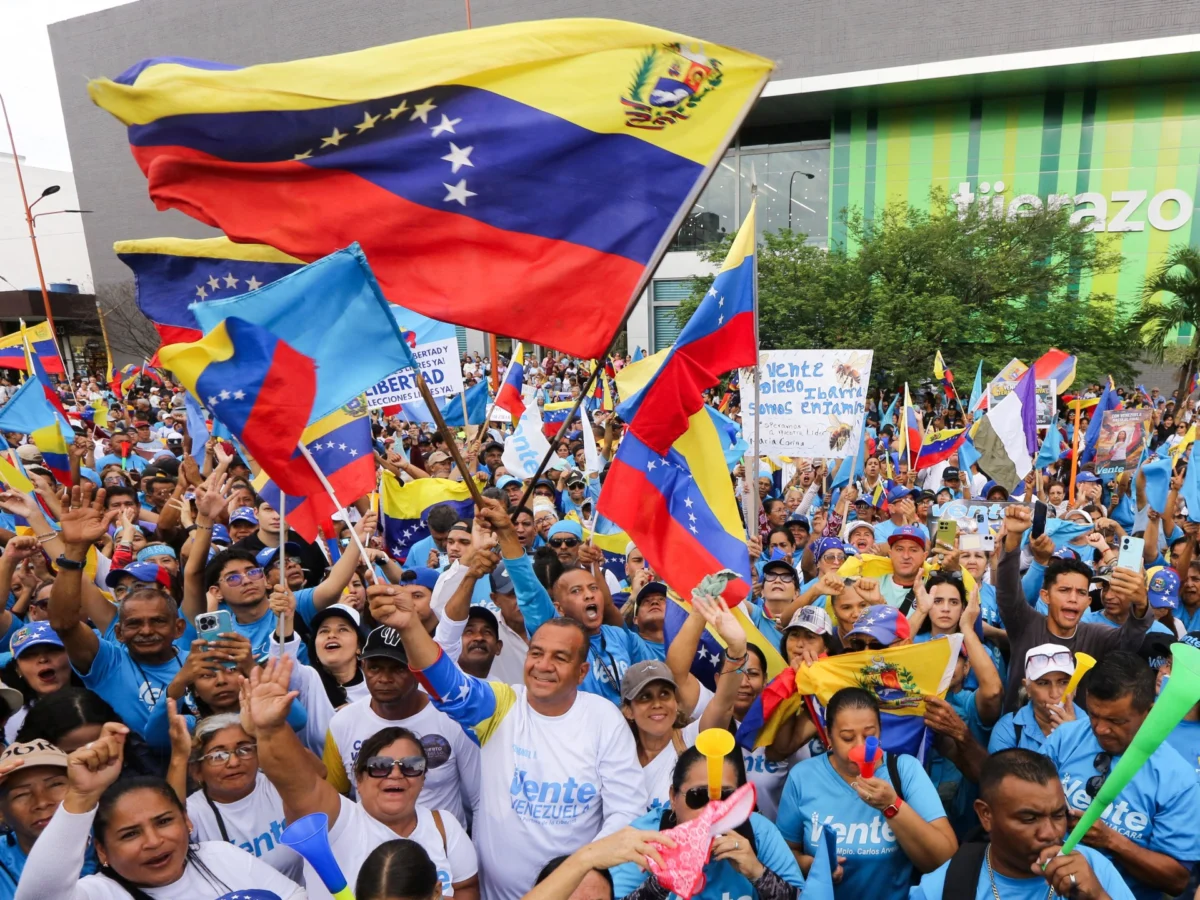
Venezuelans have taken to the streets in the first national protests in nearly two years, demanding elections to choose a successor to former President Nicolas Maduro, who was reportedly captured by U.S. forces. The demonstrations reflect growing public pressure over delayed democratic processes, though no date has yet been set for any electoral decision.
The protests come amid ongoing political tension and questions about governance, highlighting the challenges facing Venezuela’s institutions and civil society. While the scale and scope of the demonstrations remain unclear, they signal renewed civic engagement after a prolonged hiatus in large-scale public action.
KEY FACTS
- Venezuelans are protesting for the first time in nearly two years.
- The protests demand elections to decide on a successor.
- No date has been set for an electoral decision.
- Nicolas Maduro was captured by U.S. forces, per reporting.
The Story
What happens next?
The future of Venezuela’s political landscape remains uncertain. With no date set for elections, the path forward is unclear. The absence of a scheduled vote raises concerns about delayed democratic processes and potential instability.
The role of international actors, particularly the United States, may also shape upcoming developments. The reported capture of former President Nicolas Maduro by U.S. forces adds another layer of complexity, potentially affecting negotiations or timelines. Observers are watching closely for any official announcements regarding transitional arrangements or electoral scheduling.
Civil society organizations and opposition groups are likely to maintain pressure for transparency and accountability. Their influence could play a decisive role in pushing for concrete reforms or dialogue. As momentum builds, the coming days will be critical for determining whether protests lead to meaningful change.
Who is affected?
The protests primarily impact the Venezuelan people, who have lived through years of economic hardship and political uncertainty. Citizens across urban and rural areas are seeking greater voice in governance, especially regarding leadership transitions.
Opposition leaders and activists risk renewed scrutiny or reprisals, depending on how authorities respond to the demonstrations. Their ability to organize safely may determine whether public support translates into sustained political action. At the same time, ordinary voters remain eager for credible alternatives and reliable information.
Regional governments are also watching closely, as Venezuela’s stability affects broader Latin American diplomacy and migration patterns. Neighboring countries have previously mediated talks or offered humanitarian aid. Their involvement could intensify if protests expand or if no electoral framework emerges quickly.
International bodies such as the United Nations may also increase monitoring efforts, particularly if reports surface of restrictions on assembly or press freedom during the demonstrations.
What We Know — and What We Don’t
Verified by the source:
- Protests occurred, marking the first national demonstrations in nearly two years.
- Demonstrators called for elections to select a successor to Nicolas Maduro.
- Nicolas Maduro was captured by U.S. forces, according to reports.
- No official date has been announced for any electoral process.
Still unconfirmed:
- The total number of participants in the protests.
- Exact locations where demonstrations took place.
- Whether a transitional government or interim leader has been named.
Venezuela has faced years of economic decline, hyperinflation, and mass emigration, creating fertile ground for public discontent. The sudden emergence of nationwide protests suggests deep frustration with existing governance structures.
Regional and global powers have long monitored Venezuela due to its vast oil reserves and geopolitical significance. The reported capture of Nicolas Maduro adds an unusual twist, potentially reshaping diplomatic calculations. How other nations respond could influence both internal policy debates and external mediation efforts.
Given the country’s fragile institutions, even small shifts in momentum might carry outsized consequences.
Why It Matters
For Venezuelans, these protests represent a rare moment of collective civic expression amid years of restriction and uncertainty. They underscore persistent demands for democratic participation and institutional reform, issues that resonate far beyond national borders.
For international observers, the situation highlights the ongoing fragility of Venezuela’s political system and the complex interplay between domestic movements and foreign policy.
What To Watch
Authorities have not indicated when an electoral timeline might be announced. Future developments will depend heavily on whether protests continue and how the government responds.
A clear roadmap for elections, or further escalation from either side, could define the next phase of Venezuela’s political trajectory.