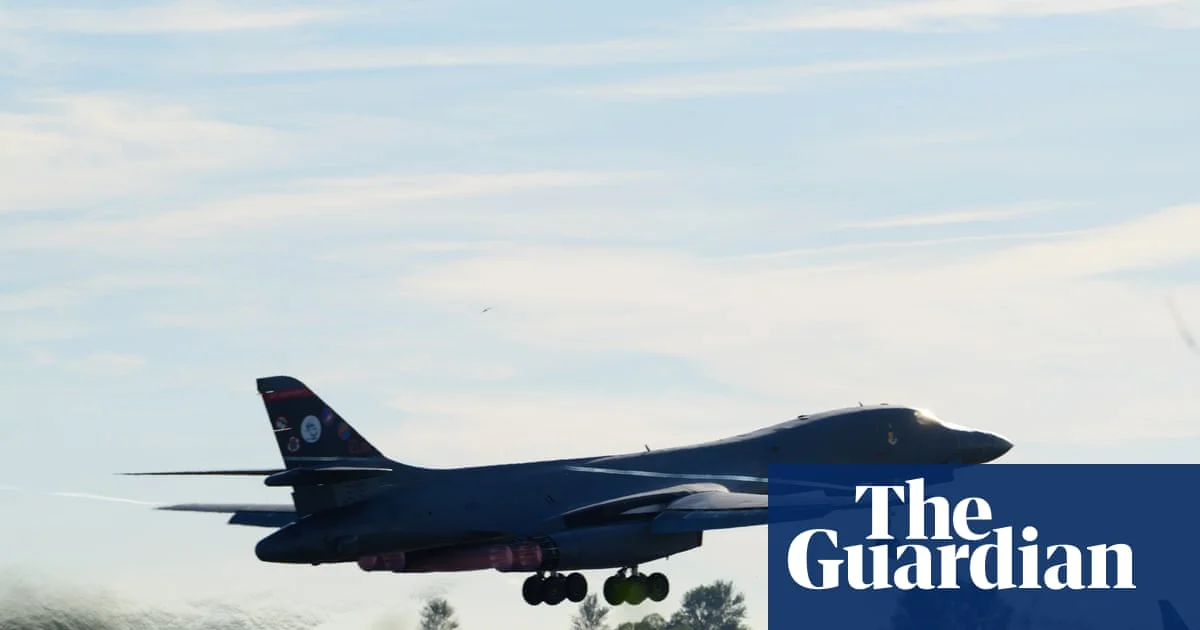
The US withdrew its bombers from RAF Fairford after launching an investigation into an alleged planned terrorist attack targeting the base, signaling that US officials took the threat seriously enough to redeploy critical military assets.
At least 10 B-1 bombers, previously used in the Iran conflict, flew out of Fairford on Sunday, marking a significant shift in posture for a facility that regularly hosts US Air Force operations in European and Middle Eastern theaters.
KEY FACTS
- B-1 bombers: At least 10 US bombers withdrew from RAF Fairiday following a terror threat.
- Arrests: Five men in three vans near the base were arrested, followed by a sixth British-Iranian national.
- All released: All six suspects were released on bail, prompting criticism from the Pentagon.
- Investigation ongoing: The withdrawal came after an investigation into an alleged planned attack on the base.
- Iran link: The aircraft had supported US military operations in the Iran conflict.
What Happened?
Last week, authorities arrested five men traveling in three vans near RAF Fairford, followed shortly by the arrest of a sixth individual identified as a British-Iranian national. All six suspects were subsequently released on bail, a decision that drew sharp criticism from the Pentagon, which reportedly questioned the decision to free individuals suspected of plotting against a sensitive military installation.
The timing of the arrests appears to have directly influenced the US European command’s decision to remove the B-1 bombers from Fairford over the weekend. These aircraft had been actively deployed in support of operations related to the Iran conflict, underscoring the strategic importance of maintaining secure operating bases for long-range strike missions.
Why This Matters
RAF Fairford is one of the few UK bases capable of hosting large numbers of US strategic bombers, making it a high-value asset during periods of heightened geopolitical tension. A perceived or actual threat to such a base could disrupt rapid-response capabilities and signal vulnerabilities in allied infrastructure used for overseas operations.
Who Is Affected?
Beyond the arrested individuals and their legal proceedings, the incident impacts broader US-UK defense coordination and public trust in intelligence-sharing protocols. The Pentagon’s public criticism of the bail release suggests potential friction between US and UK law enforcement regarding how sensitive national security cases are managed.
The withdrawal also affects ongoing military planning, as relocating bombers requires logistical adjustments and may alter readiness postures in Europe. For local communities around Fairford, increased security presence and surveillance measures are likely to persist until investigations conclude.
What We Know — and What We Don’t
Verified by the source:
- At least 10 B-1 bombers were withdrawn from RAF Fairford after an alleged terror threat investigation.
- Six people were arrested near the base; all were later released on bail.
- Five of the detainees were found in three vans near the base; the sixth was a British-Iranian national.
- The Pentagon criticized the decision to release the suspects on bail.
- The bombers had been used in operations connected to the Iran conflict.
Still unconfirmed:
- The exact date or circumstances under which the arrests occurred.
- Specific evidence cited in connection with the alleged planned attack.
- Whether any formal charges will be filed against the released suspects.
- Details about the individuals’ motivations or affiliations.
- The current status of the investigation or future troop movements.
Why It Matters
This episode highlights the fragility of joint military operations when security threats intersect with civilian justice systems. It raises questions about how allied nations balance transparency, due process, and real-time security concerns, especially when critical wartime assets are involved.
What To Watch
Authorities have yet to provide further details on whether additional security measures or redeployments are planned. Updates are expected as the investigation continues and diplomatic discussions between the US and UK evolve.
This was a targeted response driven by intelligence assessments rather than a long-term policy shift.