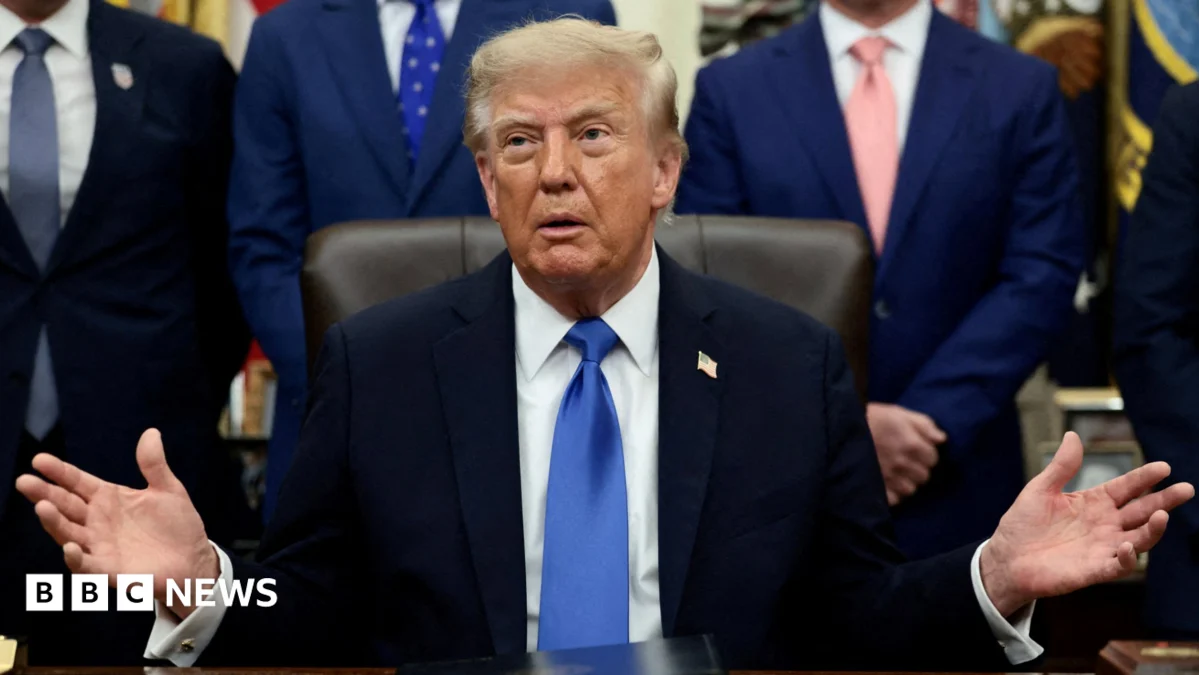
Former U.S. President Donald Trump has described artificial intelligence safety fears as a ‘hoax,’ pushing back against growing calls for stricter regulations on AI development. His remarks followed comments from an AI industry leader who suggested mandatory safety measures, including a potential ‘kill switch’ for AI systems.
The exchange highlights ongoing tension between rapid AI innovation and efforts to ensure responsible deployment. As global governments grapple with balancing progress and risk, Trump’s stance underscores a skeptical view of current AI safety discourse. AI safety remains a focal point for policymakers, technologists, and national security experts worldwide.
KEY FACTS
- Trump called AI safety fears a ‘hoax’.
- He rejected calls for greater AI safeguards.
- Anthropic co-founder Jack Clark advocated for a mandatory AI ‘kill switch’.
- Clark made his comments to the BBC.
The Debate Over AI Regulation Heats Up
Trump’s rejection of AI safety concerns contrasts with mounting pressure from researchers and technologists who warn of potential risks posed by advanced AI systems. Among them is Jack Clark, co-founder of Anthropic, a prominent AI safety research organization. Clark recently told the BBC that a mandatory AI ‘kill switch’ mechanism may be necessary to control autonomous systems if they become too powerful or unpredictable.
The concept of a ‘kill switch’ refers to an emergency shutdown protocol designed to halt an AI system immediately in case of malfunction or threat. Advocates argue such safeguards are essential as AI models grow more sophisticated and capable of operating beyond human oversight.
What Happens Next in the AI Safety Discussion?
As AI technology evolves, so too does the urgency around establishing clear guidelines and safety protocols. Governments across the globe, including the United States, European Union, and China, are considering new frameworks to govern AI development. These efforts often involve collaboration between public institutions and private companies to create standards that encourage innovation while mitigating harm.
Trump’s dismissal of AI safety fears adds another voice to a divided conversation. While some view regulation as a brake on progress, others see it as a necessary guardrail. With elections looming in several major democracies, the role of government oversight in shaping the future of AI will likely remain a contested issue.
Geopolitical Stakes in the AI Race
The race to develop cutting-edge AI is not just a technological competition—it is increasingly seen as a strategic arena where national interests intersect. Nations investing heavily in AI research view dominance in this field as critical to economic advantage and security. In this context, statements like Trump’s resonate amid broader debates about how aggressively countries should pursue AI advancement without compromising safety.
Balancing these priorities requires nuanced policy approaches. Policymakers must weigh investments in AI infrastructure against the need for oversight mechanisms that prevent misuse or unintended consequences. How governments navigate this balance could shape everything from military applications to consumer privacy protections.
What We Know — and What We Don’t
Verified by the source:
- Trump referred to AI safety fears as a ‘hoax’.
- He publicly rejected calls for increased AI safeguards.
- Jack Clark is identified as a co-founder of Anthropic.
- Clark proposed that an AI ‘kill switch’ might need to be mandatory.
- Clark gave his comments in an interview with the BBC.
Still unconfirmed:
- No specific date was provided for when Trump made his remarks.
- The full scope of Trump’s position on AI regulation is unknown.
- Details about what ‘greater safeguards’ Trump opposes were not specified.
- It is unclear how many other officials share Trump’s view.
Why It Matters
The debate over AI governance affects billions of people globally. From healthcare algorithms to autonomous weapons, decisions made today about AI safety will have lasting impacts on society, democracy, and international stability. Public figures like Trump influence the tone and direction of these vital conversations.
What To Watch
Upcoming legislative sessions in key nations may reveal whether Trump’s skepticism gains traction or is overshadowed by bipartisan support for AI regulation. Stay tuned for updates on policy developments and expert responses to evolving AI challenges.