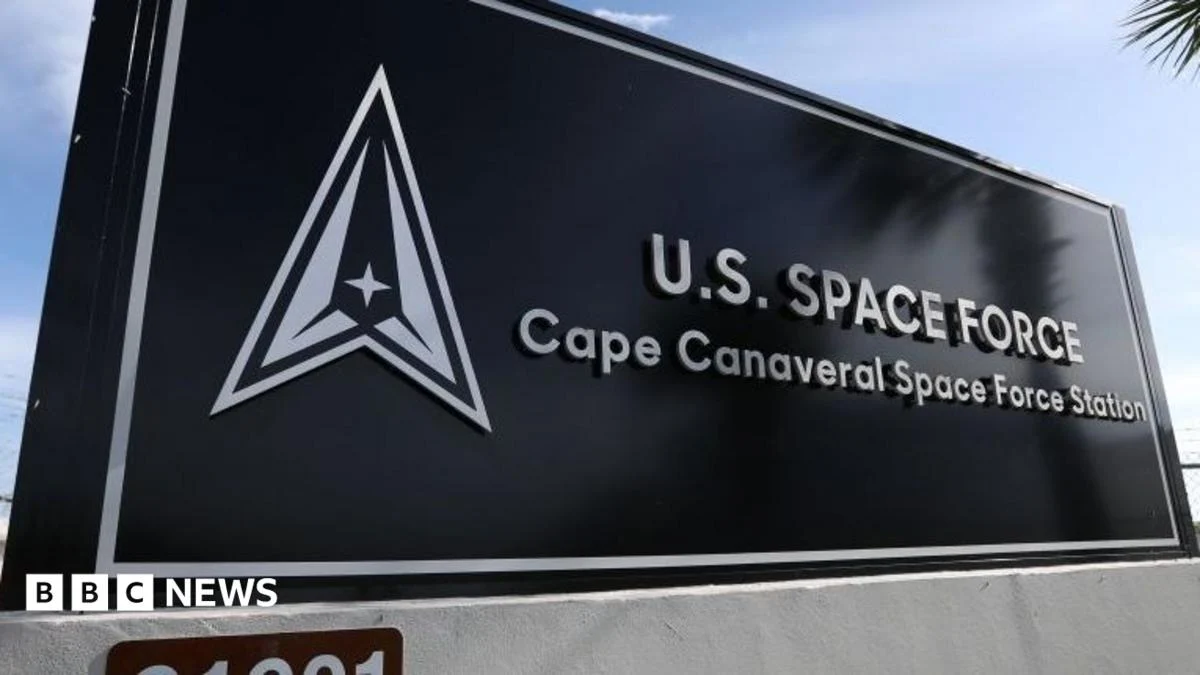
The United States has confirmed its first-ever deployment of space weapons, with the US Air Force defending the move as essential for national defense against enemy threats.
Air Force Secretary statements indicated that these space weapons are necessary to defend the country against enemy action, representing a new frontier in military capability and strategic deterrence.
The development signals a significant evolution in how global powers project power, extending traditional battlefields into outer space and raising fresh concerns among international observers about the militarization of orbital domains.
Key Facts
- US confirms deployment of space weapons for the first time.
- Air Force Secretary says weapons are necessary for defense against enemy action.
- Category: war-geopolitics.
- Source: BBC News.
What Are Space Weapons?
Space weapons refer to any device or system designed to conduct military operations from or within outer space. This may include kinetic bombardment platforms, electronic warfare satellites, cyber tools targeting orbital assets, or directed energy systems positioned above Earth’s atmosphere.
The distinction between defensive and offensive capabilities is often blurred, especially when technologies developed for protection can easily be adapted for attack. For example, anti-satellite missiles initially pitched as shielding friendly assets have long been criticized astools of aggression.
International treaties like the Outer Space Treaty of 1967 prohibit placing nuclear arms or other weapons of mass destruction in orbit, but conventional and dual-use technologies remain largely unregulated—creating room for ambiguity around deployments now confirmed by the US.
Why Does This Matter?
The formal acknowledgment by American officials introduces a new dimension to ongoing geopolitical tensions. As space becomes increasingly congested with both civilian and military infrastructure—such as GPS satellites, communication networks, and reconnaissance platforms—concerns grow over potential conflicts extending beyond Earth’s surface.
Rivals like China and Russia have tested their own anti-satellite technologies, prompting fears of an arms race. Meanwhile, NATO has recognized space as a domain of warfare, reflecting a broader shift toward treating celestial bodies as strategic theaters rather than neutral zones.
For civilians, impacts could range from disrupted communications during crises to increased financial investment in aerospace industries. However, the lack of clear international norms governing space militarization raises risks of accidental escalation if boundaries aren’t well defined.
What Happens Next?
Reactions from other nations will likely shape future policies regarding orbital security and treaty compliance. Countries may reassess their own defense postures, potentially accelerating development programs or calling for renewed diplomatic engagement through multilateral forums such as the UN Committee on the Peaceful Uses of Outer Space.
Critics argue that without binding frameworks limiting what constitutes legitimate military activity beyond our planet, today’s announcement sets a precedent for further normalization of armed presence above Earth—an outcome that experts say demands urgent attention amid rising technological capabilities across all domains.
What We Know — and What We Don’t
Verified by the source:
- The US has deployed space weapons, according to official confirmation.
- The reason given is necessity to defend against enemy action.
- The source is attributed to BBC News reporting based on statements from the US Air Force Secretary.
Still unconfirmed:
- Specific types or technical specifications of the deployed space weapons.
- Exact timeline or locations related to deployment activities.
- Names of individuals involved beyond reference to the Air Force Secretary.
Why It Matters
This development underscores a growing trend where modern warfare transcends terrestrial limits, compelling societies to reckon with evolving threats that extend far beyond land, sea, and air into orbits once thought immune to conflict.