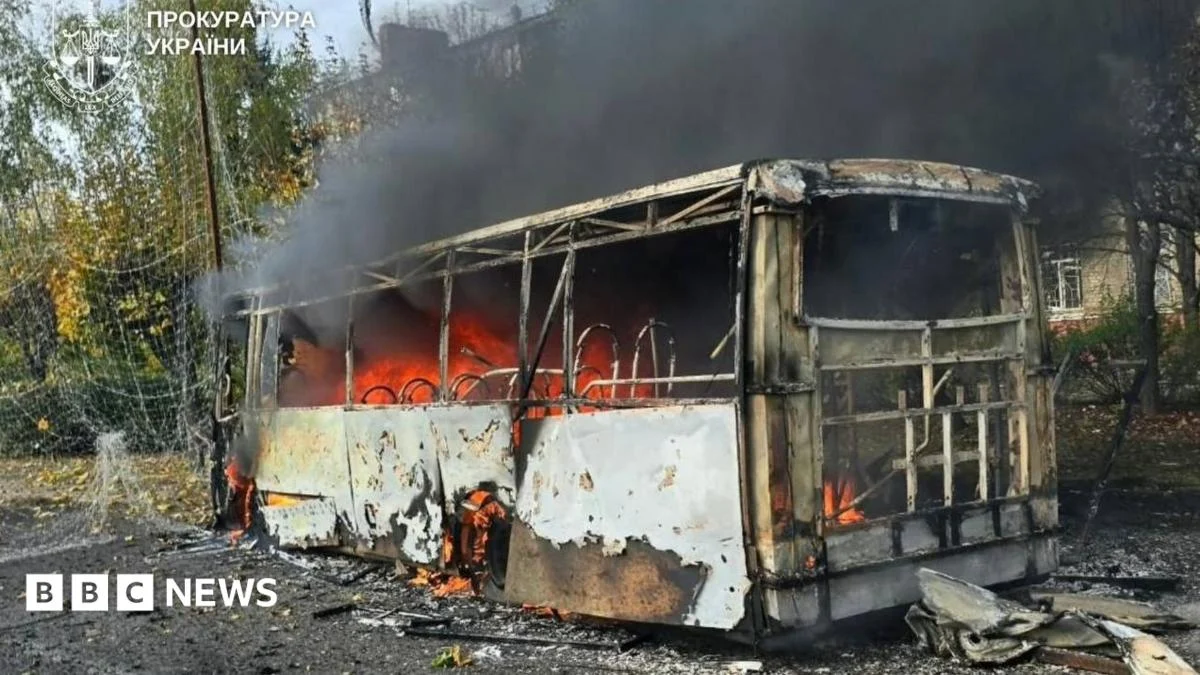
Russian strike on buses kills at least 30 in Kramatorsk, officials say
At least 30 people were killed when a Russian strike hit buses in the frontline city of Kramatorsk, according to officials cited by BBC News.
Ukraine accused Russia of deliberately targeting crowded buses in an attempt to maximize civilian casualties. The attacks come as deadly incidents against Ukrainian infrastructure and population centers have increased in recent days, raising concerns about escalating threats to civilians.
Key Facts
- Death toll:
30confirmed fatalities from a Russian strike on buses in Kramatorsk. - Civilian target: Ukraine accused Russia of aiming at crowded buses to kill civilians.
- Location: The attack occurred in
Kramatorsk, a city on the front line. - Context: Deadly attacks on Ukraine have surged, according to officials.
- Source: Figures attributed to officials, as reported by BBC News.
Who is affected by the Russian strike on buses?
The victims of the attack in Kramatorsk are civilians who were reportedly traveling on buses in a frontline city. Frontline areas are regularly subjected to aerial and artillery bombardments, and public transportation is often used by civilians trying to move within or out of conflict zones. Targeting buses or other forms of public transit can have a high impact on civilian populations, as these vehicles often carry large numbers of passengers without the protection available in military vehicles.
Ukraine has repeatedly accused Russia of intentionally targeting civilian infrastructure, including schools, hospitals, and residential buildings. This latest incident, if confirmed, would add to a pattern of claims that Moscow is using attacks on civilian targets as a strategy to break public morale. The United Nations and human rights organizations have independently documented previous cases of what they describe as war crimes involving deliberate attacks on civilians, though attribution of responsibility remains contested and legally complex.
The surge in deadly attacks suggests a potentially intensifying campaign against civilian targets. Whether these strikes are part of a broader tactical shift or localized escalation is unclear without further battlefield context or independent investigation.
What happens next after the deadly Russian strike?
Following the attack in Kramatorsk, officials are expected to investigate the circumstances, including verifying the death toll and determining what weapons were used. Ukraine may use the incident to appeal for increased military or humanitarian support from Western partners, as has historically occurred after major civilian casualties. The government has previously responded to similar attacks by calling for international sanctions or condemnation of Russia.
Russian state media has not yet commented on the specific strike on buses, but past responses to accusations of targeting civilians have included denials or counter-accusations that Ukraine stages incidents for propaganda purposes. Independent observers and international bodies such as the UN may deploy investigators to assess damage and victim testimony, though access to frontline areas is often restricted.
If the pattern of attacks continues, it could lead to increased diplomatic pressure, additional humanitarian corridors, or shifts in military strategy. Monitoring agencies will track whether the frequency or severity of such incidents changes in the coming days.
What We Know — and What We Don’t
Verified by the source:
<n
- A Russian strike on buses in Kramatorsk killed at least 30 people, according to officials.
- Ukraine accused Russia of targeting crowded buses to kill civilians.
- The city of Kramatorsk is located on the front line.
- Officials noted a surge in deadly attacks on Ukraine.
Still unconfirmed:
- The exact time and method of the Russian strike on buses.
- The identities and ages of the
30confirmed fatalities. - Independent verification of whether buses were intentionally targeted.
- Russia’s official response to the accusations.
Why It Matters
Deliberate attacks on civilian transportation in active war zones have major humanitarian and legal implications. Each incident increases civilian casualties and complicates international efforts to mediate or resolve the conflict. The global community often relies on accurate reporting from credible news outlets in war-geopolitics to form policy responses, making verified information essential for accountability and peace efforts.
What To Watch
Further details from independent investigators and whether additional strikes occur in the coming days will be critical developments to monitor.