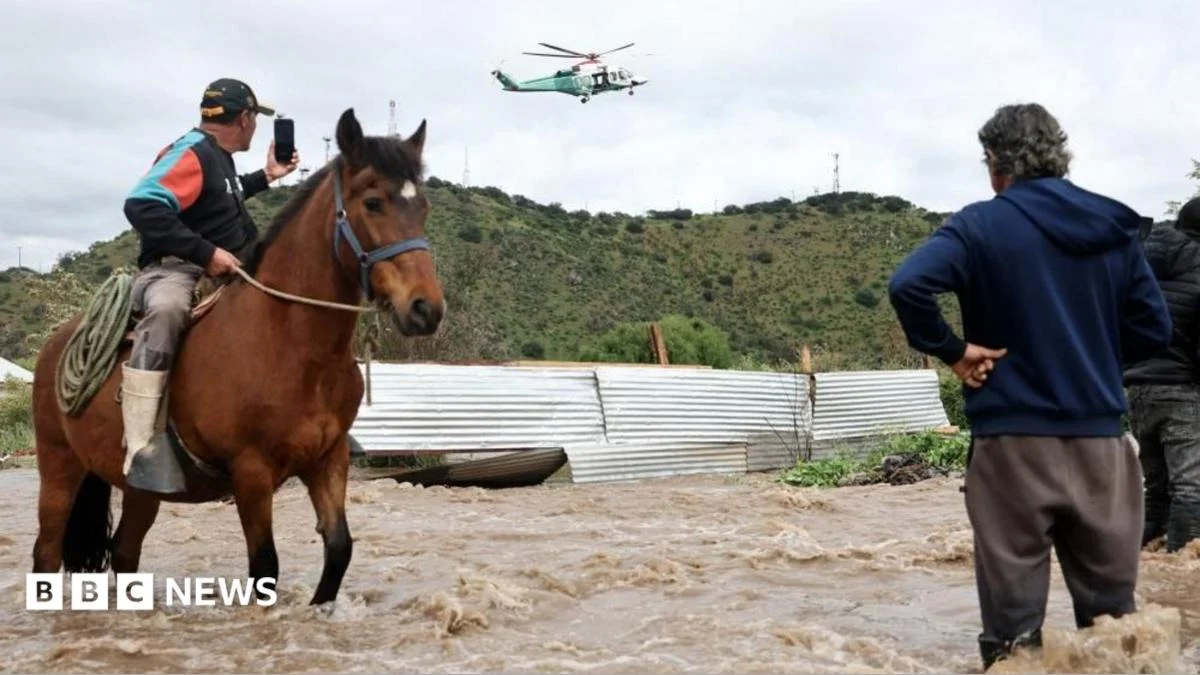
Residents were airlifted to safety after flooding in central Chile caused by the Mapocho river bursting its banks following heavy rainfall.
The floods arrived after an unusually large amount of rain fell in recent days, overwhelming drainage systems and displacing people along the river corridor. Emergency responders coordinated helicopter rescues to reach stranded residents in affected neighborhoods.
Key Facts
- River Mapocho burst its banks in central Chile.
- Residents were airlifted to safety after flooding.
- Unusually large rain fell in recent days.
What Happened?
The Mapocho river exceeded its normal water levels after an unusually large amount of precipitation fell across central Chile during recent days. The surge overwhelmed riverside infrastructure and forced residents to seek higher ground or wait for rescue teams. Aerial operations were launched to move people to safety, underscoring the urgency of the situation.
Flooding of this scale typically follows rapid runoff from saturated terrain, especially in urban or semi-urban basins where drainage capacity is limited. The Mapocho river flows through populated areas, increasing exposure for homes and businesses situated near its banks. Authorities responded by deploying resources to assist those in immediate danger.
While exact figures on damage or displacement were not provided, the decision to use aircraft for rescue signals that ground-based access was compromised. Such conditions often arise when streets become impassable or landslides block roads adjacent to waterways.
Who Is Affected?
Residents living near the banks of the Mapocho river in central Chile bore the brunt of the flooding episode. Their homes and daily routines were directly disrupted when the waterway overflowed its banks due to elevated rainfall levels recorded over several days. Many found themselves cut off from familiar routes and services once floodwaters rose suddenly.
In addition to individual households, entire neighborhoods experienced isolation as access roads became submerged or rendered unsafe. Schools, clinics, and shops located within low-lying zones likely suspended operations until flood threats receded. Local governments stepped in alongside national agencies to organize transportation and temporary shelter options wherever possible.
Emergency management officials focused first on evacuating vulnerable populations including children, elderly persons, and individuals with mobility challenges. Communication alerts issued warnings encouraging proactive relocation rather than waiting for mandatory orders from public safety coordinators operating under established disaster protocols.
Why It Matters
Flash flooding driven by intense rainfall poses recurring risks to life and property throughout South America, particularly during seasonal shifts known locally as altiplanic surges which can trigger sudden rises in regional rivers like the Mapocho.
What We Know — and What We Don’t
Verified by the source:
- The Mapocho river burst its banks.
- Residents were airlifted to safety.
- Large quantities of rain fell recently.
Still unconfirmed:
- Casualty reports or injuries.
- Damage cost estimates or infrastructure losses.
- Date or duration of incidents.
- Exact number of people evacuated or rescued.
What To Watch
Further clarity may emerge once authorities release official briefings regarding ongoing rescue efforts and community needs in central Chile amidst persistent flood concerns.