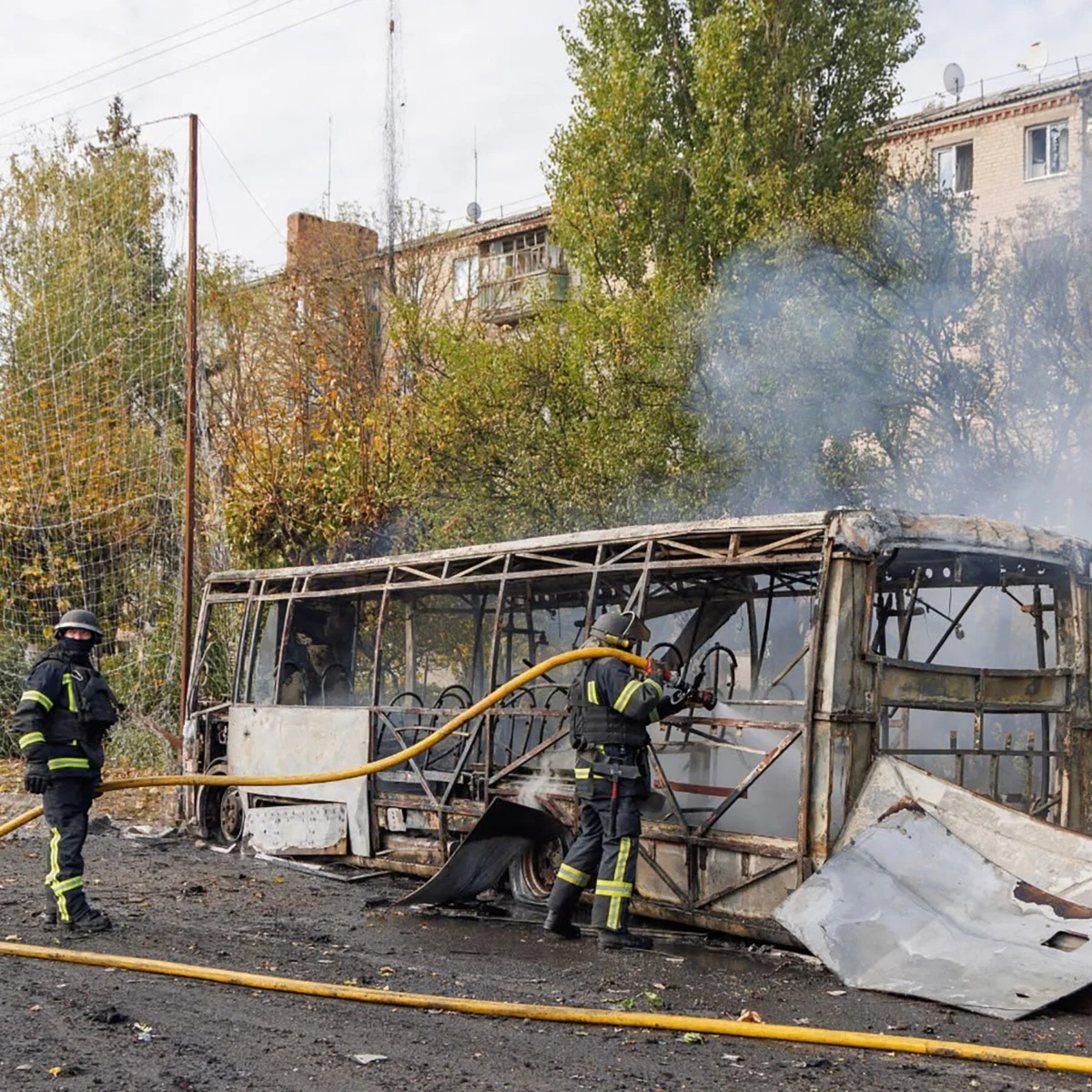
Russian strikes on Ukrainian cities killed at least 30 people when a commuter bus was hit, officials said, a day after an apartment building attack killed 22 far from the front lines. The attacks underscore escalating violence against civilian infrastructure.
At least 30 people died in a Russian strike on a commuter bus in eastern Ukraine, officials reported. A separate attack the prior day struck an apartment building well behind active combat zones, killing 22.
Key Facts
- 30 killed in a Russian strike on a commuter bus in eastern Ukraine, officials said.
- 22 killed in an attack on an apartment building far behind the combat zone, reported a day earlier.
- Both strikes targeted civilian areas, not active frontline zones.
- Ukrainian officials attributed the attacks to Russia.
- The violence adds to an already high civilian toll from the ongoing war.
What the Attacks Tell Us About the War
The bus strike occurred in Ukraine’s east, an area that has seen intense fighting but also residential and transport routes used by civilians. Officials said the bus was struck, causing numerous fatalities instantly. This marks one of the deadliest single incidents against civilian transport in recent months.
A day earlier, an apartment building was hit in a location described as far behind the combat zone, suggesting the strike reached deep into territory not currently under direct battlefield control. At least 22 people died in that attack. Apartment buildings are typically residential, housing families, elderly residents, and children.
These incidents reflect a pattern of Russian strikes hitting urban centers beyond immediate front lines, according to Ukrainian officials. While both Kyiv and Moscow regularly accuse each other of targeting civilians, this summary reflects claims made by Ukrainian officials as reported by NYT > World News.
How Did We Get Here?
The war between Russia and Ukraine has entered its third year, marked by shifting frontlines, drone warfare, and repeated missile strikes on cities. Civilian infrastructure, including homes, hospitals, and transport hubs, has been repeatedly targeted.
Previously, major cities like Kyiv, Kharkiv, and Odesa experienced waves of air raids, forcing residents underground and displacing millions. Now, attacks in eastern regions suggest renewed pressure on areas previously considered safer.
What We Know — and What We Don’t
Verified by the source:
- At least 30 people were killed in a Russian strike on a commuter bus in eastern Ukraine.
- A prior attack on an apartment building killed 22 people behind the combat zone.
- Ukrainian officials attributed both attacks to Russia.
- NYT > World News reported these figures based on statements from unnamed officials.
Still unconfirmed:
- The exact cities or regions where the bus and apartment strikes occurred.
- The method used in the attacks — missile, drone, or artillery.
- Casualty counts beyond the reported minimums.
- Whether any survivors remained missing or unaccounted for.
- Any response or comment from Russian authorities.
Why It Matters
The escalation of Russian strikes on Ukrainian cities raises concerns over growing civilian harm and the potential for broader international condemnation. As both sides trade accusations, such attacks fuel debates over proportionality, humanitarian law, and the global response to urban warfare.
For ordinary Ukrainians, these strikes represent daily reminders of vulnerability, even in areas distant from active fighting. The toll extends beyond deaths to trauma, displacement, and strained medical and emergency systems.
What to Watch
It remains unclear whether these attacks will prompt a shift in international aid or diplomatic pressure. The UN and human rights groups may seek independent verification of casualties and responsible parties. Ukrainian officials have yet to provide further details publicly.
This article draws exclusively on reporting from NYT > World News, categorized under war-geopolitics.