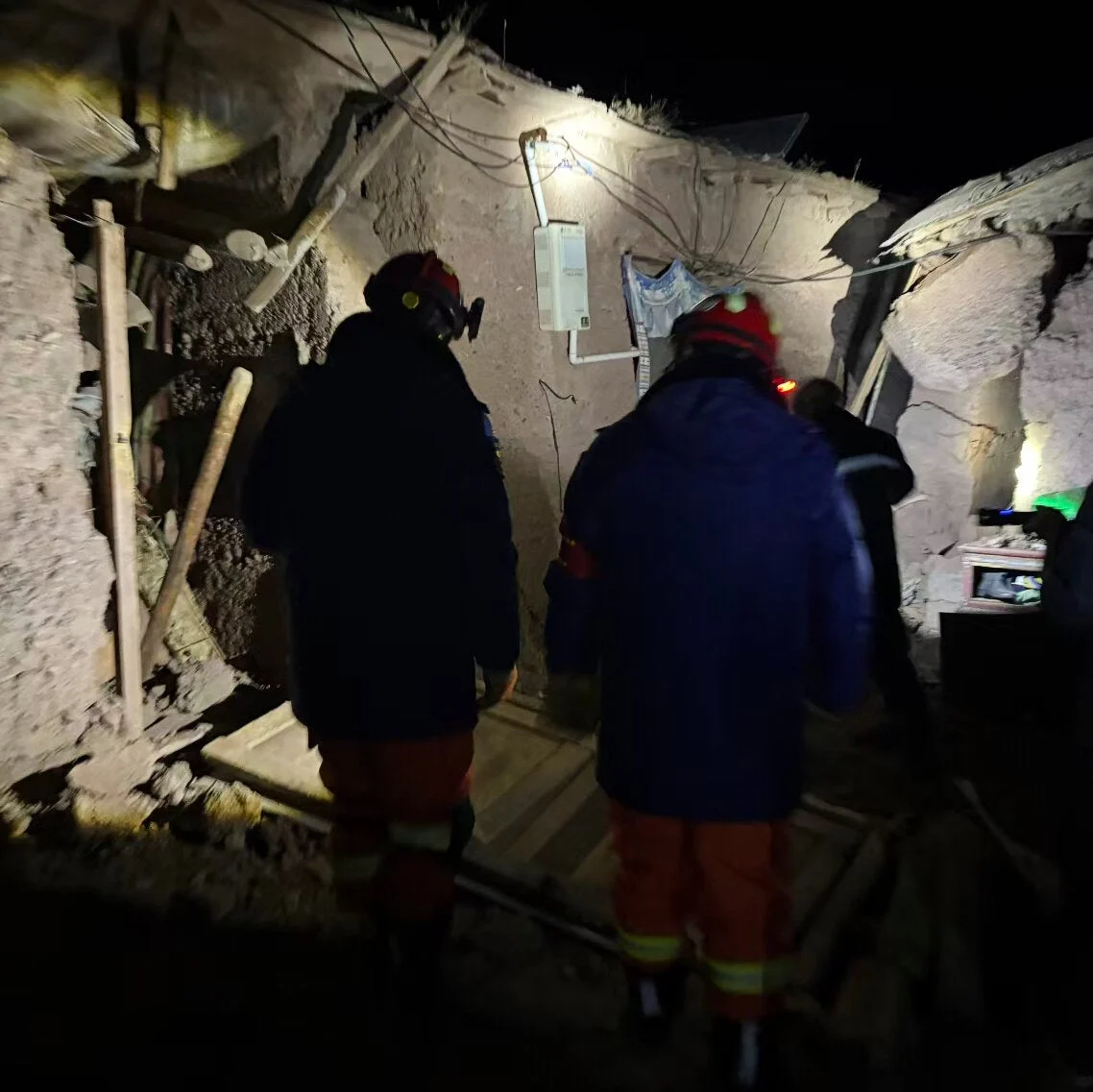
A powerful earthquake in Tibet killed at least 16 people and injured dozens, state media reported.
The 7.0-magnitude quake, which struck during the night, toppled more than 300 homes and sent residents fleeing into the cold night air, according to the New York Times World News service.
KEY FACTS
- A powerful earthquake in Tibet killed at least 16 people.
- Dozens of people were injured in the quake, state media said.
- More than 300 homes were toppled by the tremor.
- The quake measured 7.0 in magnitude.
- Residents fled into the cold night air after the earthquake in Tibet.
THE STORY
What happens next?
Following the earthquake in Tibet, emergency response teams are likely to mobilize to assess damage, locate survivors, and provide shelter and medical aid to affected residents. State media reported that dozens were injured and over 300 homes were destroyed, suggesting significant localized impact. Recovery efforts may be complicated by cold overnight temperatures and remote terrain, which could slow access to the hardest-hit areas. Updates on casualties, missing persons, and infrastructure damage are expected as assessments continue.
Who is affected?
The earthquake in Tibet directly affected local residents, many of whom lost their homes when more than 300 structures collapsed. Dozens of people sustained injuries, though exact numbers have not been released. Entire communities were displaced as people fled into the cold night air, according to state media. The destruction of homes suggests long-term displacement may be necessary for some families while reconstruction proceeds.
How did we get here?
The region experienced a sudden 7.0-magnitude tremor that caused widespread structural collapse, according to state media cited by the New York Times. Earthquakes of this scale can cause severe damage even in areas built to modern seismic standards, particularly if buildings were older or poorly constructed. The fact that over 300 homes were toppled indicates strong ground shaking across a concentrated area. This kind of natural disaster is not uncommon in seismically active parts of the region, but each event brings new challenges for emergency preparedness and response.
WHAT WE KNOW & WHAT WE DON’T
Verified by the source:
- The earthquake in Tibet killed at least 16 people.
- Dozens of people were injured.
- More than 300 homes were toppled.
- The earthquake measured 7.0 in magnitude.
- State media provided the information to the New York Times.
Still unconfirmed:
- The exact time and location within Tibet where the earthquake struck.
- The current condition of the injured and whether more casualties are expected.
- The estimated number of people displaced or left homeless.
- Whether any aftershocks have occurred or additional seismic activity is forecasted.
- The identities of any local or national officials leading the response effort.
WHY IT MATERS
Large earthquakes like the one in Tibet pose serious risks to life and infrastructure, especially in regions with rugged terrain and cold climates. Natural disasters of this scale often strain local emergency resources and highlight the importance of coordinated relief efforts. For communities already facing geographic isolation, the impact of such events can be felt for months or years through disrupted livelihoods and prolonged recovery needs. Understanding these patterns helps inform preparedness and international aid responses, as well as broader discussions about resilience in earthquake-prone regions.
WHAT TO WATCH
Officials have yet to release detailed casualty figures or damage assessments, and further updates are expected as recovery teams reach affected areas. Follow coverage in the war-geopolitics and climate-environment sections for developments.