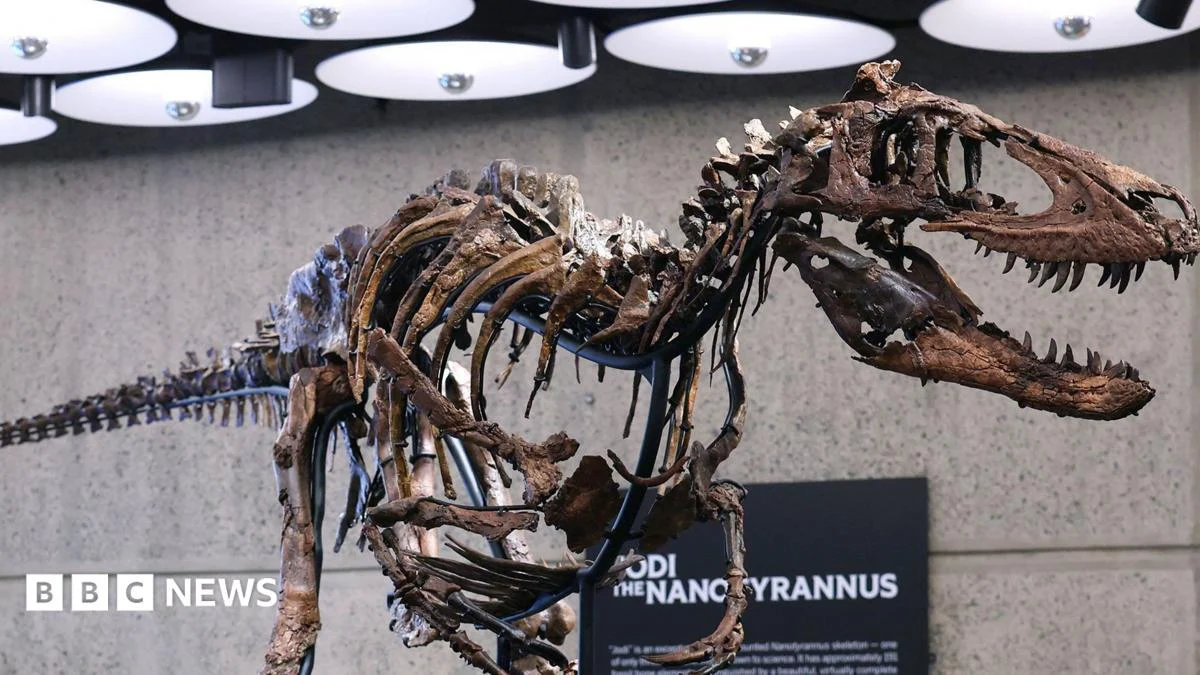
A rare Nanotyrannus skeleton sold for $47.3 million at a New York auction, intensifying long-running debate over whether important fossil specimens should remain accessible to researchers and the public or be acquired by private collectors. The sale underscores how high-value auctions can redirect scientifically significant dinosaur remains away from museums and into private hands. This transaction has drawn attention from paleontologists concerned about access to fossils for study. It also raises questions about regulation governing fossil sales. The auction house confirmed the final price exceeded expectations. Scientists warn such sales may limit future research opportunities. Advocates for open access to fossils argue that specimens of scientific importance should reside in institutions where they can be studied freely. The Nanotyrannus skeleton sale highlights this tension clearly.
Key Facts
- A Nanotyrannus skeleton sold for $47.3 million.
- The auction took place in New York.
- The sale reignited debate about dinosaur remains in private ownership.
The Story Behind the Nanotyrannus Skeleton Sale
The auction occurred in New York, where bidding reached intense levels before the gavel fell at $47.3 million. Auction houses have increasingly marketed rare fossils as investment-grade collectibles, attracting wealthy buyers who view them as alternative assets. This particular specimen was described as exceptionally well-preserved, fueling demand among both collectors and researchers monitoring the market. While some argue that private ownership can fund further excavations and preservation efforts, others contend that locking specimens behind private walls undermines scientific progress. Critics point out that public museums often lack the financial firepower to compete with anonymous high-net-worth individuals. The Nanotyrannus skeleton sale exemplifies how the global fossil trade operates outside traditional museum acquisition channels.
Who Is Affected by Private Fossil Ownership?
Paleontologists and academic institutions are directly impacted by private fossil acquisitions. When specimens enter private collections, researchers may lose access unless agreements are negotiated between collectors and universities. Some collectors do loan materials temporarily for study or exhibition, but terms vary widely. Museums also face ethical dilemmas when deciding whether to bid on fossils knowing their budgets cannot match private offers. Meanwhile, lawmakers in several countries have moved to restrict fossil exports, particularly from regions rich in Cretaceous-era deposits. The United States lacks comprehensive federal policy on fossil sales unlike legislation enacted elsewhere. The Nanotyrannus skeleton sale has prompted renewed calls for clearer guidelines governing commercial transactions involving scientifically significant specimens.
What We Know — and What We Don’t
Verified by the source:
- A Nanotyrannus skeleton sold for $47.3 million.
- The auction occurred in New York.
- The sale reignited debate over private versus public dinosaur remains.
Still unconfirmed:
- Identity of the buyer.
- Exact date of the auction.
- Origin country of the fossil.
- Scientific value assessments of this specific specimen.
Why It Matters
This transaction reflects broader concerns about the intersection of science, commerce, and accessibility. Ensuring key fossils remain available supports ongoing paleontological research crucial for understanding prehistoric life. Explore related developments in our war-geopolitics section covering territorial disputes over fossil sites globally.
What To Watch
Future legislative responses targeting fossil exports or restrictions on commercial sales could reshape the market dynamics. Stakeholders await potential regulatory changes that might influence subsequent auctions.