Lede
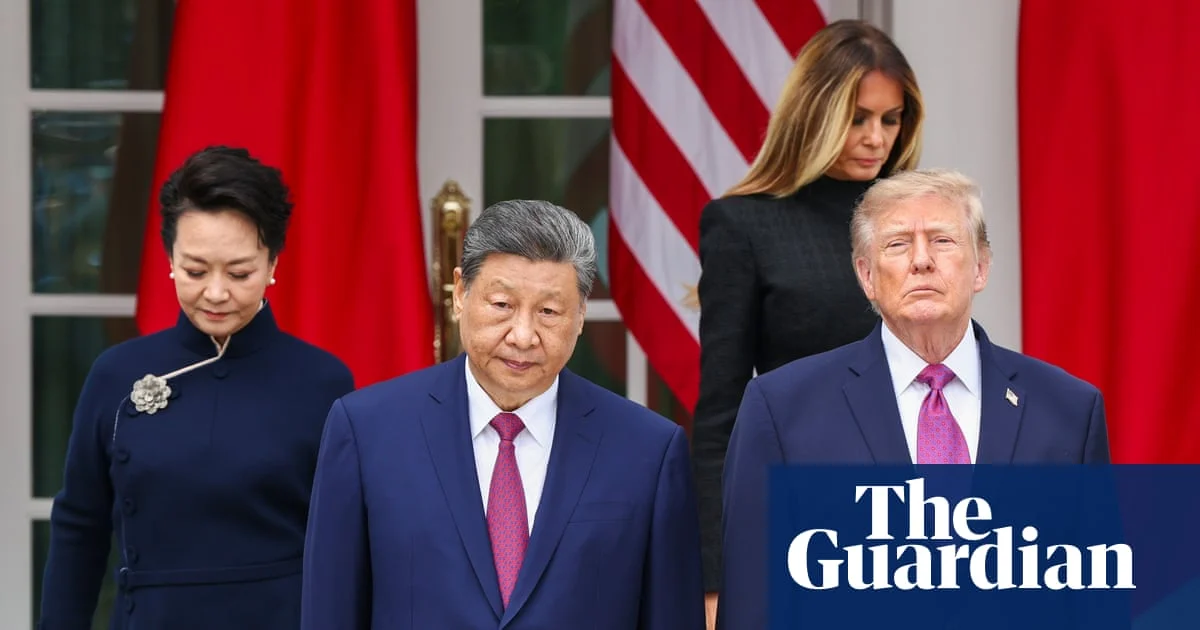
Chinese President Xi Jinping met with US President Donald Trump at the White House, calling for extensive cooperation to prevent US-China military conflict. His proposals addressed rising tensions over artificial intelligence, trade, and Taiwan.
Xi emphasized the need for a mutual understanding to steer the world’s two largest economies away from a potential military collision course. His remarks invoked the concept of the ‘Thucydides trap,’ a historical term describing how rising powers often clash with dominant ones.
Key Facts
- Xi Jinping met with Donald Trump at the White House.
- He proposed extensive cooperation to avoid US-China military conflict.
- Tensions were cited over AI, trade, and Taiwan.
- Xi referenced the ‘Thucydides trap’ as a historical warning.
- Plans were presented for a mutual understanding framework.
The Story
Who Is Affected by These Proposals?
The proposals come as the US and China navigate growing strategic competition across multiple domains. AI advancements, trade negotiations, and cross-strait relations with Taiwan remain key points of friction. Both nations are economic powerhouses whose decisions influence global markets and security dynamics. Xi’s vision of mutual gain contrasts with hawkish rhetoric often heard in Washington.
His reference to the ‘Thucydides trap’ underscores concerns that unresolved rivalry may lead to confrontation. Avoiding such an outcome requires diplomatic engagement, which this summit aimed to foster. However, structural disagreements may persist beyond dialogue alone.
How Did We Get Here?
Over recent years, US-China relations have grown more strained due to tech wars, tariff disputes, and geopolitical standoffs. Beijing views Taiwan as part of its sovereign territory, while Washington maintains formal ties through unofficial channels. Meanwhile, competition in AI and semiconductors has intensified, raising fears of future clashes. This meeting marked an effort to reset the tone amid mounting pressures on both sides.
Despite diplomatic gestures, experts note that underlying mistrust remains high. Economic decoupling trends suggest long-term shifts in global alignment. Whether cooperation can bridge these gaps depends on reciprocal actions from both capitals.
What Happens Next?
Following the summit, officials from both countries will likely assess the feasibility of implementing Xi’s proposed framework. Concrete outcomes—such as joint initiatives or policy adjustments—remain speculative until further announcements. The trajectory of US-China ties will hinge on follow-up measures rather than symbolic statements.
Observers will watch for signs of renewed trade talks, AI collaboration protocols, or clarifications on Taiwan policy. Diplomatic momentum could ease market anxieties if backed by actionable steps. Conversely, silence or backtracking might reignite friction and volatility.
What We Know — and What We Don’t
Verified by the source:
- Xi Jinping attended a summit meeting with Donald Trump at the White House.
- He advocated for cooperation to avoid US-China military conflict.
- Major tension areas include AI, trade, and Taiwan.
- He warned against the ‘Thucydides trap.’
Still unconfirmed:
- Specific terms of any agreement reached during the meeting.
- Detailed timelines for follow-up discussions or policies.
- Direct responses from US officials present at the summit.
Why It Matters
Stable US-China relations are critical to global peace, trade stability, and technological progress. Averting military escalation benefits investors, consumers, and governments worldwide who rely on predictable international frameworks. This summit signals ongoing attempts to manage rivalry without triggering catastrophic outcomes.
What To Watch
Future communications between US and Chinese leadership may reveal whether Xi’s overtures translate into concrete policy shifts. Markets and analysts await updates on trade, AI regulation, and cross-strait diplomacy.
Chinese President Xi Jinping proposed cooperation with the US to avoid US-China military conflict amid tensions over AI, trade, and Taiwan.
Related Articles
Explore our coverage in war-geopolitics and economy and markets for continued updates on global power dynamics.