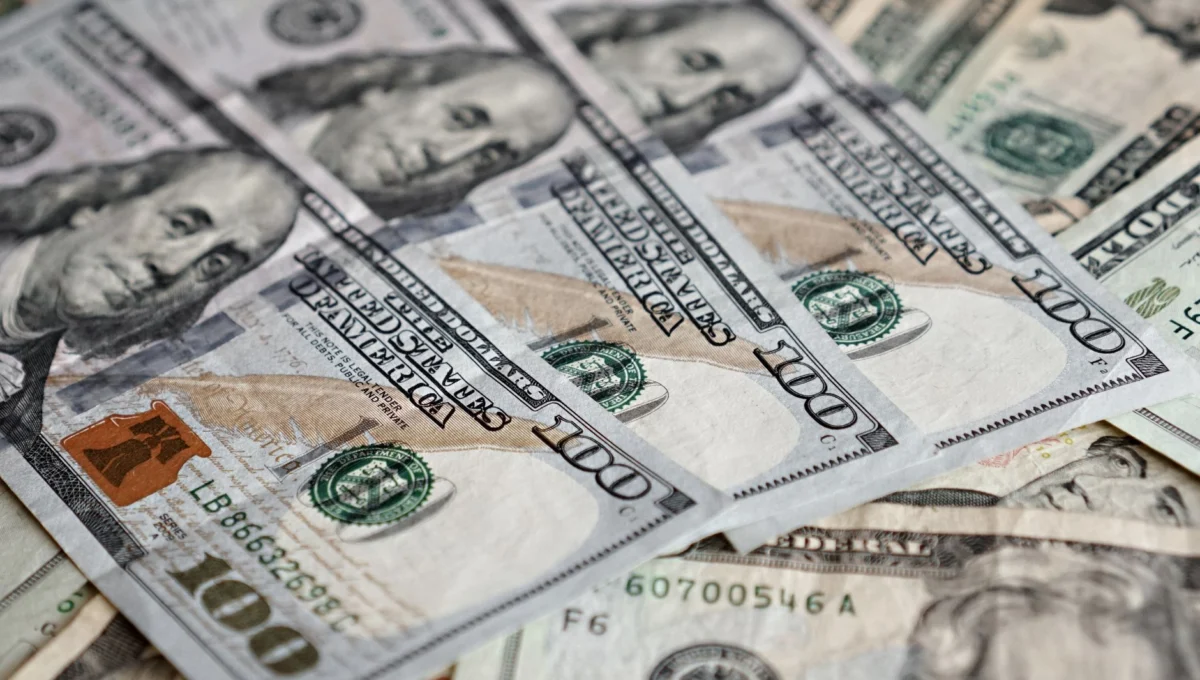
The US dollar surged to a 19-month high as traders increased bets that the Federal Reserve will keep interest rates higher for longer. The move pushed the Australian dollar lower in response.
Currency markets reacted to shifting expectations about US monetary policy, with the greenback strengthening broadly against major peers. The Australian dollar, often sensitive to risk sentiment and commodity prices, fell as the US dollar advanced.
KEY FACTS
- The US dollar hit a 19-month peak
- Gains driven by Fed hike bets — expectations of further rate increases
- The Australian dollar (Aussie) dipped against the greenback
THE STORY
What drives currency moves on rate expectations?
Interest rate differentials are a primary driver of foreign exchange rates. When markets expect a central bank to raise rates, that currency typically strengthens because higher yields attract capital. The Federal Reserve’s policy path has outsized influence because the US dollar is the world’s dominant reserve and invoicing currency.
“Fed hike bets” refers to pricing in futures markets that implies a probability of future rate increases. Traders watch economic data — inflation, employment, growth — to gauge the Fed’s next move. Stronger-than-expected US data recently has led markets to push back expectations for rate cuts, effectively betting on “higher for longer.”
Why the Australian dollar fell
The Australian dollar often moves inversely to the US dollar because Australia is a major commodity exporter. When the greenback rises, commodities priced in dollars become more expensive for foreign buyers, potentially reducing demand. Additionally, the Reserve Bank of Australia’s own rate outlook may differ from the Fed’s, creating a yield gap that favors the US dollar.
Risk sentiment also matters. The Aussie is considered a “risk-on” currency — it tends to rise when investors are optimistic and fall during uncertainty. A stronger US dollar often coincides with risk-off moods, compounding the Aussie’s decline.
WHAT WE KNOW — AND WHAT WE DON’T
Verified by the source:
- The US dollar reached a 19-month high
- The rally was attributed to Federal Reserve rate hike expectations
- The Australian dollar weakened
Still unconfirmed:
- Exact date and time the peak was reached
- Specific level or index value of the US dollar at the peak
- Magnitude of the Australian dollar’s decline
- Which economic data or Fed comments triggered the move
- Performance against other major currencies (euro, yen, pound)
- Whether the move continued or reversed after the report
WHY IT MATTERS
A stronger US dollar affects global trade, inflation, and debt burdens. Countries with dollar-denominated debt face higher repayment costs. US exporters lose competitiveness, while importers benefit. Emerging markets often see capital outflows when the Fed tightens. For everyday consumers, currency moves influence travel costs, imported goods prices, and investment returns.
WHAT TO WATCH
Upcoming US inflation and employment reports will test whether Fed hike bets hold. Central bank speeches and minutes may clarify the rate outlook. The Australian dollar’s next moves will depend on both US developments and domestic Australian data.