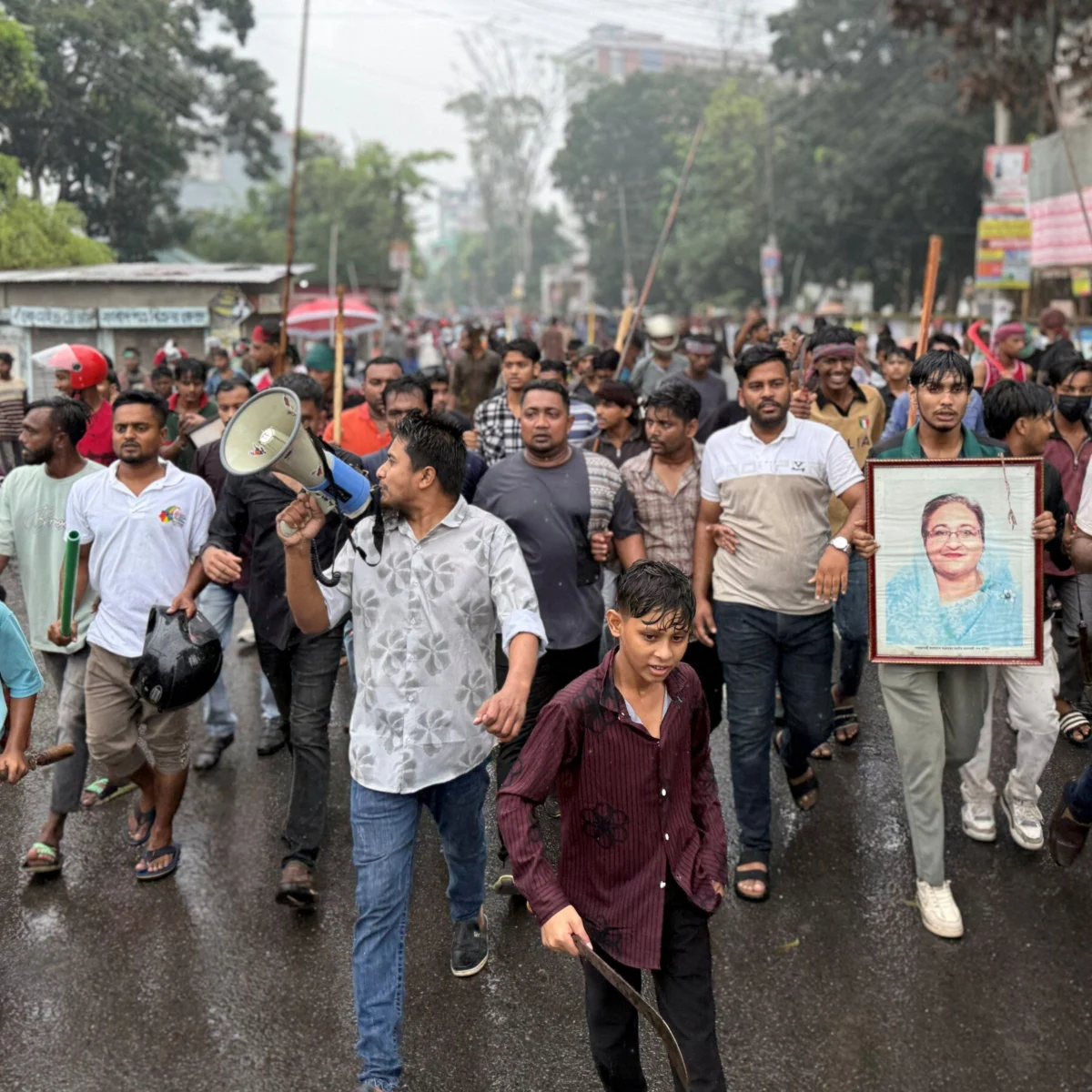
Deadly protests have erupted in Bangladesh as supporters of exiled former prime minister Sheikh Hasina wage a small-scale insurgency aimed at destabilizing the current government. Hasina, who was sentenced to death in absentia, remains a polarizing figure whose followers continue to challenge the political order that replaced her.
The Bangladesh protests reflect a deep fracture in the country’s political landscape. Hasina’s ouster and subsequent death sentence have galvanized her base, turning judicial action into a rallying point for armed resistance rather than quiet acceptance.
KEY FACTS
- Deadly protests have erupted in Bangladesh
- Protests center on exiled former leader Sheikh Hasina
- Hasina was the deposed prime minister
- She received a death sentence in absentia
- Her supporters are waging a small-scale insurgency to destabilize the current government
THE STORY
How did we get here?
Sheikh Hasina served as Bangladesh’s prime minister for multiple terms before being deposed. Her removal from power marked a dramatic shift in the country’s governance. The subsequent decision to try and sentence her to death in absentia — a legal proceeding conducted without the defendant present — signals the current authorities’ determination to permanently sideline her political influence.
In absentia trials are controversial internationally because the accused cannot mount a defense. For Hasina’s supporters, the sentence confirms their view that the current government is illegitimate and vindictive, fueling the narrative that armed resistance is justified.
What does the insurgency look like?
The source describes the resistance as a “small-scale insurgency,” suggesting organized but limited armed activity rather than mass civil unrest or conventional warfare. This characterization implies hit-and-run tactics, targeted attacks on security forces or infrastructure, and attempts to erode government control in specific areas rather than a nationwide uprising.
Small-scale insurgencies typically aim to exhaust state resources, undermine legitimacy, and create political space for negotiation or regime change. The government’s response — whether restrained or heavy-handed — will shape whether the movement grows or fractures.
Who is affected?
Ordinary Bangladeshis face the immediate consequences of instability: disruption to daily life, economic activity, and public safety. The business community, foreign investors, and international partners monitor the situation closely, as prolonged unrest threatens development gains in one of South Asia’s fastest-growing economies.
Regional neighbors also watch carefully. Bangladesh shares borders with India and Myanmar, and instability can spill across frontiers through refugee flows, cross-border militant links, or disruption of trade routes.
WHAT WE KNOW — AND WHAT WE DON’T
Verified by the source:
- Deadly protests have occurred in Bangladesh
- Protests involve supporters of exiled former prime minister Sheikh Hasina
- Hasina was sentenced to death in absentia
- Her supporters are waging a small-scale insurgency
- The insurgency aims to destabilize the current government
Still unconfirmed:
- Number of casualties or specific death toll from the protests
- Geographic scope of the insurgency within Bangladesh
- Identity or structure of the insurgent groups
- Government casualty figures or security force response details
- International reaction or diplomatic statements
- Timeline for potential escalation or resolution
WHY IT MATTERS
The Bangladesh protests matter because they test whether a country of over 170 million people can manage a peaceful transfer of power after decades of Hasina’s dominance. The shift from political rivalry to armed insurgency raises the stakes for democratic stability, economic progress, and regional security in a strategically vital part of South Asia.
WHAT TO WATCH
Watch for government counter-insurgency measures, any expansion of protest activity beyond current areas, and whether international actors engage diplomatically. The trajectory will depend heavily on whether the state can contain the insurgency without triggering wider unrest.