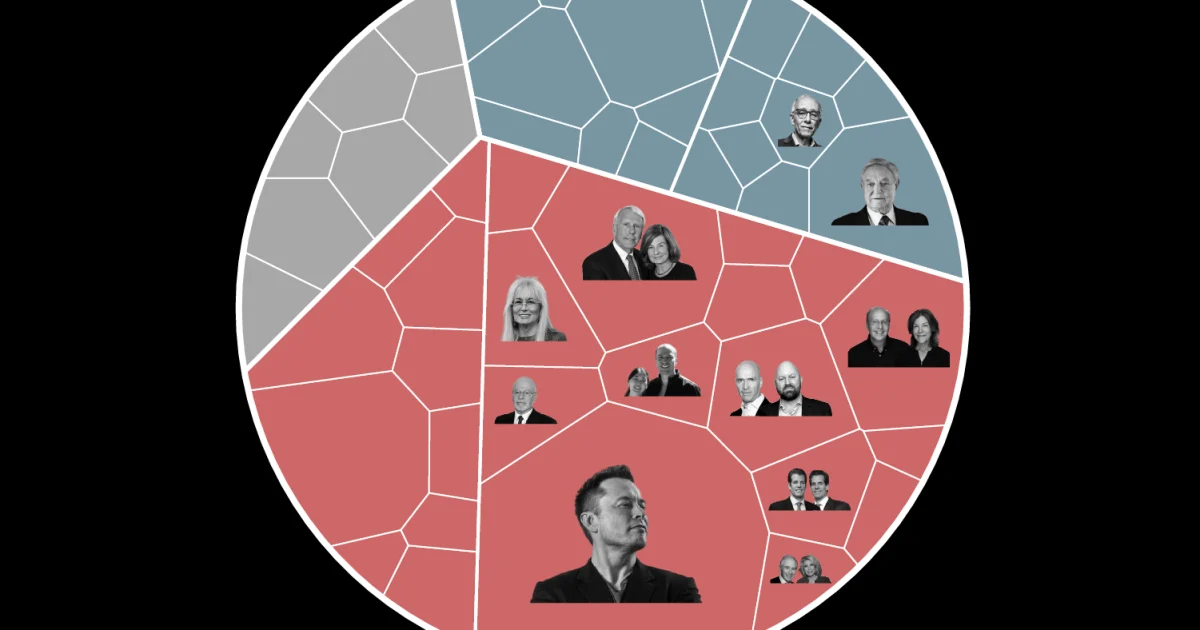
In the 2026 U.S. midterm elections, the 50 biggest contributors have poured a total of $2.77 billion into the race, according to Al Jazeera. The largest single contribution comes from Elon Musk, who donated $446 million to Republican-aligned groups. These figures highlight how a small group of major donors can shape the competitive landscape of a national election.
With control of Congress and key state positions at stake, campaign finance plays a central role in determining which candidates can mount serious campaigns and which messaging efforts reach voters. The concentration of funding among a few large donors raises ongoing questions about access and influence in American democracy, even as the 2026 midterm election funding cycle continues to unfold.
Key Facts
- The 50 biggest donors have contributed $2.77 billion to the 2026 midterm elections.
- Elon Musk is the top individual donor, giving $446 million to Republican-aligned groups.
- The contributions reflect a highly concentrated pattern of political giving.
- The funding race is ongoing as candidates prepare for the 2026 midterms.
- Al Jazeera reported these figures based on available campaign finance data.
What the Numbers Mean
The $2.77 billion total represents an enormous influx of money into the 2026 midterm election funding cycle. This funding supports advertising, voter outreach, staff salaries, and digital organizing efforts across competitive House, Senate, and gubernatorial races. Because so much of the total comes from just the top 50 donors, a relatively small number of individuals and organizations hold significant sway over how much resources each campaign can access.
Large donations often flow to outside groups such as super PACs and dark-money nonprofits, which can spend unlimited amounts to advocate for or against candidates. This structure allows wealthy donors to amplify their political influence without contributing directly to candidate campaigns, which remain subject to contribution limits. The scale of giving underscores how outside money continues to shape the electoral landscape in the modern era.
Who Is Affected
The candidates and parties involved in the 2026 midterm elections are directly affected by this concentration of funding. Campaigns with access to large donor networks can afford more staff, broader advertising reach, and advanced data analytics, potentially giving them an edge over opponents who rely primarily on smaller donations. Voters in competitive districts and states may see more television commercials, digital ads, and mailers as a result of these contributions.
Beyond individual candidates, the broader democratic process is influenced by how campaign money flows. When a small group of donors accounts for a large share of total spending, questions arise about whether elected officials will be responsive to ordinary voters or to those who funded their campaigns. Advocacy groups and reform organizations frequently call for expanded disclosure rules and lower contribution limits to address these concerns.
What We Know — and What We Don’t
Verified by the source:
- The 50 biggest donors contributed a combined total of $2.77 billion in the 2026 midterm races.
- Elon Musk donated the largest single amount, $446 million, to Republican-aligned groups.
- The data was reported by Al Jaepera based on campaign finance disclosures.
Still unconfirmed:
- The specific identities of the other top donors beyond Elon Musk.
- The exact breakdown of how much went to each political party or candidate.
- The final total fundraising figure for the entire 2026 election cycle.
- Campaign finance disclosure delays that may update these numbers.
Why It Matters
The scale and concentration of 2026 midterm election funding matter because money often determines how competitive a race can become. When a handful of donors contribute hundreds of millions of dollars, they help set the tone for the issues discussed and the candidates who can afford to run. Citizens and analysts alike watch these patterns to understand not just who is winning elections, but whether the political process reflects the priorities of everyday voters.
What To Watch
Additional campaign finance reports are expected as the election approaches, which may reveal updated totals and new major donors. Al Jazeera and other outlets will likely continue tracking the flow of money through the 2026 midterm election funding cycle as it develops.
The next filing deadline from the Federal Election Commission should provide a fuller picture of 2026 midterm election funding and identify any new large contributors.
Politics coverage and economy and markets analysis offer more context on how money influences democratic processes.