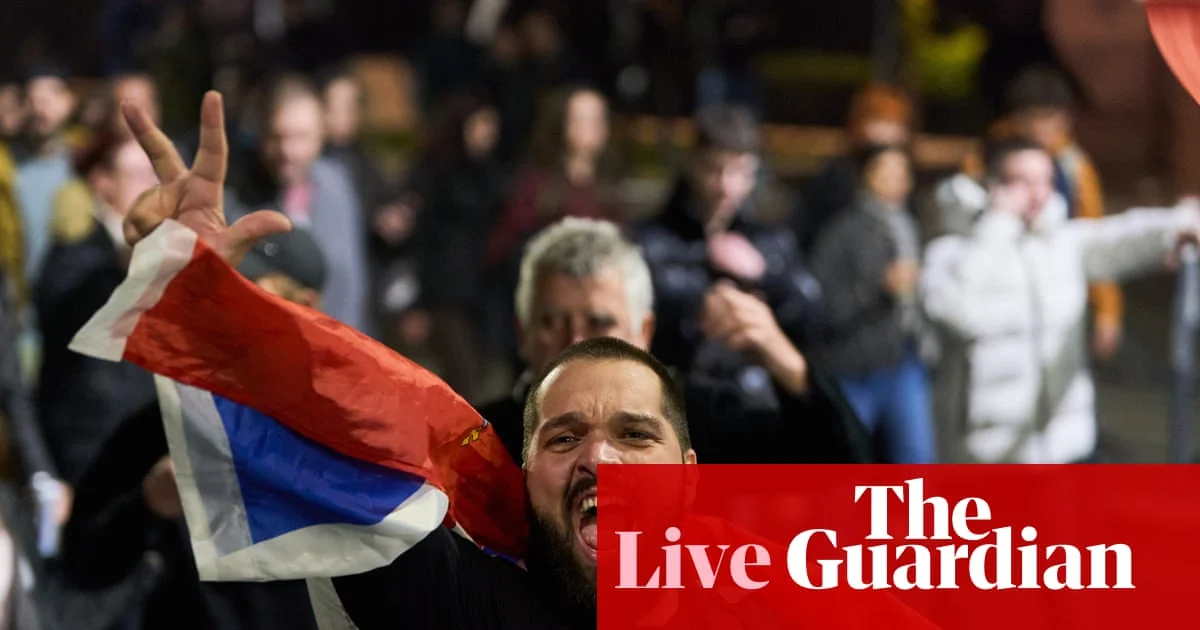
Lede
Belgrade — Serbia’s political landscape shifted decisively after a student-led movement unseated longtime President Aleksandar Vučić, according to reporting by World news | The Guardian. The defeat marks a rare break in a tenure defined by centralized control and strained ties with European institutions, and it has sparked cautious optimism among regional allies.
While details surrounding the transition remain unclear, analysts note the vote reflects widespread public frustration with governance challenges and economic stagnation. The student movement, which drew parallels to Hungary’s recent leadership change, appears poised to influence future policy directions, including foreign relations and domestic reforms.
KEY FACTS
- Serbian leader ousted by student movement in seismic election.
- Hopes raised for reset in relations with EU and other partners.
- Hungary’s prime minister emotionally invested in Serbian events.
- Comparison drawn between victories in Hungary and Serbia.
- Reference made to symbolic ‘Budapest Express’ reaching Belgrade.
THE STORY
Who is affected?
The removal of Vučić affects millions of Serbian citizens grappling with inflation, emigration, and limited democratic freedoms. Internationally, neighboring governments and EU officials have watched closely, hoping for improved engagement. Within Serbia, students and civic groups claim credit for mobilizing voters disillusioned with decades of authoritarian tendencies under Vučić’s rule.
Regional actors, particularly those aligned with Western institutions, may see new diplomatic opportunities. However, uncertainty lingers about whether this shift will translate into concrete reforms or simply replace old structures with new faces.
How did we get here?
For years, Vučić dominated Serbian politics through media manipulation, judicial interference, and suppression of dissent. Opposition parties struggled to unite until a grassroots wave led by university students gained momentum. Their campaign emphasized transparency, accountability, and Eurointegration—messages that resonated amid rising cost-of-living pressures and brain drain.
In Hungary, Prime Minister Péter Magyar expressed visible enthusiasm following the outcome, framing it as part of a broader ideological trend against entrenched leadership. His comments suggest potential coordination or shared messaging strategies between reformist movements across Central and Eastern Europe.
What happens next?
The immediate future hinges on how quickly a new government forms and whether transitional mechanisms ensure stability. Questions remain over which coalition might emerge and what compromises they’ll accept. Internationally, Brussels has signaled openness to re-engaging if democratic norms are upheld.
Domestically, activists demand swift action on corruption probes and electoral integrity measures. Meanwhile, skeptics warn that without sustained institutional change, public trust could erode again.
WHAT WE KNOW — AND WHAT WE DON’T
Verified by the source:
- Vučić was removed from power via an election influenced by student activism.
- There are expectations for improved EU relations post-election.
- Magyar commented positively on the result and linked it symbolically to Hungary’s own political developments.
Still unconfirmed:
- Exact vote margins or candidate totals.
- Identity of any incoming prime minister or governing coalition.
- Whether formal EU accession talks will resume immediately.
- Timelines for implementing promised reforms or investigations.
WHY IT MATTERS
This development signals a possible turning point not just for Serbia but for democratic resilience in a region long wary of authoritarian backsliding. With growing youth mobilization and cross-border solidarity, the student movement represents both a challenge and an opportunity for institutions seeking legitimacy.
WHAT TO WATCH
All eyes now turn to the formation of a new government and early policy signals, especially regarding press freedom, judicial independence, and regional diplomacy. Official responses from Brussels and Washington are also expected soon.
Serbia’s student movement ousts longtime leader Vučić, raising hopes for renewed EU ties and democratic reform.
Explore more in our war-geopolitics archive and politics section.