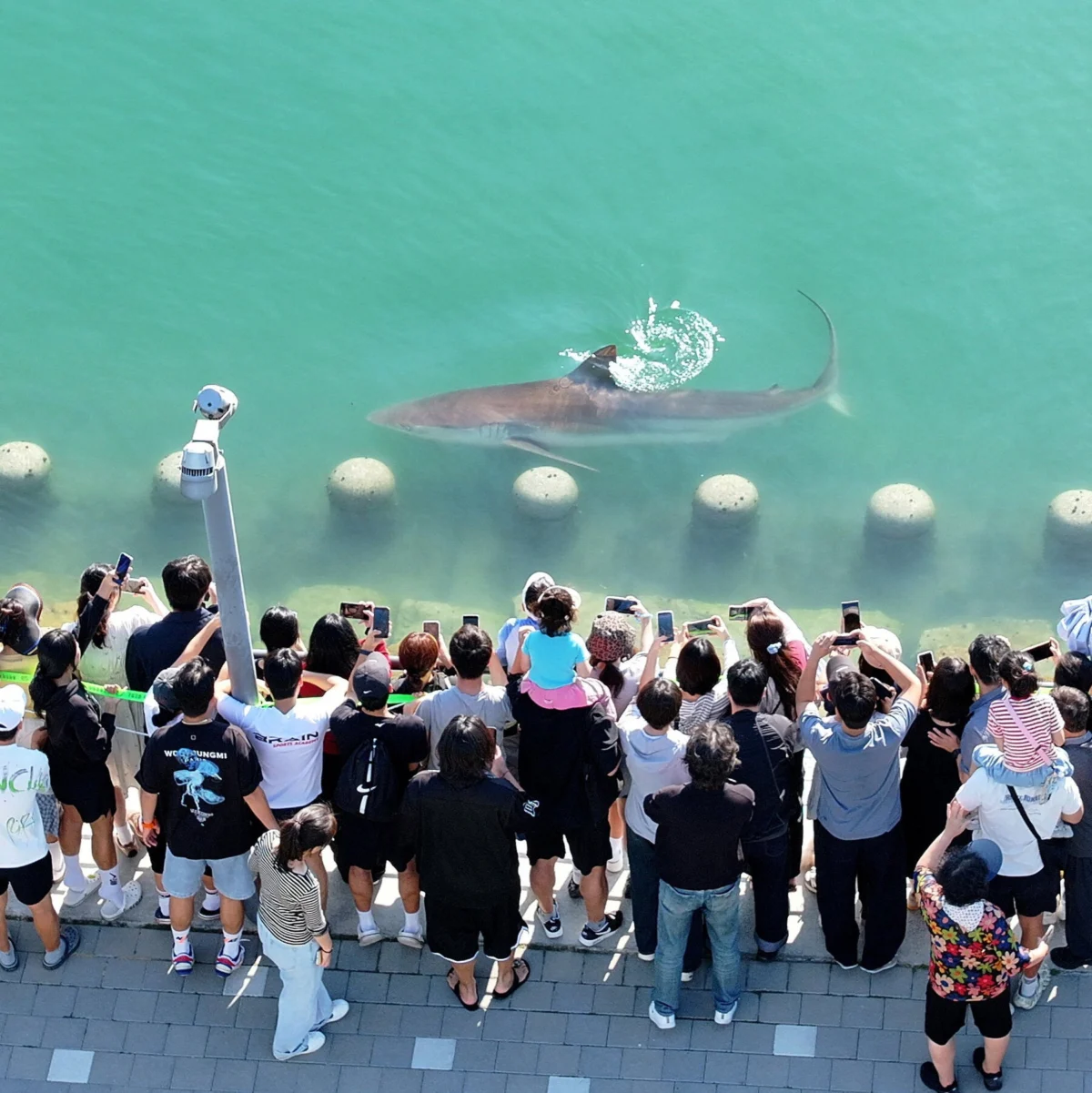
A 10-foot shark stranded in a South Korean port waterway has become a surprise celebrity, drawing over a million visitors as officials work to guide it back to open sea. The fish, whose presence remains unexplained, has turned an ordinary dock into an impromptu tourist attraction. Local authorities have urged the public to remain calm while coordination continues behind the scenes.
KEY FACTS
- A 10-foot shark has been stranded for weeks in a South Korean port waterway.
- The shark has attracted over a million spectators.
- Officials are trying to guide the shark back to open sea.
The Shark’s Unexpected Stay
The 10-foot stranded shark has remained lodged in the port waterway for weeks, prompting concern among maritime officials and curiosity among residents. No cause for the stranding was given, but such events often occur when tides shift suddenly or prey patterns change. Visitors have flocked to see the animal up close, many bringing children and cameras.
South Korea’s ports are typically busy with cargo traffic and fishing vessels, making this unusual encounter all the more notable. Emergency teams have reportedly deployed barriers and signage to keep crowds at a safe distance while evaluating how best to move the shark without causing it harm.
What happens next?
Officials continue efforts to guide the stranded shark back to open sea, though the timing and method remain unclear. High tide windows are often preferred for such operations, since deeper water allows safer passage. Until then, thousands continue visiting the site daily, transforming a maritime incident into a local phenomenon.
Why It Matters
This event highlights how wildlife encounters can unexpectedly capture public attention, even amid routine urban life. With climate shifts altering marine behavior, similar incidents may rise globally. The stranded shark serves as a rare reminder of nature’s unpredictability near human settlements.
What To Watch
Watch whether officials succeed in returning the shark to open waters, and whether visitor numbers remain high during ongoing rescue efforts.