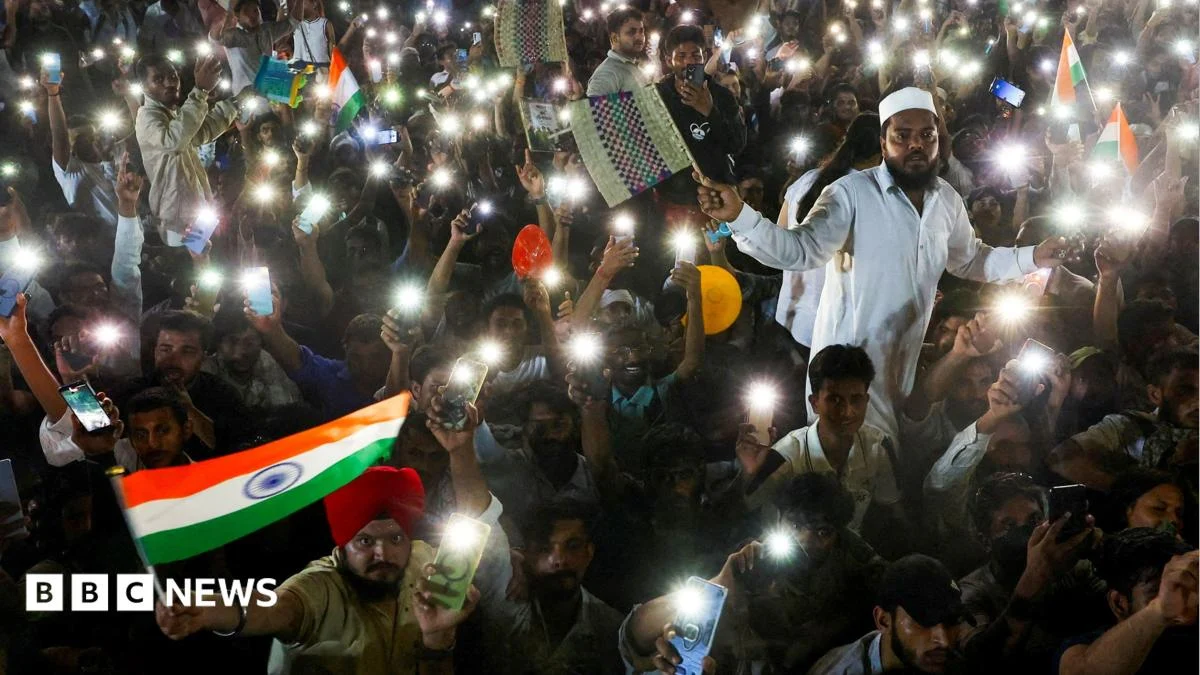
Jantar Mantar, an 18th Century site in Delhi long associated with public demonstrations, has been denotified as a protest site. The move effectively ends its use for organized gatherings and rallies, marking a significant shift in how the historic location is governed.
The denotification signals a policy change that could reshape the city’s protest culture, which has revolved around the landmark for decades. While the site remains accessible to the public, its formal designation for civic expression has been withdrawn.
Key Facts
- Jantar Mantar in Delhi has been denotified as a protest site.
- It was historically used for public demonstrations and rallies.
- The change removes its official status for organized gatherings.
- The site dates back to the 18th century.
What happens next?
With the formal protest designation removed, organizers may face legal hurdles if they attempt to hold large gatherings at the location. Authorities are expected to enforce zoning and public order rules more strictly, though the precise enforcement mechanisms remain unclear. Legal experts suggest that future demonstrations may shift to other approved areas of the city.
The government has not publicly detailed the reasoning behind the decision, though such moves typically stem from urban planning concerns or public safety considerations. Activists and civil society groups have not yet issued formal responses, but the site has been central to numerous movements over recent years.
How did we get here?
Jantar Mantar, completed in 1743 as an astronomical observatory, evolved into a symbolic platform for dissent and public discourse. Over time, it became a legal venue for protests, attracting political parties, student groups, and advocacy organizations. Its prominence made it both influential and contentious, often drawing both massive turnouts and police scrutiny.
The denotification process likely followed administrative procedures under local governance laws, though specific legal clauses were not disclosed. The move arrives without prior public consultation, raising questions about transparency. Meanwhile, the broader context of protest regulation in India remains under debate, with several states tightening rules on public assembly in recent years.
What We Know — and What We Don’t
Verified by the source:
- Jantar Mantar has been denotified as a protest site.
- It is an 18th Century site in Delhi.
- It was commonly associated with demonstrations.
Still unconfirmed:
- The specific legal basis for the denotification.
- The timing of the decision.
- Whether alternative protest sites will be designated.
- Reactions from political or civil society groups.
Why It Matters
The status change affects how citizens engage in public expression in India’s capital. As democratic societies worldwide grapple with balancing order and free speech, this development may influence similar policies in other cities.
What To Watch
Further clarity on enforcement and alternative locations is expected in the coming weeks, though no timeline has been announced.