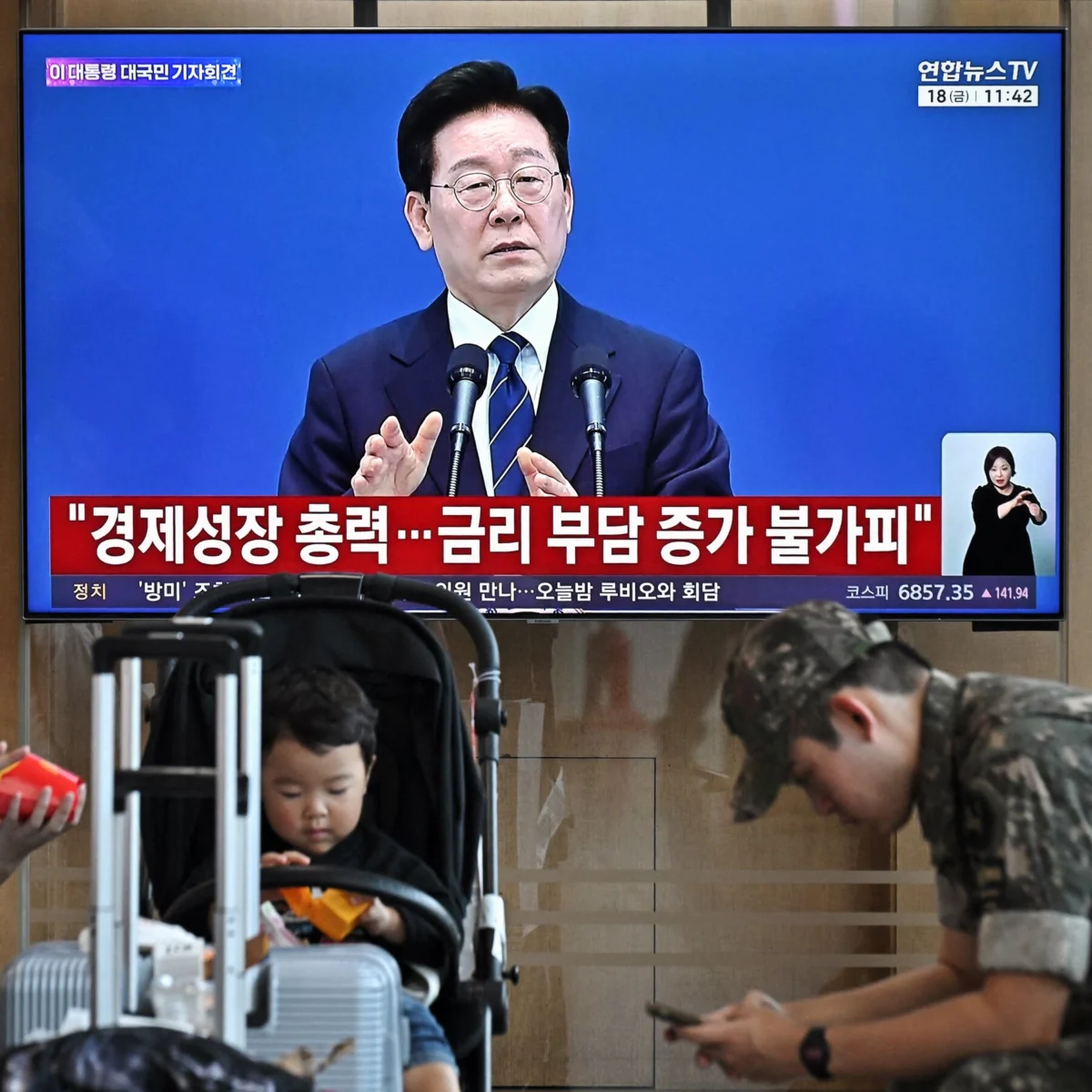
South Korean President Lee Jae Myung has rejected a request from U.S. President Donald Trump to provide military support in connection with Iran, according to reporting by The New York Times. The decision underscores ongoing friction between the two allies despite a historic security partnership. Trump had repeatedly asked for what he described as ‘a little hand’ from South Korea, a longtime American ally in East Asia. President Lee’s refusal signals a reluctance to align with U.S. pressure on matters involving Iran, though specific details about the scope of the request or the context behind it remain unclear. This development adds to recent strains in U.S.-South Korea relations, particularly around regional security and diplomatic coordination.
The phrase ‘a little hand,’ used by President Trump, appears to refer to a symbolic or limited gesture of support, though its precise meaning has not been clarified publicly. South Korea maintains a robust military alliance with the United States, anchored in mutual defense agreements and joint operational frameworks. However, this latest stance suggests that President Lee may be cautious about extending support beyond traditional regional commitments, particularly in geopolitical contexts where domestic or international sentiment could complicate alignment with U.S. policy.
What happens next?
The implications of South Korea’s decision are likely to unfold in diplomatic channels between Washington and Seoul. Analysts will watch whether the U.S. responds with formal diplomatic measures or adjusts its expectations for allied cooperation. South Korea’s foreign policy posture has historically balanced alignment with the U.S. against broader regional stability concerns, especially regarding tensions on the Korean Peninsula. Whether future requests of a similar nature will be met with the same resistance remains uncertain. For now, the episode highlights the complexity of managing alliance dynamics amid divergent strategic priorities.
Who is affected?
The decision affects bilateral ties between South Korea and the United States, two key partners in Indo-Pacific security architecture. It may also influence how other regional actors assess alignment with U.S. initiatives, particularly those involving conflict zones beyond the immediate region. Domestically, public opinion in South Korea could shape how President Lee justifies the stance to constituents wary of entanglement in distant conflicts. Internationally, observers will note how this plays into broader narratives about alliance reliability and autonomy in foreign policy decisions.
How did we get here?
The backdrop involves evolving U.S.-China competition, ongoing North Korean tensions, and shifting priorities within the U.S. administration under President Trump. South Korea’s leadership has sought to navigate these currents without fully committing to external pressures that might risk internal cohesion or escalate regional instability. The mention of Iran in particular reflects wider debates over Middle Eastern involvement versus localized defense obligations in Northeast Asia. These factors contribute to a pattern where traditional allies weigh strategic costs against perceived benefits when asked to participate in operations outside shared geographic boundaries.
Verified by the source:
- President Lee Jae Myung rejected a request from President Trump regarding troop deployment to Iran.
- Trump described his appeal as seeking ‘a little hand’ from South Korea.
- South Korea is identified as a decades-old American ally.
Still unconfirmed:
- The exact nature and timing of Trump’s request for South Korean support
- Details on what form South Korean military assistance would have taken
- Whether Iran was directly involved or named in official communications
- Any formal response issued by either government
- Statements from either leader beyond reported summaries
South Korea’s refusal to offer military backing on Iran-related matters sits at the intersection of alliance management and independent statecraft—issues central to ongoing shifts in global power dynamics and multilateral coordination. Readers following developments in [war-geopolitics](/category/war-geopolitics) or [economy-markets](/category/economy-markets) should consider how such diplomatic crosscurrents ripple through trade, investment flows, and long-term security planning across regions.
Key questions linger around consistency in transnational collaboration and whether this marks part of a wider trend toward selective engagement among U.S. partners worldwide.