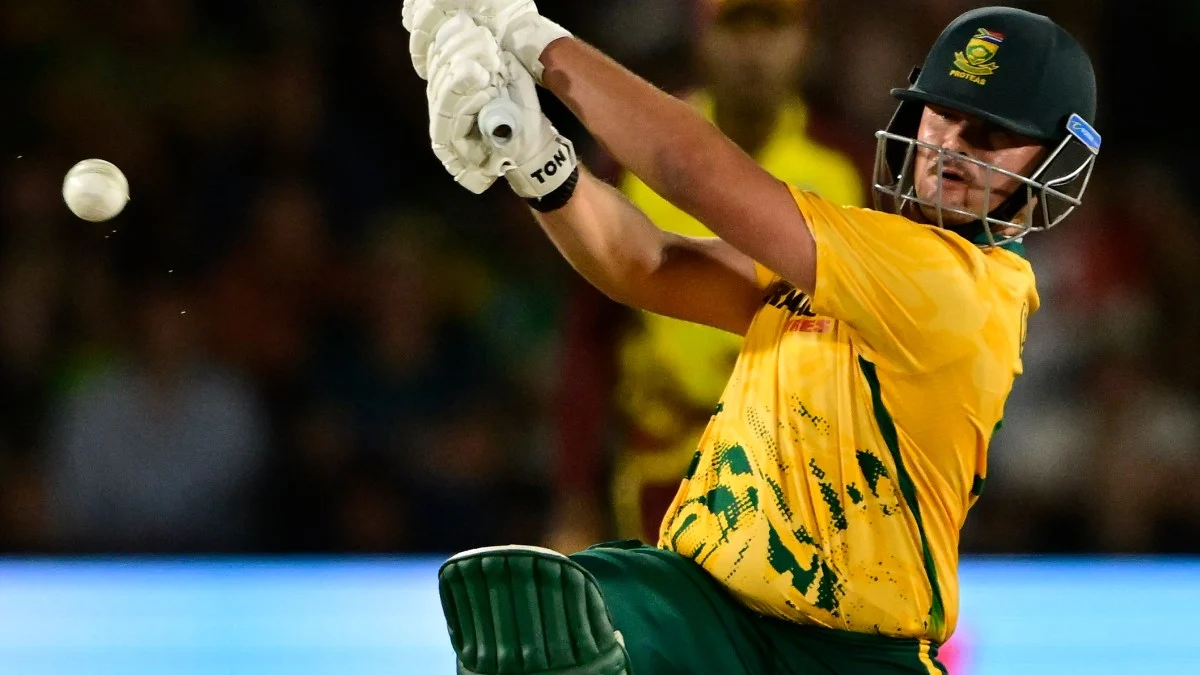
South Africa’s Lhuan-dre Pretorius hit 50 in 24 balls, needed 16 more to reach 100 and took another 18 to hit 150, breaking the T20 cricket record previously held by Chris Gayle.
The knock rewrites the benchmark for the highest individual score in a T20 innings, a format where big totals are increasingly expected but still rare. By clearing the old mark — set by Gayle, long regarded as the most Explosive hitter in short-form cricket — Pretorius moves into a register usually reserved for headline-grabbing, match-defining performances. The speed of the acceleration also matters: reaching 50 off 24 balls, then 100 shortly after, underscores how a single innings can reshape a format’s record book inside a single, high-pressure spell at the crease.
Key Facts
- Pretorius 150: Lhuan-dre Pretorius scored 150 in a T20 innings.
- 50 off 24: He reached 50 in 24 balls.
- Record broken: His score broke Chris Gayle’s previous T20 cricket record.
- 100 came 16 balls after reaching 50.
- 150 came 18 balls after reaching 100.
How did we get here?
T20 cricket has long carried the ambition of measuring a batsman’s ceiling in the shortest, most explosive format, and Chris Gayle’s long-standing mark served as the gold standard for nearly a decade. The Barbados-born opener built his reputation on clearing boundaries at will, and his record total became a reference point for every franchise tournament and international chase. Pretorius’s innings reopens the conversation about what is possible when a batsman combines timing with power, especially in conditions that favour strokeplay. The innings also arrives as T20 leagues multiply globally, putting fresh pressure on players to deliver match-changing knocks within just 20 overs.
Who is affected?
Pretorius’s feat lands squarely in the middle of the discussion around batting benchmarks, where individual records often become shorthand for a player’s standing and a format’s evolving limits. Other record holders now find themselves measured against a new number, and future aspirants will recalibrate their targets around the updated T20 cricket record. The shift also adds weight to debates about how rule tweaks, pitch conditions, and bowling restrictions shape what scores are attainable, since a single extraordinary knock can redefine the ceiling that everyone else aims for.
Why it matters
Records in short-form cricket matter because they crystallise the format’s progress and set new expectations, and Pretorius’s T20 cricket record reopens questions about how high a batting innings can climb. Beyond the statistical milestone, such knocks influence how teams approach powerplays, how fans gauge greatness, and how future talent measures itself against benchmarks. It also reaffirms that even in a heavily analysed sport, a single innings can still produce a moment that rewrites the record books.
What We Know — and What We Don’t
Verified by the source:
- Pretorius scored 150 in a T20 innings.
- He reached 50 in 24 balls.
- The innings broke Chris Gayle’s previous T20 cricket record.
- 100 came 16 balls after 50.
- 150 came 18 balls after 100.
Still unconfirmed:
- The date and venue of the innings.
- Which team or opposition was involved.
- The final match result.
- Details of how the 16 and 18-ball intervals were distributed.
What to watch: Officials and statisticians may confirm or revise the innings details once full scorecard data is published. The T20 cricket record could face further challenges if other top-order batsmen adapt quickly to the new benchmark. Meta description: South Africa’s Lhuan-dre Pretorius broke the T20 cricket record score, hitting 150 after reaching 50 in 24 balls and surpassing Chris Gayle’s mark.