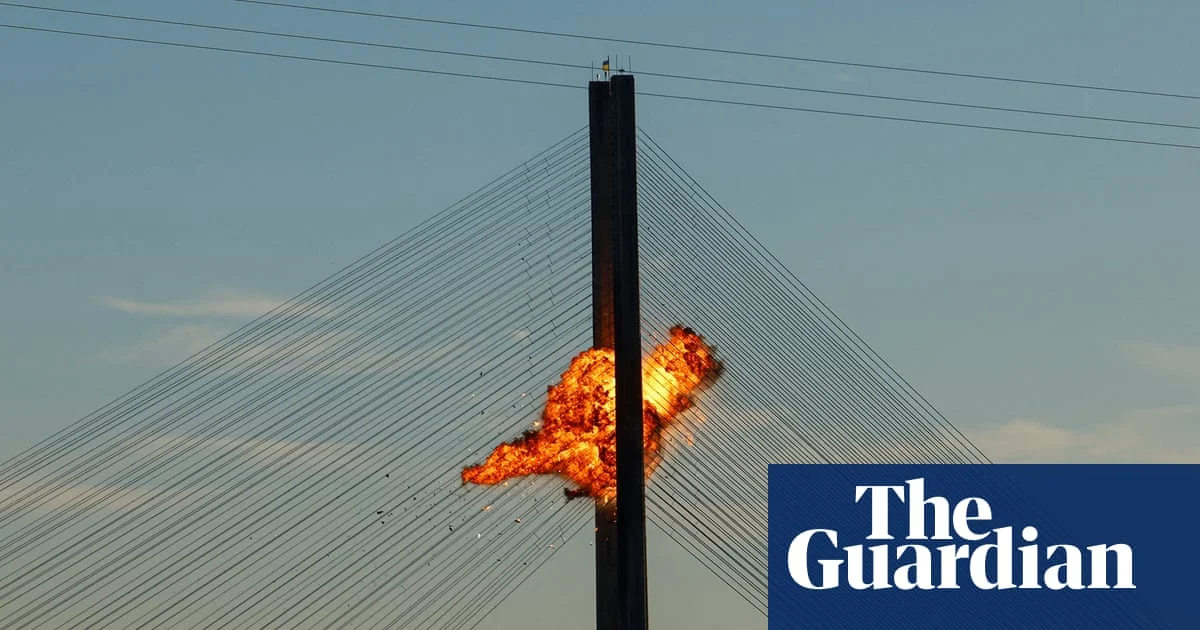
Russian airstrikes struck key bridges connecting Kyiv’s two banks for a second day, crippling traffic and deepening disruptions across the capital.
The attacks, which targeted the Southern Bridge and two other crossings over the Dnipro River, were part of what officials described as an escalating campaign against critical infrastructure. Long traffic jams stretched through the city morning and evening following the strikes.
A senior Ukrainian official linked the intensified attacks to a September directive by Vladimir Putin removing restrictions on Russia’s air campaign. Kyiv’s mayor called the situation “very dramatic” during an emergency security council meeting.
Key Facts
- Russia struck a Kyiv bridge for the second consecutive day.
- Traffic was suspended on three Dnipro River bridges.
- One person was killed and two injured in a separate drone strike in Kyiv.
- Two people were killed and 32 wounded in Kharkiv.
- The Southern Bridge was among targets hit by drone strikes.
What happened to Kyiv’s infrastructure?
Russia has increasingly targeted bridges, power stations, and residential buildings in urban centers such as Kyiv and Kharkiv. These Kyiv bridge strikes reflect a broader push to degrade mobility and morale in the capital. Around 500,000 people cross the Dnipro River daily for work, making the impact of these attacks especially severe for commuters and the economy.
The Southern Bridge, a crucial link, was struck by an evening drone attack, forcing partial closures. Traffic jams built up rapidly, especially during rush hours. Officials reported fires in apartment buildings and widespread power outages in affected areas.
Who is affected by the attacks?
Residents of Kyiv and Kharkiv bear the immediate cost, with disrupted commutes, damaged homes, and loss of life. In the northeastern city of Kharkiv, a guided bomb killed two and wounded dozens more. In Kyiv itself, an apartment fire after a drone strike left one dead and two injured.
Local authorities warn that infrastructure damage could worsen as winter approaches. A joint U.S.-Ukrainian reconstruction fund recently approved its first major minerals deal aimed at rebuilding energy and transport systems, but current attacks continue to strain resources.
What We Know — and What We Don’t
Verified by the source:
- Russia struck Kyiv bridges on consecutive days.
- Officials confirmed traffic suspensions on three bridges.
- Casualties were reported in both Kyiv and Kharkiv.
- Ukrainian officials attributed the escalation to a new Russian order.
Still unconfirmed:
- The exact time or method of each individual strike.
- The names or ranks of responding officials.
- The total number of injured or displaced civilians.
- The long-term strategy behind the targeting.
Why It Matters
The renewed focus on urban infrastructure signals a shift toward targeting daily life and economic activity, not just military positions. As temperatures drop, the strain on energy grids and housing will likely deepen, increasing pressure on humanitarian and reconstruction efforts. The effectiveness of recently announced Western-backed recovery programs remains untested amid ongoing bombardment.
What To Watch
Officials have yet to comment on whether additional bridge closures or air raids are expected. Future updates may clarify whether these strikes are coordinated with broader offensive operations or aimed solely at disrupting civilian life.