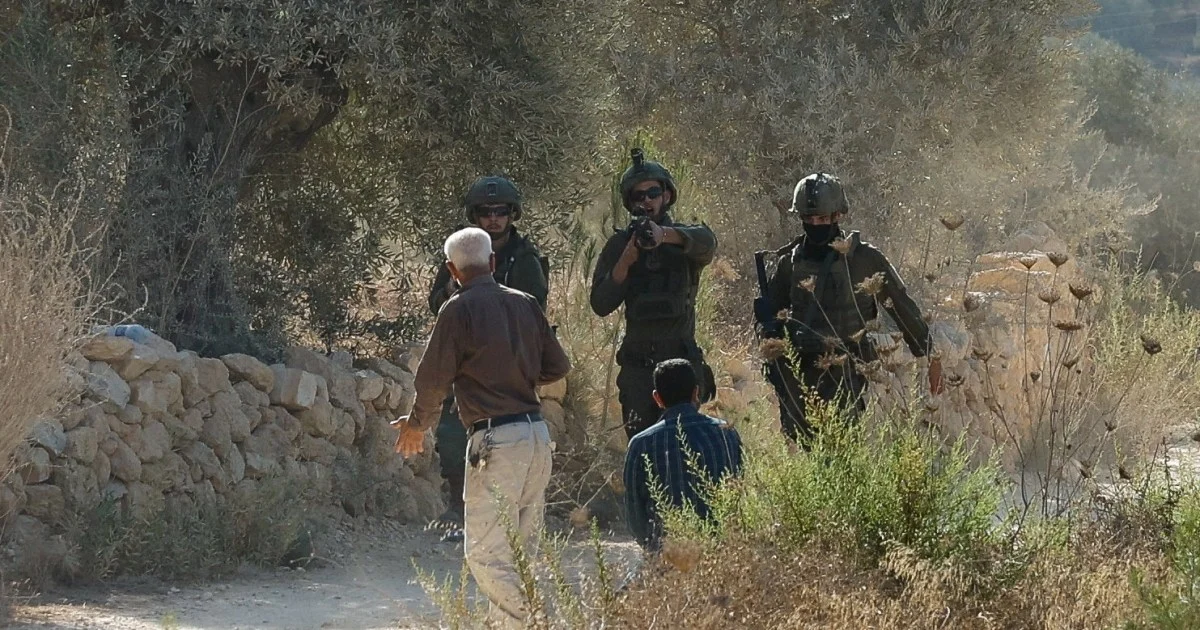
Israeli settlers attacked Palestinian farmers in the West Bank, while Israeli forces detained and assaulted journalists covering the incident, according to Al Jazeera. The clash occurred in the Jabal Qamass area in Beita, south of Nablus. The reported violence adds to long-running tensions in the occupied West Bank, where settler activity and Palestinian farming often intersect. Such incidents frequently draw international attention. The role of Israeli forces in detaining journalists raises separate concerns about press access and accountability in the region. The West Bank remains a focal point of the broader Israeli-Palestinian conflict.
KEY FACTS:
– Israeli settlers attacked Palestinian olive pickers in the West Bank.
– Israeli soldiers detained journalists covering the incident.
– Israeli soldiers assaulted journalists in the Jabal Qamass area.
– The incident occurred in Beita, south of Nablus.
– Al Jazeera reported the attacks on Palestinian farmers and journalists.
THE STORY
What happened during the West Bank incident?
Israeli settlers attacked Palestinian farmers in the West Bank, prompting Israeli forces to detain and assault journalists covering the event. The clash took place in the Jabal Qamass area in Beita, located south of Nablus. Such confrontations between settlers and Palestinian farmers are recurring features of life in the occupied West Bank, where disputes over land, water, and agricultural access often escalate into violence. Reports of journalists being assaulted while documenting the incident highlight additional concerns about press safety and freedom of coverage in the region.
Who is affected by the violence?
Palestinian farmers were directly targeted during the reported settler attack, reflecting ongoing risks faced by rural communities working their land near Israeli settlements. Journalists covering the incident were also affected, having been detained and assaulted by Israeli soldiers. These dual impacts underscore how civilians and media personnel often find themselves caught in volatile confrontations between settlers and Israeli forces. The broader Palestinian population in the West Bank continues to navigate restrictions and security challenges tied to the occupation.
How did this escalate?
The reported attack by Israeli settlers on Palestinian olive pickers follows a familiar pattern of friction in the West Bank, where competition over agricultural land and resources often leads to confrontations. Israeli military presence in the area is intended to maintain order but has been criticized by rights groups for restricting Palestinian movement and, in some cases, using excessive force. The reported assault on journalists adds another layer of complexity, as press freedom advocates regularly raise concerns about obstacles faced by reporters covering demonstrations and clashes in the territory.
WHAT WE KNOW — AND WHAT WE DON‧T
Verified by the source:
– Israeli settlers attacked Palestinian farmers in the West Bank.
– Israeli forces detained journalists covering the incident.
– Israeli forces assaulted journalists in Jabal Qamass, Beita.
– The location is south of Nablus.
Still unconfirmed:
– Exact number of people injured or detained.
– Names of affected farmers or journalists.
– Reason for the soldiers’ response toward journalists.
– Official statements from Israeli or Palestinian authorities.
WHY IT MATTERS
The reported violence reflects deeper, unresolved tensions in the occupied West Bank, where disputes over land and resources shape daily life for Palestinians and Israelis. Incidents involving settlers, farmers, and journalists often draw international scrutiny, as they highlight questions about security, accountability, and press freedom. The West Bank remains a sensitive flashpoint in the broader Israeli-Palestinian conflict.
WHAT TO WATCH
The situation may develop further if additional details emerge about casualties, detentions, or official responses from Israeli or Palestinian authorities. International observers and media organizations are likely to monitor reports regarding press access and accountability.