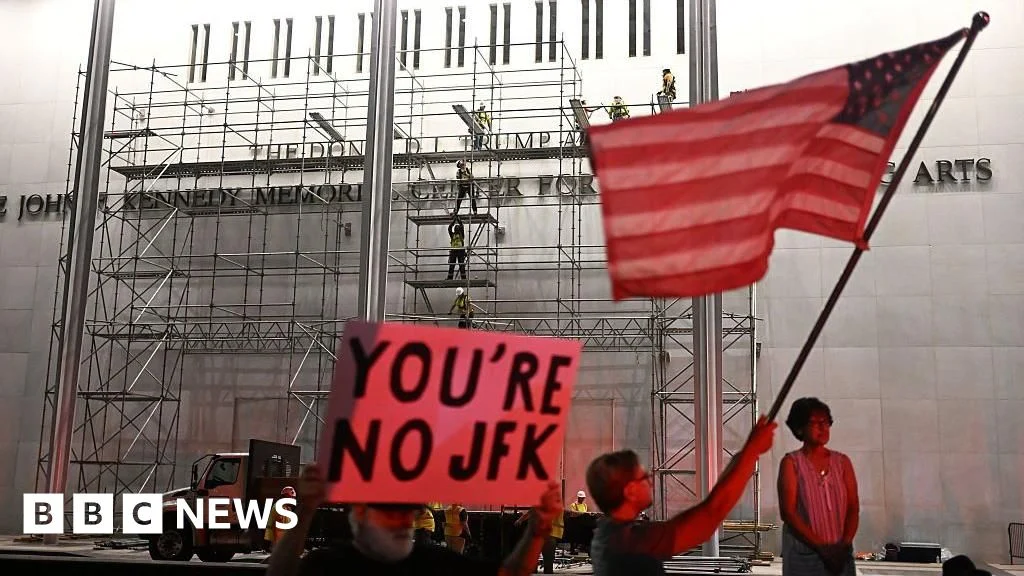
At 9:15 a.m. on Friday, a metal scaffold clanged into place against the marble façade of the John F. Kennedy Center, the first visible sign that the “Trump name removed” order was being carried out.
Legal paperwork signed by a federal judge on Thursday mandated the excision of former President Donald J. Trump’s name from the theater’s “Trump Pavilion” after a lawsuit argued the honor violated the 1964 Civil Rights Act.
How the removal unfolded
Workers erected a 30‑foot steel framework on the west wing while onlookers gathered, phones raised, to watch a piece of Washington history being rewritten. By evening, heavy rain forced a pause; crews resumed Saturday morning, polishing the newly exposed stone with industrial grinders.
The project cost an estimated $1.2 million, funded by a combination of private donations and a modest allocation from the National Endowment for the Arts. The Kennedy Center’s board released a brief statement confirming the work but declined to comment on the political implications.
Why does this matter?
Removing a name from a major cultural institution raises questions about how societies remember contentious figures. For tourists, the change will alter guidebooks and audio tours that once highlighted the Trump Pavilion as a symbol of 1980s philanthropy. For activists, it signals a growing willingness to reassess public honors tied to controversial legacies.
Legal scholars note the ruling could set a precedent for future challenges to monuments, statues, and building names across the United States. “If a court can order a name removed from a federal performing arts venue, the door opens for similar suits against schools, streets, and parks,” one commentator wrote in a legal analysis (see politics).
What happens next?
The Kennedy Center plans to replace the plaque with a neutral designation, simply “Performance Hall C,” by the end of the month. A redesign committee, composed of architects and historians, will decide whether to name the space after another donor or keep it unnamed.
Meanwhile, supporters of the former president have launched a petition demanding the restoration of his name, gathering over 250,000 signatures within 48 hours. The White House has not issued an official comment.
This episode illustrates how cultural venues can become flashpoints in America’s broader culture wars, where art, law, and memory intersect.
What’s the broader impact?
For residents of Washington, D.C., the removal is a reminder that public symbols are not immutable; they can be re‑examined as societal values evolve. For anyone planning a visit to the Kennedy Center, the updated signage will be a visible cue that history is still being debated, not merely archived.
As the scaffolding comes down, the conversation is just beginning. Will other institutions follow suit, or will legal roadblocks halt a wave of renamings? The answer will shape the cultural landscape for years to come.