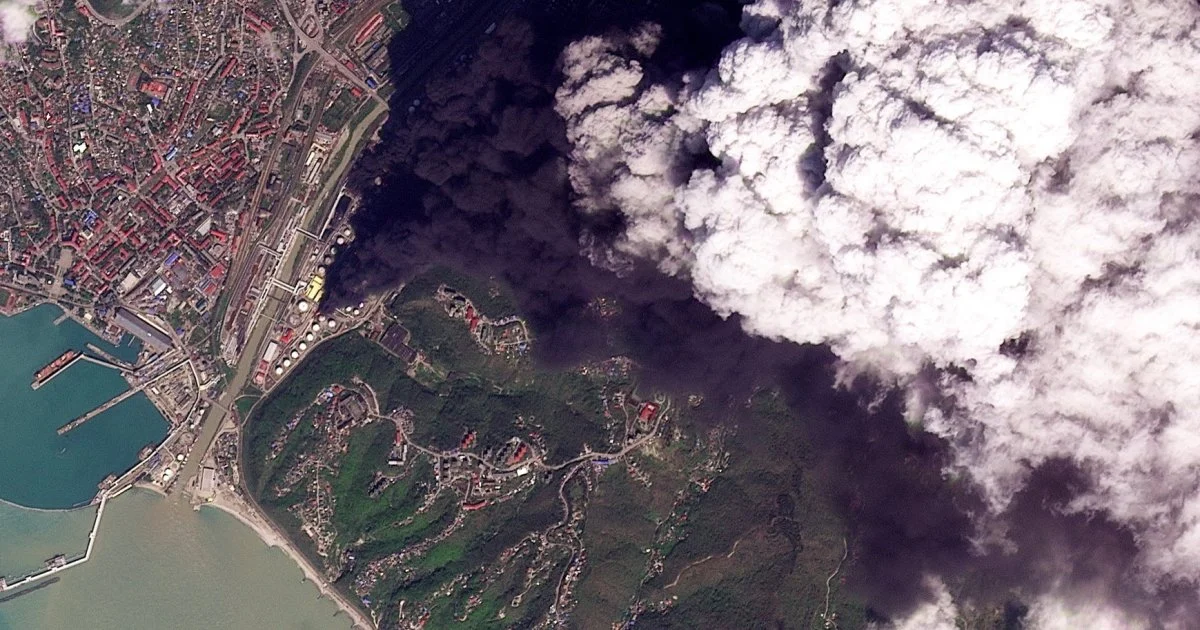
At 02:17 a.m. local time, a thunderous explosion ripped through the Tamanneftegaz terminal on the Sea of Azov, sending a plume of black smoke into the night sky.
Ukraine’s State Security Service (SBU) announced the strike, saying a Ukrainian drone set fire to the fuel storage facility and sparked a blaze that forced workers to evacuate.
Firefighters battled the inferno for hours; satellite images later showed a sizable scar of scorched water and oil slicks spreading toward the coast.
Why does this matter?
The terminal processes over 4 million tons of crude annually, feeding pipelines that power eastern Russian cities and export plants that feed European markets. Disrupting that flow dents Russia’s already strained war chest, which relies on energy exports for roughly 30 % of state revenue.
Analysts estimate that a single week of halted output could shave $1.5 billion off the Kremlin’s budget, tightening the squeeze on a war economy already weakened by sanctions.
What happens next?
In a June 13 briefing, the SBU warned that the Tamanneftegaz attack is “the first of many” aimed at crippling Russian energy infrastructure. The statement did not name the drone model but hinted at “long‑range, low‑observable systems” supplied by Western partners.
Russian military officials, who declined comment, have increased air patrols over the Azov coast, suggesting a rapid escalation in aerial defence.
European energy markets felt the tremor immediately. The European Brent price ticked up 0.8 % the morning after the attack, while natural‑gas futures for the winter contract rose 1.2 %.
For consumers, the ripple could mean higher fuel bills and tighter electricity supplies during the upcoming heating season. Countries already grappling with supply shortages may see further volatility if Ukraine expands its campaign.
Who is affected?
Beyond the Kremlin’s coffers, the strike threatens the livelihood of the terminal’s 1,200 workers, many of whom live in nearby villages that depend on the facility for employment.
Local fishermen reported a sudden drop in fish catches, likely due to the oil slick contaminating spawning grounds.
Western governments tracking the conflict have flagged the operation as a “legitimate military target” under international law, but human‑rights groups caution that civilian casualties could rise if attacks broaden to densely populated ports.
Ukrainian officials say the campaign aims to pressure Russia into negotiating a durable cease‑fire, leveraging energy as a bargaining chip.
As winter looms, the stakes rise for both sides. Will Kyiv intensify its strikes and force Moscow to the negotiating table, or will Russia’s defenses blunt the offensive and keep the energy arteries flowing?
Stay tuned as the battle over Russian energy infrastructure unfolds, shaping the geopolitics of European winter energy security.