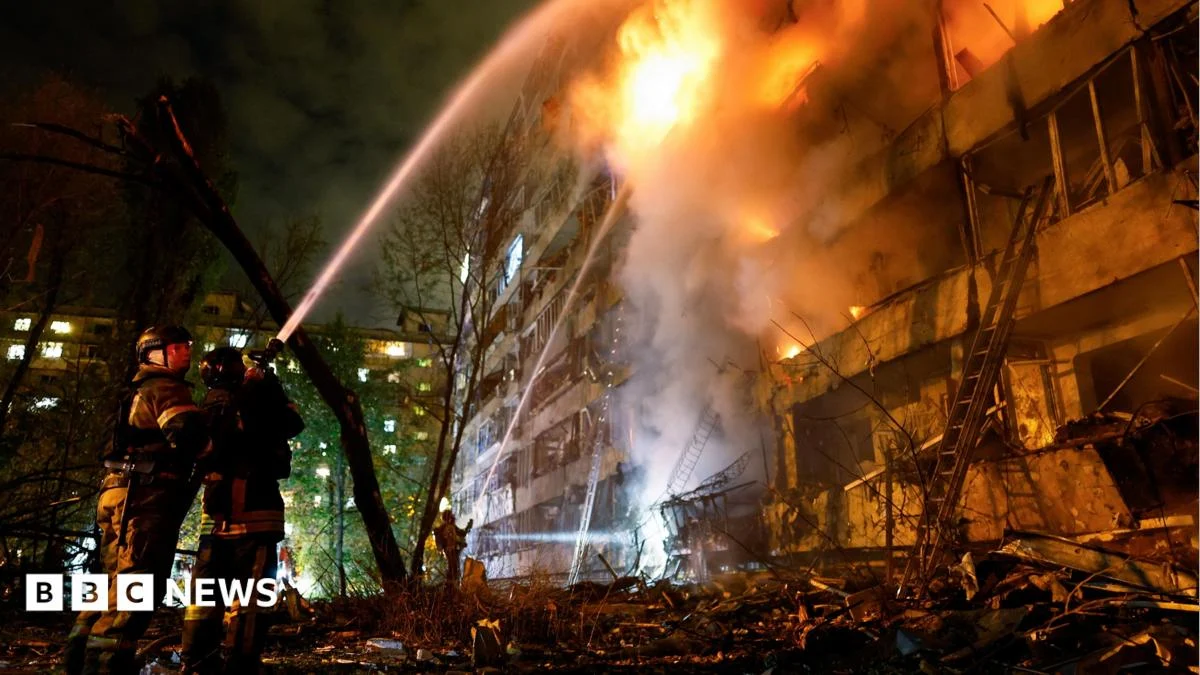
Ukrainian President Volodymyr Zelensky said Russian ballistic missile strikes struck a key power plant in Kyiv, marking another escalation in the ongoing conflict. He also stated that there was no early warning from partners, raising concerns over communication and preparedness.
This incident underscores the persistent threat of aerial attacks on Ukraine’s critical infrastructure, particularly energy facilities that serve civilian populations. The lack of advance notice reportedly left little time for defensive measures or evacuation warnings.
Key Facts
- Russian strikes hit a key power plant in Kyiv, Zelensky says.
- The attacks involved ballistic missiles, according to Zelensky.
- Zelensky said there was no early warning issued by partners.
- The target was described as a key power plant serving the capital.
What Happened in Kyiv?
The Ukrainian president reported that Russian forces launched ballistic missile strikes targeting a major power plant in the capital city. Such infrastructure serves as a critical lifeline for millions of residents relying on electricity for heating, lighting, and essential services. Damage to energy facilities often compounds humanitarian challenges during wartime, especially in winter months.
Ballistic missiles differ from cruise missiles in trajectory and speed, making them harder to intercept depending on air defense capabilities. Zelensky did not specify the scale of damage or casualties resulting from the strike. No further operational details were provided by him at this time.
How Did This Occur Without Warning?
Zelensky criticized the absence of early warning signals from international partners, suggesting a gap in intelligence coordination. Early detection systems typically alert authorities ahead of incoming projectiles, allowing civilians to seek shelter or utilities to shut down vulnerable components preemptively.
A failure in receiving timely alerts could delay emergency responses and increase exposure risks for both personnel and residents near the facility. While specific allies responsible for monitoring are unnamed, the complaint reflects broader frustrations regarding support mechanisms. It remains unclear whether technical faults or procedural lapses caused the missed notifications.
What Happens Next?
Ukraine may issue updated guidance on civilian safety protocols following what officials describe as an avoidable lapse in alert procedures. Domestic officials might review their own air raid readiness plans while appealing for stronger cooperation from foreign governments involved in surveillance operations. Recovery efforts at the plant site would likely begin once security conditions permit access for engineers and repair crews. International donors may also face renewed pressure to replenish energy sector funding amid repeated attacks on grid stability.
What We Know — and What We Don’t
Verified by the source:
- Russian strikes struck a key power plant in Kyiv.
- The weapons used were ballistic missiles.
- Zelensky stated no early warning was received from partners.
- The plant was targeted within the capital city area.
Still unconfirmed:
- Exact extent of physical damage or operational disruption.
- Casualty figures among workers or nearby residents.
- Identity of partner nations involved in warning systems.
- Timeline of events leading up to impact.
- Official responses from Russian or allied military sources.
Why It Matters
Attacks on power generation hubs disrupt daily life and strain public services across urban centers already coping with years of warfare. Repeated targeting of energy infrastructure threatens long-term recovery prospects and increases dependence on humanitarian aid. Delays in issuing early warnings can erode public trust in protective institutions and international alliances meant to safeguard civilian welfare during active combat zones.
What To Watch
Observers will watch for official statements from affected energy companies and updates from Kyiv’s municipal authorities concerning restoration timelines. Further comments from foreign capitals about intelligence sharing practices could shape future diplomatic discussions around joint defense initiatives.