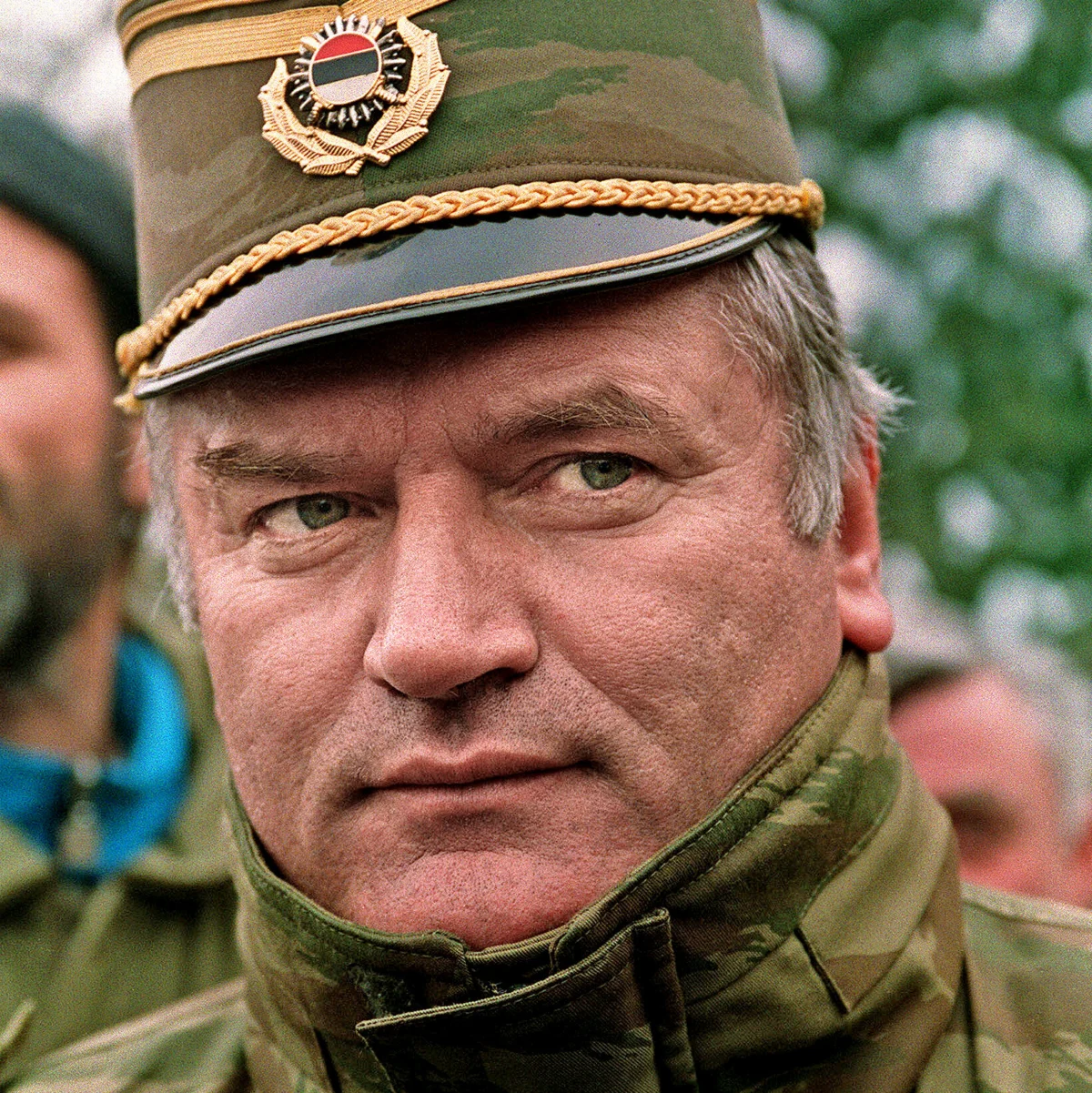
Ratko Mladic, the former Bosnian Serb military leader convicted of genocide for the 1995 Srebrenica massacre, has died at the age of 83. His death closes a grim chapter in the history of the Balkans, where his actions during the 1990s wars left a legacy of violence and division.
Mladic was a central figure in the Balkan conflicts, commanding forces responsible for some of the worst atrocities in Europe since World War II. His conviction by an international tribunal cemented his reputation as one of the most notorious figures of the era.
KEY FACTS
- Ratko Mladic, a general during the Balkan wars of the 1990s, has died at 83.
- He was convicted in the killing of some 8,000 Muslims at Srebrenica.
- The Srebrenica massacre is considered Europe’s deadliest since World War II.
WHO WAS RATKO MLADIC?
Ratko Mladic rose to infamy as the military leader of the Bosnian Serb forces during the Yugoslav Wars. His command was marked by brutal campaigns, including the siege of Sarajevo and the Srebrenica massacre, which targeted Bosnian Muslim civilians. Mladic’s actions were later classified as genocide by international courts, a designation that underscored the scale of the atrocities committed under his orders.
WHAT WAS THE SREBRENICA MASSACRE?
The Srebrenica massacre, carried out in July 1995, remains one of the darkest episodes of the Balkan conflicts. Under Mladic’s command, Bosnian Serb forces overran the UN-designated safe zone of Srebrenica, systematically executing thousands of Muslim men and boys. The event is often cited as a defining moment of the wars, illustrating the failure of international institutions to prevent mass atrocities.
WHAT WE KNOW — AND WHAT WE DON’T
Verified by the source:
- Ratko Mladic has died at the age of 83.
- He was convicted for his role in the Srebrenica massacre, where approximately 8,000 Muslims were killed.
Still unconfirmed:
- The exact circumstances or location of Mladic’s death.
- Whether his death will impact ongoing reconciliation efforts in the Balkans.
WHY IT MATTERS
Mladic’s death brings a symbolic close to one of the most horrific periods in modern European history. His crimes, and the international response to them, reshaped perceptions of justice and accountability in post-conflict societies. The legacy of his actions continues to influence the political and social landscape of the Balkans today.
WHAT TO WATCH
Reactions from survivors and international bodies will likely shape the narrative around Mladic’s death. The long-term impact on Balkan reconciliation remains uncertain.