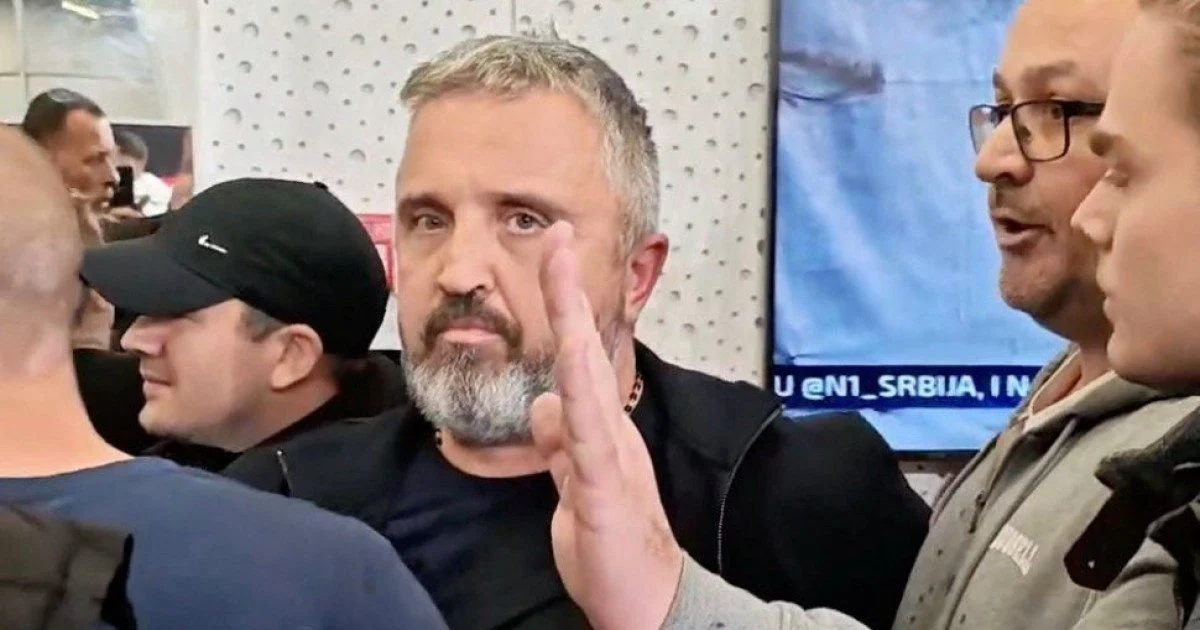
PROTESTERS BROKE INTO a Serbian TV station associated with President Aleksandar Vucic following his defeat at recent polls, an action the president condemned as an attack on free speech and journalism. The event underscores rising political tensions tied to disputed election results and media influence. President Vucic publicly denounced the storming of the broadcaster, framing it as a threat to democratic institutions. The incident highlights ongoing friction between opposition movements and pro-government media in the country. Protesters entered the premises of a television station known for supporting President Vucic, shortly after preliminary poll results showed his party losing ground. The president responded by calling the breach a direct assault on free speech and press freedom. His statement reflects broader concerns about political polarization affecting media operations across Serbia. Opposition groups have long criticized pro-Vucic outlets for biased reporting and amplifying government messaging. This confrontation marks one of the most visible clashes yet between demonstrators and state-aligned media infrastructure.
What happened at the Serbian TV station?
Protesters forced their way into a Serbian TV station aligned with President Vucic after his party lost ground in recent polling data. No specific timing or casualty details were provided in the source material, but the act itself triggered an immediate response from the presidency. President Vucic described the incident as an attack on free speech and the freedom of journalism. His remarks suggest he views such actions as undermining democratic dialogue and press independence. Media freedom advocates often warn that political interference can compromise editorial integrity, especially when outlets become entangled in partisan conflicts. In this case, the targeting of a single broadcaster signals deep divisions within Serbia’s media landscape. Pro-government stations frequently face criticism from opposition factions who accuse them of serving as mouthpieces for ruling elites. Meanwhile, supporters claim these channels provide balanced coverage essential to informed civic participation. The disruption comes amid a wider trend of media politicization across parts of Eastern Europe.
Who is affected by the unrest?
Journalists and staff at the targeted Serbian TV station likely faced heightened risk during the physical incursion. Beyond individuals, public trust in media neutrality may erode further if audiences perceive broadcasters as extensions of political power. Citizens relying on television for news might question whether reporting reflects objective truth or partisan agendas. Additionally, international observers monitoring press freedoms in the region could cite this episode when evaluating democratic health in Serbia. The European Union has previously flagged concerns regarding media pluralism in candidate countries including Belgrade. Should the situation escalate, it may draw renewed scrutiny from diplomatic bodies advocating for transparent journalism practices. Civil society organizations tracking disinformation trends also watch how state-linked outlets shape narratives around contested elections.
How did we get here?
Tensions over election legitimacy have simmered in Serbia for years, particularly since the rise of nationalist rhetoric and centralized media control. Recent polls suggesting setbacks for President Vucic’s party appear to have sparked unrest among factions opposed to his leadership style. Demonstrations have grown more frequent near government buildings and symbolic locations, including media hubs closely tied to the administration. Critics argue that unchecked influence over public broadcasting distorts electoral fairness and marginalizes dissenting voices. As opposition figures demand accountability, clashes with loyalist institutions seem inevitable. Historical precedents show that media disruptions often precede larger waves of civil unrest in post-authoritarian states transitioning toward EU integration standards.
What We Know — and What We Don’t
Verified by the source:
- Protesters stormed a Serbian TV station after Vucic’s loss at polls.
- President Vucic called the incident an attack on free speech and journalism.
- The TV station was identified as being pro-Vucic.
Still unconfirmed:
- Exact date and time of the protest.
- Identity of the specific TV station involved.
- Number of people injured or arrested.
- Official response beyond the president’s statement.
- Whether any individuals were detained during the breach.
Serbia ranks poorly in global indices measuring press freedom, with watchdogs noting increasing control over independent journalism. Incidents like this reinforce fears that democratic norms remain fragile despite formal institutions appearing stable.
Why it matters
This story illustrates how contested elections can spill into attacks on media houses, threatening core pillars of democracy. When broadcasters are viewed as tools of political power, their credibility suffers, and public discourse becomes distorted. Such episodes resonate globally wherever media independence faces mounting pressure from populist leaders. For SourceRated readers, understanding these dynamics matters because free speech underpins factual reporting — the foundation upon which all trustworthy news rests. Explore more developments in geopolitics via our war-geopolitics archive or follow updates in politics.
What to watch
Authorities may soon announce whether charges will be filed against those involved in the break-in. International monitors are expected to release commentary assessing the impact on press freedom in Serbia. Meanwhile, upcoming electoral cycles could see similar flashpoints unless mediation efforts take hold.