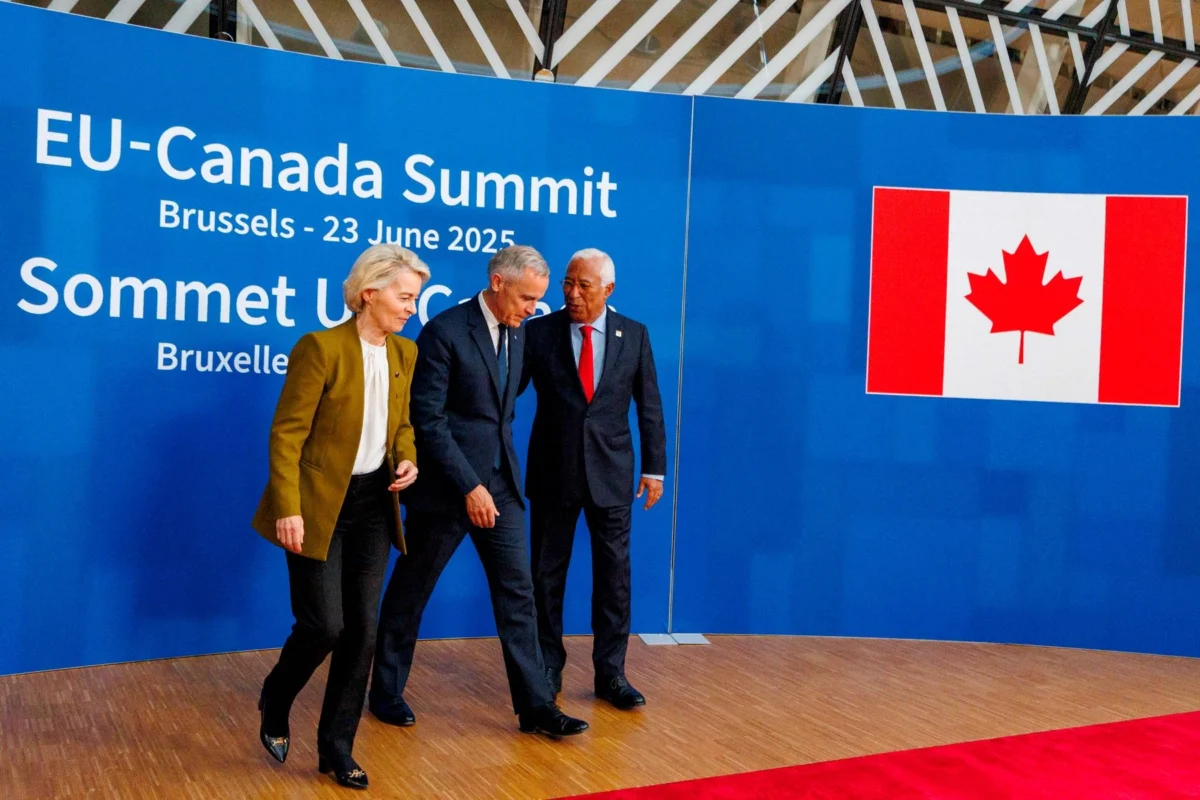
At a Canada-EU summit focused on strengthening transatlantic ties, the European Union has floated the idea of offering Canada associate membership status—an unprecedented move reflecting shared concerns over rising protectionism. This development underscores how shifting global trade dynamics are pushing traditional allies to explore alternative frameworks for cooperation. With Washington’s tariff policies creating new challenges, both Ottawa and Brussels are weighing strategic responses that could reshape North American-European relations.
The summit arrives at a moment when transatlantic solidarity faces fresh tests. While the precise scope and implications of the proposed associate arrangement remain undefined, the signal itself suggests a reevaluation of long-standing bilateral partnerships—one that may extend beyond economics into diplomatic alignment.
KEY FACTS
- Event: Canada-EU summit held to discuss bilateral cooperation.
- Proposal: EU offered Canada a potential path toward associate membership.
- Context: Discussions took place amid ongoing tensions related to U.S. tariffs.
- Significance: The EU described the offer as its first such initiative with a non-European partner.
- Source: Details reported by Al Jazeera – Breaking News, World News and Video from Al Jazeera.
What happens next?
Neither side has disclosed formal timelines or negotiating mandates for advancing an associate membership framework. The proposal appears exploratory in nature, though its announcement marks a notable shift in how European policymakers frame strategic autonomy outside conventional trade pacts.
This initiative aligns with broader efforts by the EU to diversify economic linkages amid uncertainty over transatlantic trade stability. Canada, already bound to Europe through the Comprehensive Economic and Trade Agreement (CETA), might represent a pilot model for future partnerships with like-minded democracies seeking closer integration without full accession.
Trade experts note that associate membership typically involves selective participation in regional governance structures—an option previously extended only among European neighbors. Whether this concept translates directly to a Canada-EU context remains unclear, particularly given constitutional limits within EU law on external association agreements.
How did we get here?
Years of mounting frustration over U.S. trade tactics—from steel-and-aluminum tariffs to disputes under NAFTA-era rules—have prompted Canadian officials to seek alternatives that bolster resilience against unilateral economic pressure. Simultaneously, Brussels has sought new anchors for influence beyond its immediate periphery, especially after repeated divergences with Washington on climate and digital regulation.
The summit builds on prior dialogues aimed at deepening cooperation across sectors including energy transition, artificial intelligence, and defense industrial bases. However, no concrete commitments emerged publicly during the latest round of talks, leaving stakeholders cautious about interpreting symbolic gestures as binding shifts in policy direction.
Observers say any formal steps toward associate status would likely require extensive legal vetting and parliamentary approvals in both jurisdictions—an especially complex process given divergent domestic priorities and institutional rhythms across North America and Europe.
Who is affected?
Businesses operating across Canada-EU supply chains stand to gain clarity—or further uncertainty—depending on how quickly negotiators define the contours of this prospective partnership. Agricultural exporters, tech firms, and green-energy investors have all signaled interest in preferential access arrangements that bypass volatile multilateral forums.
Citizens on both sides may experience indirect effects through evolving labor mobility norms and data-sharing protocols, though specific benefits or obligations were not outlined in initial briefings. Civil society groups have called for transparency throughout what they describe as a potentially transformative but under-explained diplomatic endeavor.
Regional governments, including provinces reliant on offshore trade, are watching for signals about customs cooperation and dispute resolution mechanisms that could stabilize cross-border commerce amid fluctuating U.S. trade postures.
What We Know — and What We Don’t
Verified by the source:
- A Canada-EU summit occurred recently with high-level diplomatic engagement.
- The EU proposed making Canada its first associate member outside Europe.
- Tensions stem specifically from U.S. tariffs impacting bilateral considerations.
Still unconfirmed:
- Exact timing and format of the summit discussions.
- Mechanisms or criteria for implementing associate membership.
- Official responses from Canadian government representatives.
- Legal feasibility under existing EU treaties and CETA provisions.
Why it matters
As global fragmentation accelerates, smaller and mid-sized powers are increasingly turning to flexible alliances to safeguard economic sovereignty. The Canada-EU dialogue reflects a growing trend where democratic nations seek alternatives to unipolar dependencies, particularly when major partners introduce unpredictable trade measures. For readers tracking international affairs, this dynamic signals a recalibration of geopolitical loyalties shaped less by geography and more by shared values and mutual vulnerability to globaleconomic disruption.
What to watch
Future announcements regarding detailed negotiations—or silence from key officials—will clarify whether the associate membership concept moves beyond rhetoric. Meanwhile, upcoming EU trade missions and G7 summits may provide additional context on how Western allies coordinate responses to systemic protectionism. Analysts expect further commentary once official documents or joint statements begin circulating through diplomatic channels.