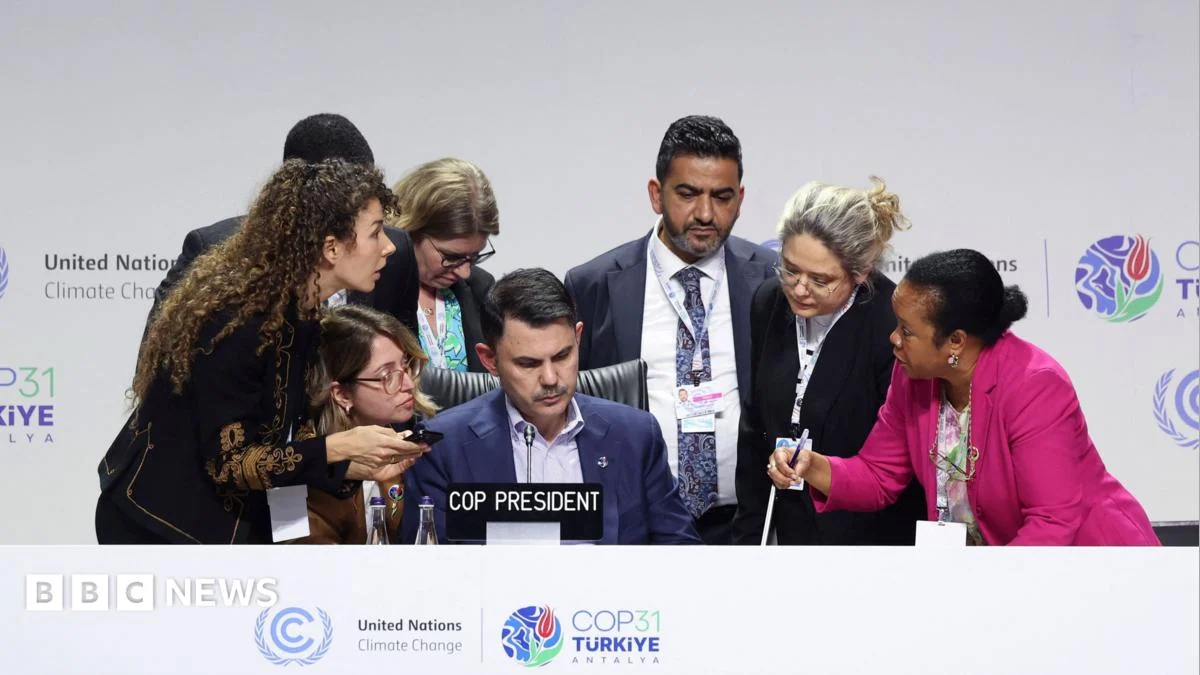
Negotiators at the UN climate summit in Turkey are working from a new draft agreement designed to stop the talks from breaking down entirely. The meeting, known as COP31, has moved into a second day of overtime as countries remain divided on core issues.
The draft text represents an attempt to bridge gaps that have kept delegates from reaching a final accord. With the scheduled close of the summit already passed, the document is being treated as a potential basis for compromise.
Key Facts
- The UN COP31 climate summit is being held in Turkey
- Talks have entered a second day of overtime
- Countries are struggling to reach an agreement
- A new draft deal aims to avert collapse of the negotiations
The Story
How did we get here?
The Conference of the Parties, or COP, is the annual UN gathering where nations negotiate collective action on climate change. COP31 marks the 31st such meeting. These summits routinely run past their official end date as negotiators work through disagreements on finance, emissions targets, and adaptation support. The move to overtime is common, but a second extra day signals particularly deep divisions.
Turkey is hosting this year’s summit. As a country bridging Europe and Asia with its own climate vulnerabilities — including water stress and wildfire risk — its role as host adds regional significance. The draft deal now circulating reflects weeks of preparatory work and days of intensive closed-door sessions.
What happens next?
Delegates will now review the draft text, propose amendments, and seek consensus. In UN climate practice, nothing is agreed until everything is agreed. A single objection can block the final document. The coming hours will test whether the draft contains enough flexibility for all parties to sign on, or whether new fractures emerge.
If consensus is reached, the outcome will be formalized in a decision text that sets the agenda for the next year of climate diplomacy. If not, the summit could end without a substantive agreement — a rare but not unprecedented outcome that would shift pressure to interim negotiations before COP32.
What We Know — and What We Don’t
Verified by the source:
- The UN COP31 meeting is taking place in Turkey
- Negotiations have extended into a second day beyond the scheduled close
- Countries have not yet reached a final agreement
- A new draft deal has been introduced to prevent the talks from collapsing
Still unconfirmed:
- Which specific issues are blocking consensus
- Whether the draft deal has majority support among negotiating blocs
- How many more days the overtime may continue
- Whether any major economies have signaled acceptance or rejection of the draft
- The exact content of the draft agreement
Why It Matters
These annual summits produce the framework that guides global climate action for the coming year. When talks stall, the ripple effects reach national policy planning, corporate investment decisions, and international climate finance flows. A collapsed summit would also damage trust in the multilateral process at a time when scientific assessments show accelerating climate impacts. Read more about related developments in our climate-environment coverage.
What To Watch
Watch for a final plenary session announcement, which would signal whether consensus has been reached. The formal adoption of any decision text — or an acknowledgment that talks ended without one — will be the definitive next milestone.