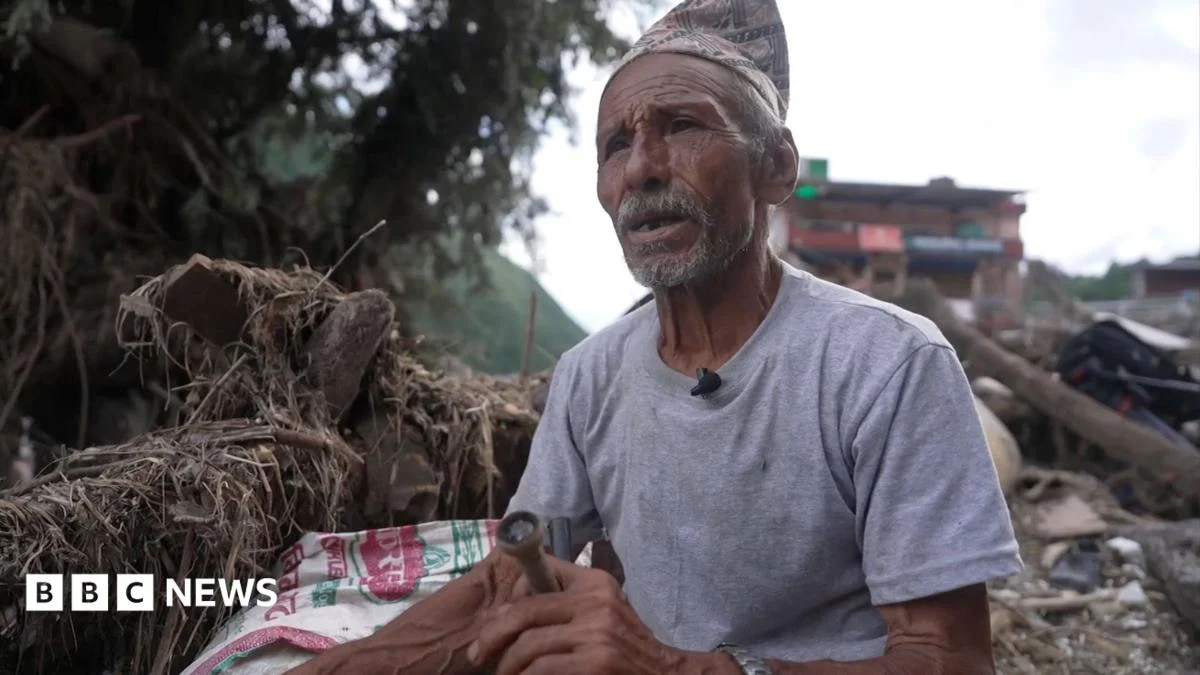
A village in Nepal has been swept away by deadly floods, leaving survivors waiting for the recovery of missing loved ones as rescue efforts continue. BBC South Asia correspondent Azadeh Moshiri spoke to a local resident who is still awaiting the retrieval of his wife’s body. The scale of destruction in the area highlights the devastating impact of the disaster.
KEY FACTS
- A village in Nepal was destroyed by deadly floods.
- Rescue efforts are ongoing to retrieve victims.
- One local resident is still waiting for his wife’s body to be found.
- The BBC’s South Asia correspondent reported on the aftermath.
THE STORY
What happened to the village?
The floods in Nepal have caused severe damage, with one village reportedly reduced to mud and silt. According to the BBC, survivors are grappling with the loss of homes and loved ones, as rescue teams work to recover bodies and assess the destruction.
Who is affected?
Local residents, including one man interviewed by the BBC, are facing unimaginable grief. The man remains in limbo as he awaits the recovery of his wife’s body, underscoring the human toll of the disaster. No official death toll or further details about survivors have been confirmed.
WHAT WE KNOW — AND WHAT WE DON’T
Verified by the source:
- A village in Nepal was destroyed by floods.
- One survivor is waiting for his wife’s body to be recovered.
Still unconfirmed:
- The exact number of casualties or missing persons.
- The cause of the floods or contributing factors.
- Government or international response efforts beyond rescue operations.
WHY IT MATTERS
Floods in South Asia, particularly in Nepal, often devastate vulnerable communities with limited infrastructure. This tragedy highlights the urgent need for disaster preparedness and response in regions prone to extreme weather events. More stories on climate and environmental issues can provide further context on regional risks.
WHAT TO WATCH
Rescue operations continue, but officials have yet to release comprehensive updates on the disaster. Further details may emerge as recovery efforts progress.