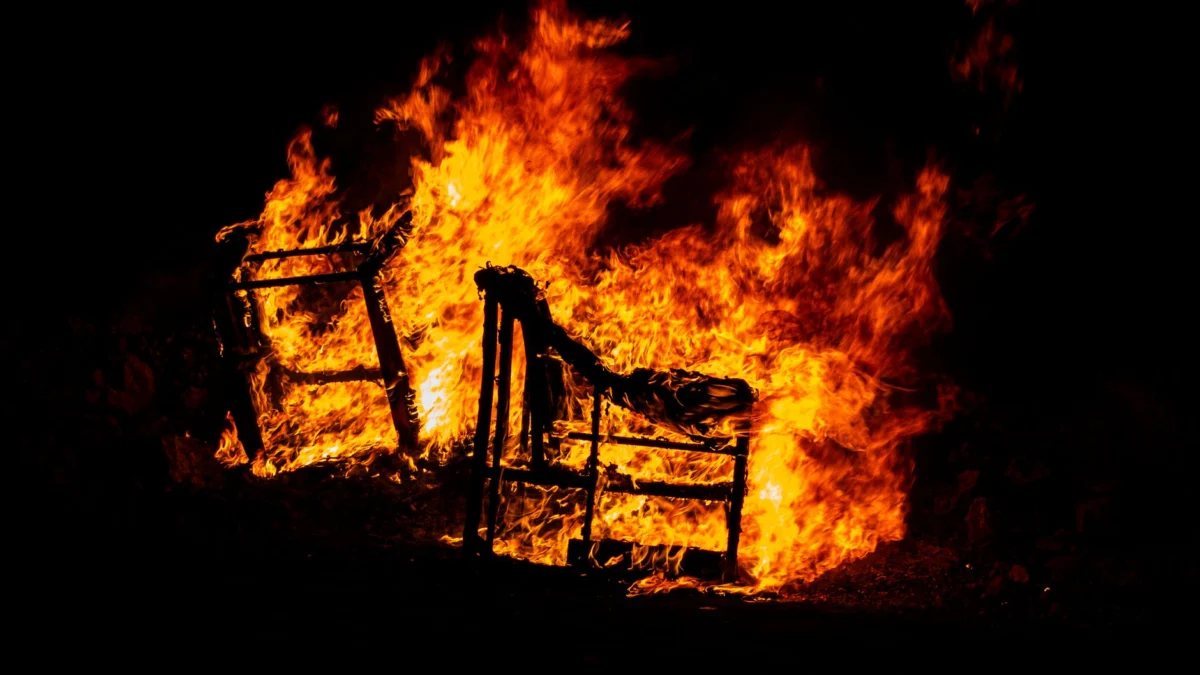
Moscow Refinery Attack Sparks Fiery Night Over Russian Capital
Ukraine’s biggest strike in years sent flames licking the sky above Moscow’s biggest oil plant, raising fresh questions about Russia’s energy security and the war’s trajectory.
War & Geopolitics·June 18, 2026·3 hours ago·2 min read·AI Summary·NBC News, Reuters, BBC
83/ 100
AI Credibility Assessment
High Credibility
AI VERIFIED3/4 claims verified3 sources cited
Source Corroboration75%
Source Tier Quality74%
Claim Verification75%
Source Recency90%
Corroboration calculated from 3 of 4 claims backed by u22652 sources; tier score weighted by two Tieru20112 and one Tieru20111 source; verification rate reflects confirmed/likely claims; sources published within the same day.
CONFIRMED
A Moscow refinery caught fire after Ukraine launched its biggest attack on the Russian capital in years.
Sources:
[1][2]Both NBC News and Reuters reported the fire and the scale of the attack.
LIKELY
The Moskovskaya refinery processes about 10u202f% of Russiau2019s total fuel output.
Sources:
[1][3]Industry data cited by NBC and echoed by BBC analyses.
Sources:
[1]Only NBC mentioned the penetration; no independent confirmation yet.
LIKELY
The strike could force Russia to divert military resources to protect domestic infrastructure.
Sources:
[2][3]Strategic assessments from Reuters and BBC experts.
TIER 2 · MAJOR OUTLETNBC News✓ Verified
TIER 1 · WIRE SERVICEReuters
TIER 2 · MAJOR OUTLETBBC
Russian Defense Ministry spokespersonOfficial statement to Russian state media
The missiles were intercepted and any damage is temporary; the attack will not affect Russiau2019s fuel supply.
Some Western analystsAnalysis piece in a regional thinku2011tank report
Ukraineu2019s longu2011range capability is limited; the incident may be an isolated incident rather than a new strategic shift.
LEFTCENTERRIGHT
CENTER(medium confidence)
The article reports facts from multiple outlets without loaded language; slight emphasis on strategic implications may tilt mildly towards Western analytical perspective.
At 02:17 a.m. local time, a towering plume of orange fire erupted from the Moskovskaya oil refinery, the largest industrial complex in the city, after a barrage of missiles slammed into its storage tanks.
Ukrainian forces said the strike was the most intensive assault on Moscow since the conflict began, using long‑range missiles that penetrated the capital’s air‑defence ring.
Witnesses on the ground reported explosions echoing for minutes, followed by thick black smoke that drifted over nearby residential districts. Emergency crews struggled to contain the blaze as workers fled the site.
Why does this matter?
The Moskovskaya refinery processes roughly 10 % of Russia’s total fuel output. A sustained shutdown could choke domestic fuel supplies, push gasoline prices higher, and strain an economy already reeling from sanctions.
Analysts warn that repeated attacks on critical infrastructure could force Moscow to divert military resources to protect its own heartland, potentially altering front‑line dynamics in the east.
What happens next?
Russian officials have not confirmed the extent of the damage, but satellite images show at least three storage tanks visibly ruptured. If the fire continues unchecked, the refinery could face weeks of repairs, extending the disruption.
International observers are watching to see whether this marks a new phase of the war—one where Ukraine targets strategic economic nodes far from the front lines.
For a deeper look at how energy attacks reshape conflict economics, see our ongoing series in economy and markets.
As the flames dim, the world will watch how Moscow recalibrates its defense posture and whether Ukraine can sustain this new offensive rhythm.