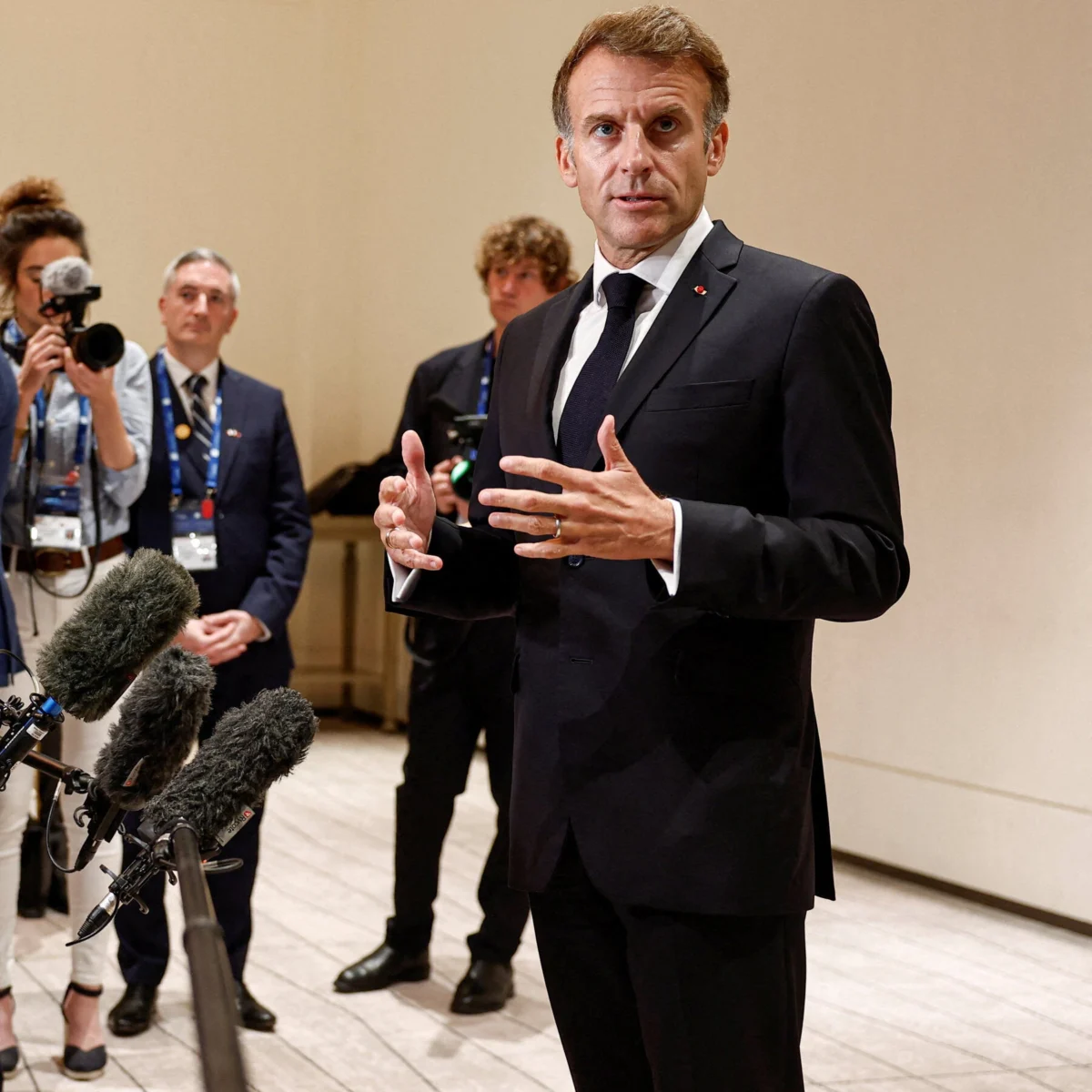
French President Emmanuel Macron accused certain foreign leaders of fabricating claims about unrest in France, suggesting they do so for domestic political advantage. Speaking while abroad, Macron directly criticized those who, he said, distort the reality of events within France to serve their own purposes. His remarks did not spare any specific country or leader, though U.S. President Donald Trump was widely interpreted as a target in media coverage.
The speech came during Macron’s overseas trip, where he defended his nation’s stability against what he described as misleading narratives. He emphasized that such rhetoric undermines diplomatic trust and misrepresents France’s internal conditions. Macron called on global leaders to rely on verified information rather than politicized interpretations of protest movements or civil unrest.
Key Facts
- President Emmanuel Macron criticized unnamed foreign leaders.
- Macron claimed foreign leaders spread false claims about France.
- He suggested these claims were used for political ends.
- Remarks were made during a speech in Qatar.
- Unrest in France was the central topic addressed.
Why Foreign Narratives Matter
When foreign officials comment on domestic turbulence elsewhere, they often shape international opinion without full context. Macron argued that some leaders use images of protests or strikes in France to bolster their own positions at home, portraying Europe as unstable to justify alternative policies. This dynamic can strain diplomatic ties and invite retaliatory statements. By highlighting the distortion, Macron aimed to reframe the narrative around France’s resilience and democratic norms. The broader implication reflects how modern geopolitics increasingly relies on curated or selective reporting to gain leverage. Macron’s stance signals France’s intent to push back against external mischaracterizations, particularly from allies or rivals with competing visions for global leadership.
What Happens Next?
In the wake of Macron’s remarks, reactions from other world leaders remain unclear. No formal responses have yet emerged from the administrations potentially referenced. Domestically, public discourse in France may shift depending on whether citizens perceive the speech as defensive or assertive. If protests continue, Macron’s position could face renewed scrutiny. However, if calm returns, his critique might be seen as preemptive damage control. The international community will likely watch how France balances internal challenges with its global messaging. Future speeches or interviews by Macron could offer further clarity on his strategy for countering foreign narratives.
What We Know — and What We Don’t
Verified by the source:
- Macron spoke publicly about false claims made by foreign leaders.
- His comments occurred during a visit to Qatar.
- He linked these claims to unrest in France.
- Macron stated that such claims served political ends.
Still unconfirmed:
- Whether Donald Trump was specifically named in the speech.
- The exact date or venue of the speech.
- Which foreign leaders Macron was directly criticizing.
- The extent and nature of the unrest referenced.
- Any official response from other governments.
Macron’s speech highlights rising tensions between national sovereignty and international perception in an era of rapid information sharing.
Why It Matters
Public statements by national leaders carry weight in shaping global narratives. When a head of state accuses peers of spreading disinformation, it reflects deeper fractures in diplomatic communication. For readers worldwide, such exchanges influence how countries view each other and form policy decisions. In democratic societies, perception often intersects with reality, especially when media amplifies selective images. Macron’s rebuke serves both a domestic and foreign policy function — reinforcing national unity while challenging external critiques. This moment underscores the ongoing struggle between fact-based dialogue and strategic misinformation on the world stage.
What To Watch
Members of Macron’s administration have not released an official transcript of the speech. Observers will monitor whether he clarifies his remarks in future appearances or issues follow-up statements.