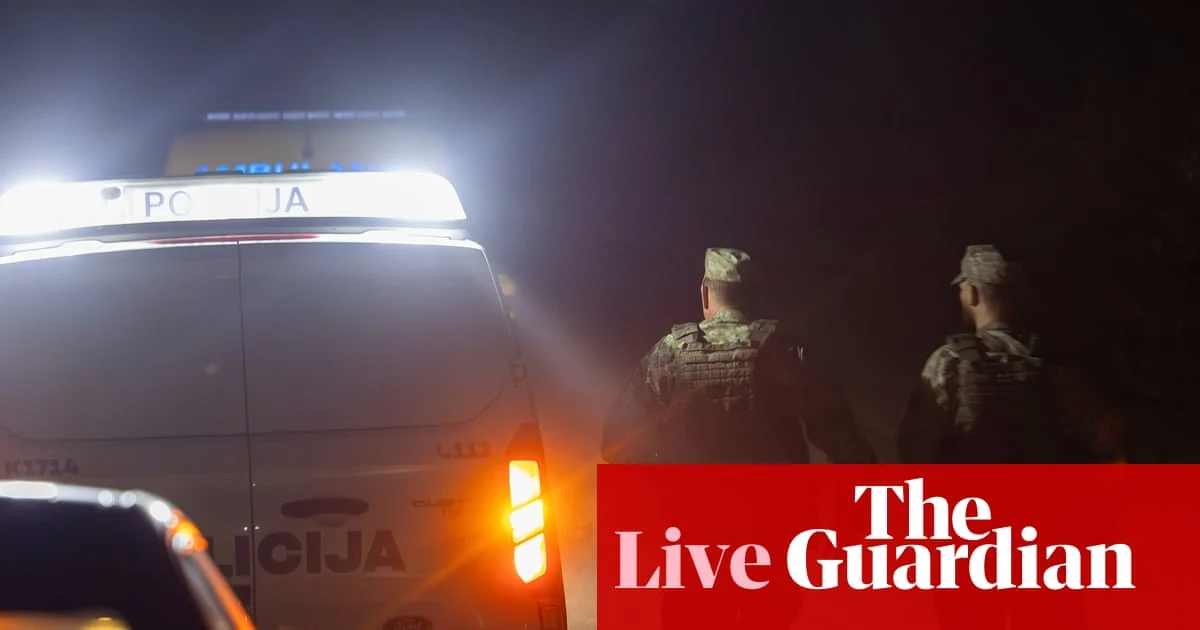
Lithuania briefed European Union allies overnight after a drone was shot down, the foreign ministry confirmed, as security incidents across Europe continue to intensify. The move comes amid heightened alert across the alliance’s eastern flank following separate incidents in Denmark and Poland. Ukraine’s foreign minister expressed full support for Denmark after what Kyiv called unacceptable actions targeting a Danish helicopter.
The drone shoot-down underscores growing concern among NATO members about potential escalation linked to Russia’s ongoing war in Ukraine. Lithuania’s briefings reportedly focus on how to strengthen collective defenses along the alliance’s eastern border. This follows a wave of unexplained security events that officials say warrant close coordination among member states.
Key Facts
- Lithuania briefed EU allies after a drone shoot-down overnight.
- Security incidents are intensifying across Europe, including Denmark and Poland.
- Ukraine’s foreign minister offered full support after the Danish helicopter incident.
- Discussions are ongoing on how to strengthen NATO’s eastern flank.
- Ukraine said joint, decisive action is needed to counter Russian threats to Europe.
What Happened and When
The drone shoot-down occurred overnight, according to statements from Lithuania’s foreign ministry. While the summary does not specify the exact time or location, it confirms that the incident prompted immediate consultations among EU allies. Lithuania’s decision to brief partners reflects standard procedure during heightened security alerts involving NATO airspace.
According to The Guardian, the shoot-down was part of a broader pattern of security incidents across Europe. The report names Denmark and Poland as locations where such incidents have occurred, though further details about the nature or timing of those events were not provided in the available summary.
Who Is Affected
Ukraine’s foreign minister, Andrii Sybiha, publicly declared Kyiv’s full support for Denmark following the helicopter incident. He framed the event as part of Moscow’s attempts to destabilize Europe, calling for joint and decisive action. His statement signals that Ukraine sees these incidents as part of a larger strategic threat environment.
NATO members along the eastern flank, particularly those bordering Russia or active conflict zones, appear to be on higher alert. Lithuania, which shares a border with Belarus and is closely aligned with NATO military planning, has taken a leading role in organizing diplomatic responses among EU allies.
How Did We Get Here
Europe’s security landscape has become increasingly volatile since Russia’s full-scale invasion of Ukraine in 2022. NATO members have reported a rise in unauthorized aerial activity, suspected sabotage, and other hybrid threats. These incidents often occur near critical infrastructure or military installations.
The current wave of incidents, including the drone shoot-down and the Danish helicopter event, has prompted renewed discussions within EU and NATO circles about reinforcing the alliance’s eastern perimeter. Lithuania’s foreign ministry is among those advocating for stronger collective defense measures, though specific policy proposals were not outlined in the summary.
What We Know — and What We Don’t
Verified by the source:
- A drone was shot down and Lithuania briefed EU allies afterward.
- Security incidents are increasing in Europe, including in Denmark and Poland.
- Ukraine expressed support for Denmark after a helicopter incident.
- Negotiations are ongoing about reinforcing NATO’s eastern flank.
Still unconfirmed:
- The exact location and time of the drone shoot-down.
- The identity of the aircraft or drone involved.
- The specific nature of the Danish helicopter incident.
- Details about the ongoing consultations among EU allies.
- Any confirmed link between the incidents and Russian state actors.
Why It Matters
The drone shoot-down and related incidents highlight the expanding reach of hybrid warfare tactics into NATO and EU territory. For citizens and policymakers alike, these events raise questions about the effectiveness of current defense postures and the need for unified European security responses. They also underscore how the war in Ukraine continues to spill over into neighboring regions, affecting alliance cohesion and civilian preparedness.
What To Watch
EU foreign ministers are expected to convene in the coming days to assess collective security protocols. Further official statements from NATO headquarters and member states may clarify whether additional military deployments or intelligence-sharing agreements are being considered. The Guardian first reported on the Lithuanian briefing and ongoing diplomatic coordination.