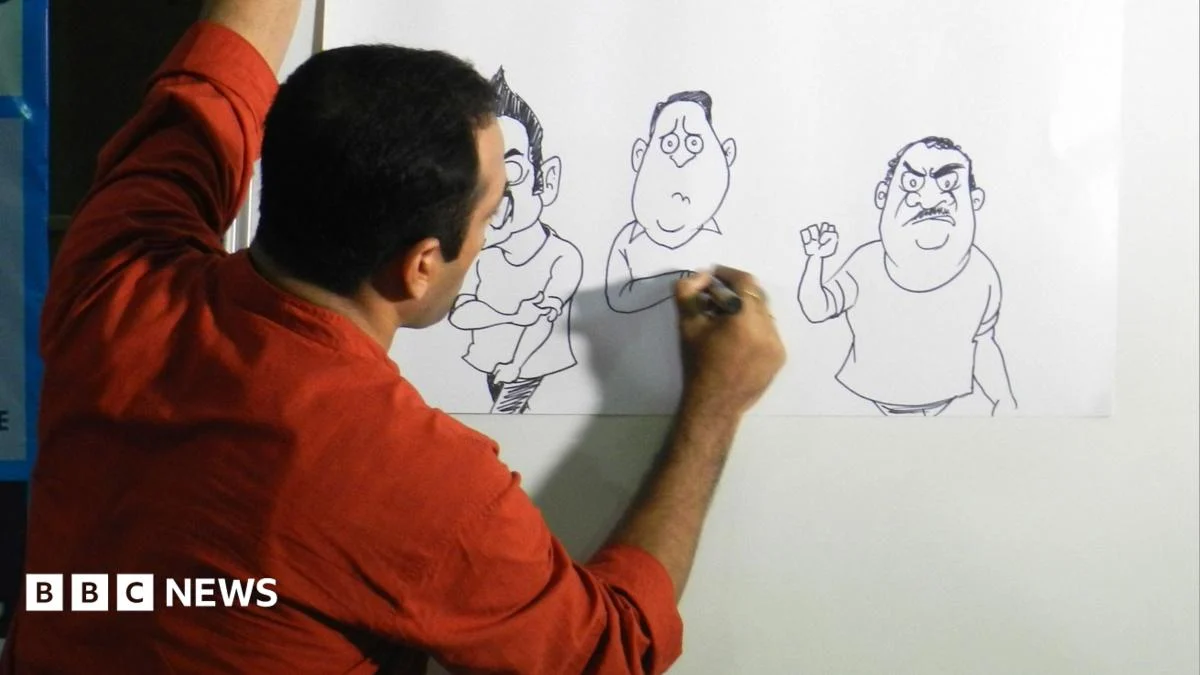
Indian cartoonists say online restrictions are making satire harder, but they aren’t giving up.
The restriction of posts on digital platforms has created new hurdles for satirical content creators, who previously built sizeable audiences online. These creators report growing difficulty in sharing their work as platform policies tighten, though the specific reasons for the restrictions remain unclear.
KEY FACTS
- Indian cartoonists built an audience online, now posts are being restricted.
- Online restrictions are making satire harder.
- Cartoonists are not giving up despite challenges.
WHAT HAPPENS NEXT WITH ONLINE RESTRICTIONS?
The persistence of Indian cartoonists despite online restrictions underscores a broader tension between free expression and platform governance. While the source does not detail the platforms involved, such limitations often stem from content moderation policies aimed at curbing misinformation or hate speech. However, satirical commentary can sometimes be misclassified under such frameworks, inadvertently suppressing legitimate critique.
These online restrictions may have a chilling effect on public discourse, particularly in contexts where satire serves as a vital check on authority. The inability to freely share satirical content could reduce public engagement with political and social issues, narrowing the space for dissenting voices.
WHO IS AFFECTED BY ONLINE RESTRICTIONS?
The primary individuals affected by these online restrictions are Indian cartoonists and the audiences they serve. Cartoonists who once thrived on digital reach now face barriers to publication, limiting their ability to critique societal norms and political developments. Their audiences, in turn, lose access to satirical commentary that often bridges complex topics and public awareness.
Beyond direct stakeholders, the broader Indian public may experience reduced exposure to diverse perspectives and humor-laced commentary. This absence could subtly shape public discourse, especially among younger demographics who rely on social media for news and entertainment. Educational institutions, cultural commentators, and advocacy groups focused on press freedom are also likely monitoring these developments closely.
WHAT WE KNOW — AND WHAT WE DON’T
Verified by the source:
- Online restrictions are affecting Indian cartoonists’ ability to post content.
- Satire has become harder for these creators.
- Despite challenges, Indian cartoonists continue working.
Still unconfirmed:
- Specific platforms implementing the restrictions.
- Reasons cited by platforms for restricting posts.
- Extent or duration of the restrictions.
WHY IT MATTERS
The suppression of satirical expression online touches on fundamental questions about free speech, digital rights, and democratic engagement. When creators face online restrictions, the ripple effects can extend into public dialogue, diminishing accountability and narrowing the range of voices in national conversations. For societies that rely on open critique, ensuring space for satire is essential.
WHAT TO WATCH
Future developments in platform policies and creator responses will clarify whether these online restrictions are temporary or part of a longer trend affecting Indian satirists.