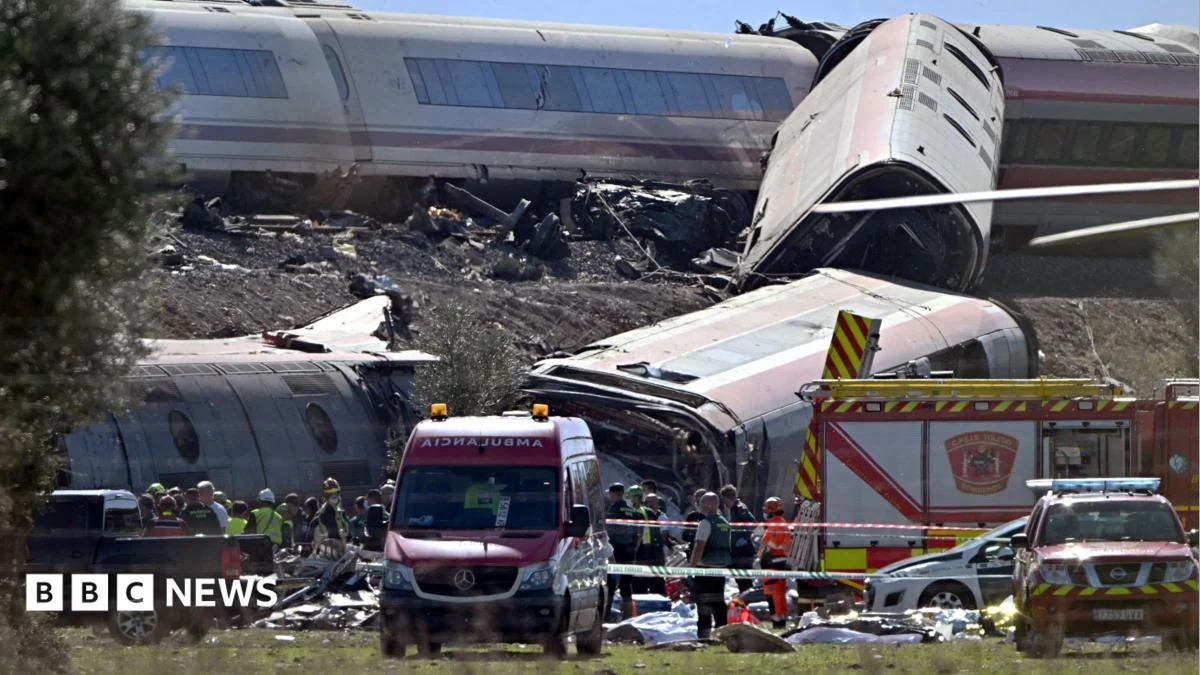
A high-speed train crash in Spain has killed at least 68 people after a moving train collided with another train that was stopped further up the track, according to the country’s transport minister, who described the cause as ‘inexplicable.’ The incident underscores ongoing concerns over rail safety across Europe, where high-speed networks carry millions of passengers annually.
The crash involved two trains on the same line, with one reportedly traveling at high speed when it struck the stationary train. Emergency services responded quickly to the scene, though details about the exact location, time, and full impact remain limited in early reporting.
Key Facts
- At least 68 people were killed in a train crash in Spain.
- The crash involved a moving train colliding with a stopped train.
- Spain’s transport minister called the cause ‘inexplicable.’
- The collision occurred between two trains on a high-speed rail line.
Who Is Affected?
The immediate impact falls on the families and loved ones of those killed, many of whom are now facing the difficult task of identifying victims and seeking answers. Beyond individuals, the disaster affects national transportation systems in Spain and may raise questions for European countries relying on aging or stressed rail infrastructure. Investigators will also face pressure to determine exactly how such a breach occurred on a supposedly controlled high-speed line. No formal death toll or detailed passenger manifest has yet been released by authorities.
How Did This Happen?
As reported, the crash involved a moving train and another that was stopped further up the track. Spain’s transport minister described the cause as ‘inexplicable,’ suggesting that standard safety protocols may not explain why the moving train failed to stop or slow before impact. High-speed rail systems typically rely on automated signaling and collision avoidance mechanisms. That the trains ended up in a direct collision raises questions about possible communication failures, track obstructions, or breakdowns in operational procedure. Investigations are likely to focus on these areas.
What Happens Next?
Authorities will almost certainly launch a full investigation into the incident, examining everything from signaling systems to driver actions. International rail safety agencies, including the European Union’s transport arm, may offer technical assistance depending on the scope of the inquiry. Meanwhile, Spain’s transport ministry could implement temporary or long-term safety reviews across its network. Public reactions are also expected, particularly from advocacy groups pushing for stricter rail oversight. Until findings emerge, officials say the public should await official updates rather than rely on speculative accounts.
What We Know — and What We Don’t
Verified by the source:
- At least 68 people died in the train crash.
- The crash involved a moving train and a stopped train.
- The transport minister described the cause as ‘inexplicable.’
Still unconfirmed:
- The exact date, time, and location of the crash.
- The names or roles of involved officials beyond the transport minister.
- The total number of injured individuals.
- Specific technical cause of the collision.
- Which rail operator was involved.
Why It Matters
Train crashes like this highlight vulnerabilities in high-speed rail networks, which are often promoted as safe and environmentally friendly alternatives to air travel. For Spain and other European nations investing heavily in rail infrastructure, such incidents raise questions about whether safety systems evolve fast enough to match technological growth. International travelers and commuters alike may feel renewed concern about rail travel reliability. As climate-conscious policies expand rail use globally, ensuring foolproof safety measures becomes more urgent. This tragedy reminds us how critical transparency and swift accountability are in transportation governance.
What To Watch
In coming days, investigators are expected to release preliminary findings about the cause. The public and international observers will be watching for official statements from Spanish authorities and any calls for system-wide safety audits.