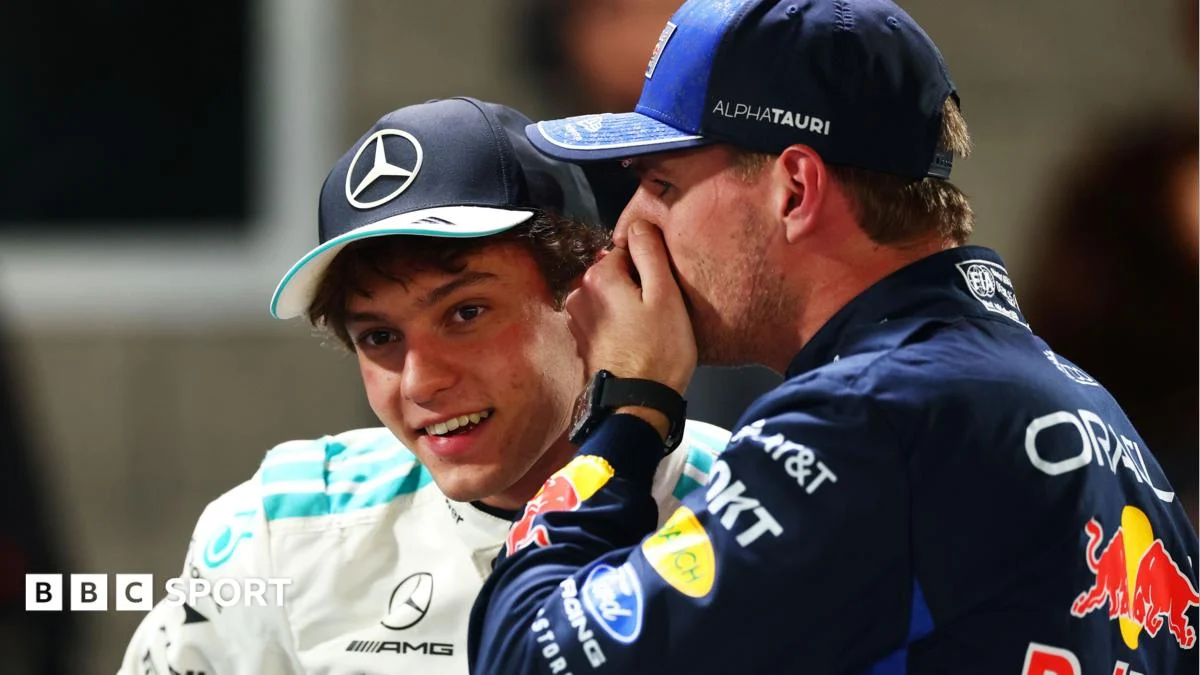
Mercedes driver Kimi Antonelli posted the fastest lap in qualifying for the Las Vegas Grand Prix, yet a grid penalty will drop him behind Red Bull’s Max Verstappen, who inherits pole position for Sunday’s race. The outcome means the driver who topped the timesheets will not start from the front row when the lights go out.
Qualifying determines the starting order for a Formula 1 race, with the fastest driver over a single lap earning pole position. Penalties can be applied for various infractions — such as exceeding component limits or impeding other cars — and are served by dropping the affected driver a set number of places on the grid. In this case, the penalty applied to Antonelli is sufficient to promote Verstappen to the top spot.
Key Facts
- Kimi Antonelli (Mercedes) set the fastest qualifying time for the Las Vegas Grand Prix
- A grid penalty demotes Antonelli from pole position
- Max Verstappen (Red Bull) will start the race from pole
- The session was qualifying for the Las Vegas Grand Prix
How the Grid Penalty Changes the Starting Order
In Formula 1, the driver who sets the absolute fastest lap in the final qualifying segment (Q3) normally claims pole position and the advantage of starting first on race day. A grid penalty overrides that sporting outcome by moving the penalised driver back a predetermined number of places. Every driver behind the penalised competitor moves up one spot for each place the penalty covers.
Because Antonelli’s penalty is large enough to drop him behind Verstappen, the Red Bull driver — who qualified second — is elevated to pole. The rest of the grid shifts accordingly. This mechanism ensures that technical or sporting breaches carry a tangible competitive cost without excluding the driver from the race entirely.
What Happens Next for the Front Row?
Verstappen now starts from the clean side of the track with no cars ahead, giving him the optimal chance to control the opening laps. Antonelli will start further back depending on the exact size of the penalty, which the source does not specify. His race strategy will likely focus on recovering positions early, while Mercedes may adjust tyre choices or pit-stop timing to aid his progress through the field.
For Red Bull, the inherited pole is a valuable opportunity. Verstappen has converted front-row starts into victories at Las Vegas before, and track position is critical on a street circuit where overtaking is difficult. The team will aim to maximise the advantage through race pace and strategy execution.
What We Know — and What We Don’t
Verified by the source:
- Kimi Antonelli (Mercedes) was fastest in qualifying
- A grid penalty applies to Antonelli
- Max Verstappen (Red Bull) receives pole position as a result
- The event is the Las Vegas Grand Prix
Still unconfirmed:
- The specific reason for the grid penalty
- The exact number of places Antonelli will drop
- Antonelli’s new starting position
- Verstappen’s qualifying time or gap to Antonelli
- Whether any other drivers received penalties
- The date of the qualifying session or race
Why It Matters
A grid penalty altering the front row reshapes the championship narrative instantly. Verstappen gains a strategic edge in a title fight where every point matters, while Mercedes must overcome a self-inflicted setback. For fans, it turns a straightforward qualifying result into a compelling race-day storyline: can Antonelli charge through the field, or will Verstappen convert the gift into a win?
What to Watch
The race start will reveal how effectively Verstappen exploits the clean air ahead, while Antonelli’s opening-lap progress will indicate whether Mercedes’ race pace can overcome the qualifying penalty.