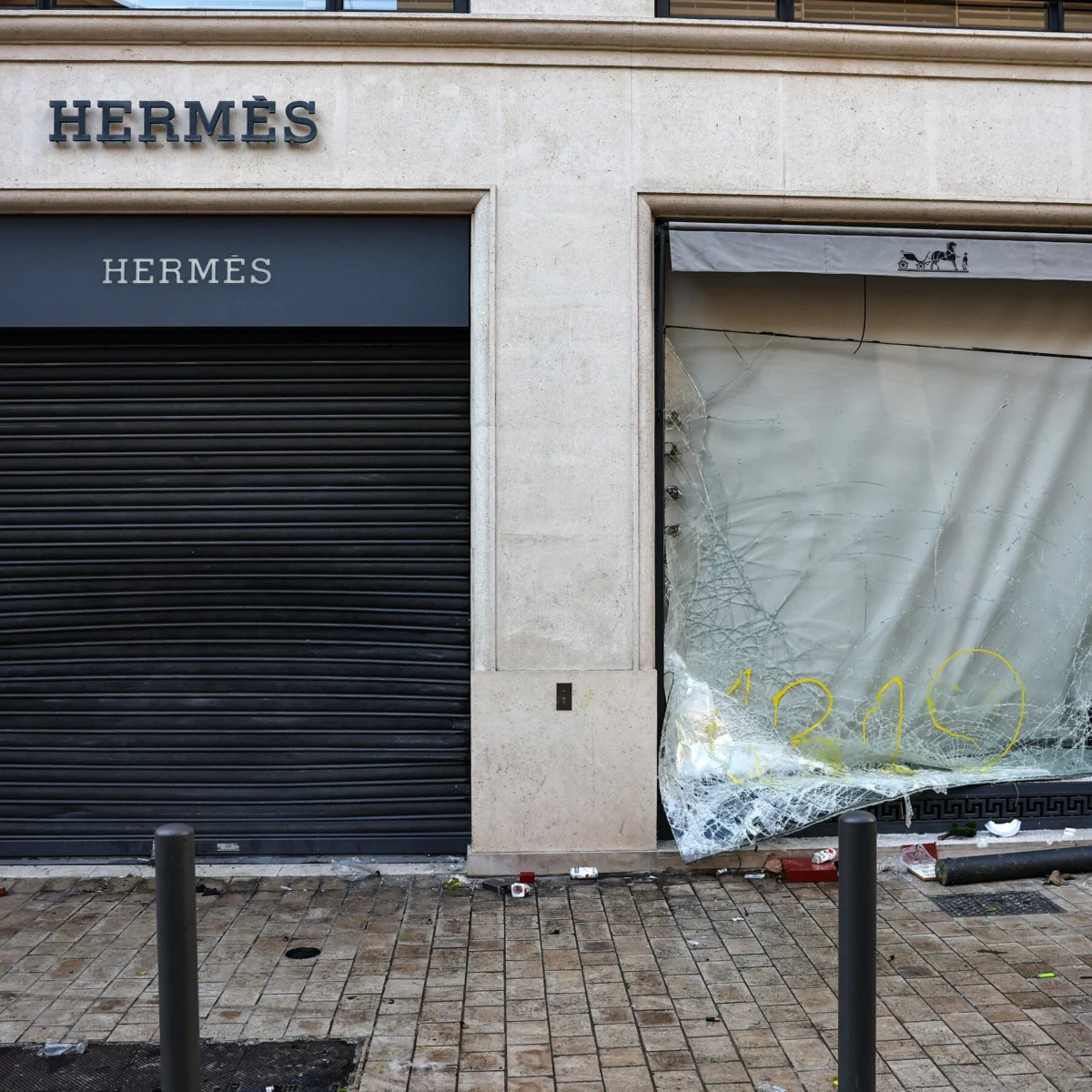
Looting during France riots exposed public rage aimed at luxury brands such as Dior, Celine, and Hermès, puncturing the glossy facade these companies usually project.
The unrest laid bare a vulnerability in luxury retail, where high-end stores became symbols of broader economic and social tensions. According to NYT > Business, the incidents underscore how quickly prestige brands can become targets when civil disorder erupts.
KEY FACTS
- Looting targeted luxury stores including Dior, Celine, and Hermès during France riots.
- The violence exposed a crack in the glossy facade of luxury brands.
- Rage was specifically aimed at luxury firms like Dior and Hermès.
- The events were reported by NYT > Business in the economy-markets category.
THE STORY
What happens next?
The aftermath of the France riots leaves luxury brands facing reputational risk and physical damage. Stores linked to Dior, Hermès, and Celine were looted, turning symbols of wealth into flashpoints of public anger. While the exact scale of losses remains unconfirmed, the incidents highlight how quickly prestige can turn to liability during civil unrest.
Luxury firms typically insulate themselves from such volatility through premium positioning and global customer bases. Yet the France riots showed that economic inequality and social frustration can swiftly destabilize that insulation. The looting did not appear to be pre-planned, suggesting opportunistic targeting rather than coordinated protest.
As authorities respond and investigations unfold, the focus may shift to whether these brands face long-term consumer backlash. The question now is whether the damage is reputational, financial, or both — and whether France riots will prompt luxury retailers to adjust security and public messaging strategies.
Who is affected?
Beyond the targeted luxury brands, the France riots affected local communities and businesses caught in the unrest. Retailers in major cities were disrupted, and the looting of high-end stores added another layer of economic disruption to already strained neighborhoods. Ordinary consumers and employees were also impacted by closures and heightened police presence.
The incident also reflects broader tensions around income inequality and access. Luxury brands often symbolize wealth disparities, making them vulnerable during periods of social upheaval. For investors tracking the economy-markets segment, such events can signal risks to retail stocks and consumer confidence.
What remains unclear is whether this marks a sustained trend or an isolated flare-up. Monitoring future protests and their targets will determine whether France riots represent a pattern or a passing crisis for luxury retail.
How did we get here?
The roots of the France riots trace back to long-simmering social and economic grievances. While specific triggers were not detailed in the source, longstanding issues like unemployment, housing pressure, and inequality have periodically fueled unrest across French cities. Luxury districts, with their visible opulence, often become focal points during such moments.
In previous episodes, similar tensions have led to localized protests and property damage. The looting of Dior, Hermès, and Celine stores fits within this history, where affluent commercial zones sometimes become symbols of exclusion. The luxury sector’s global reach does not insulate it from domestic instability.
The role of media coverage in amplifying the narrative cannot be ignored. NYT > Business framed the events as exposing cracks in the luxury brand image, reinforcing perceptions of fragility behind polished facades. Whether this framing sticks will depend on how brands respond and how communities rebuild.
WHAT WE KNOW — AND WHAT WE DON’T
Verified by the source:
- Luxury stores including Dior, Celine, and Hermès were looted during France riots.
- The events were reported by NYT > Business under economy-markets.
- The incidents revealed anger directed at luxury brands.
- The looting exposed a crack in the luxury industry’s public image.
Still unconfirmed:
- No specific dates, locations, or casualty figures have been verified.
- The exact scale of financial damage remains unconfirmed.
- No official statements from luxury brands or government sources have been provided.
- The broader cause or organizing force behind the riots is not detailed.
WHY IT MATTERS
The France riots matter because they illustrate how quickly symbols of prestige can become targets of public discontent. For economy-markets observers, the incident raises questions about how brands manage risk during social unrest and whether consumer sentiment can shift rapidly. It also underscores how luxury retail, often seen as insulated, remains exposed to domestic volatility.
WHAT TO WATCH
Authorities have yet to comment on broader implications, and luxury brands have not issued public responses. Future protests or economic data on retail impact will clarify whether this marks a lasting concern for the sector. For ongoing updates, follow the [economy-markets](https://www.sourcerated.com/category/economy-markets) archive.