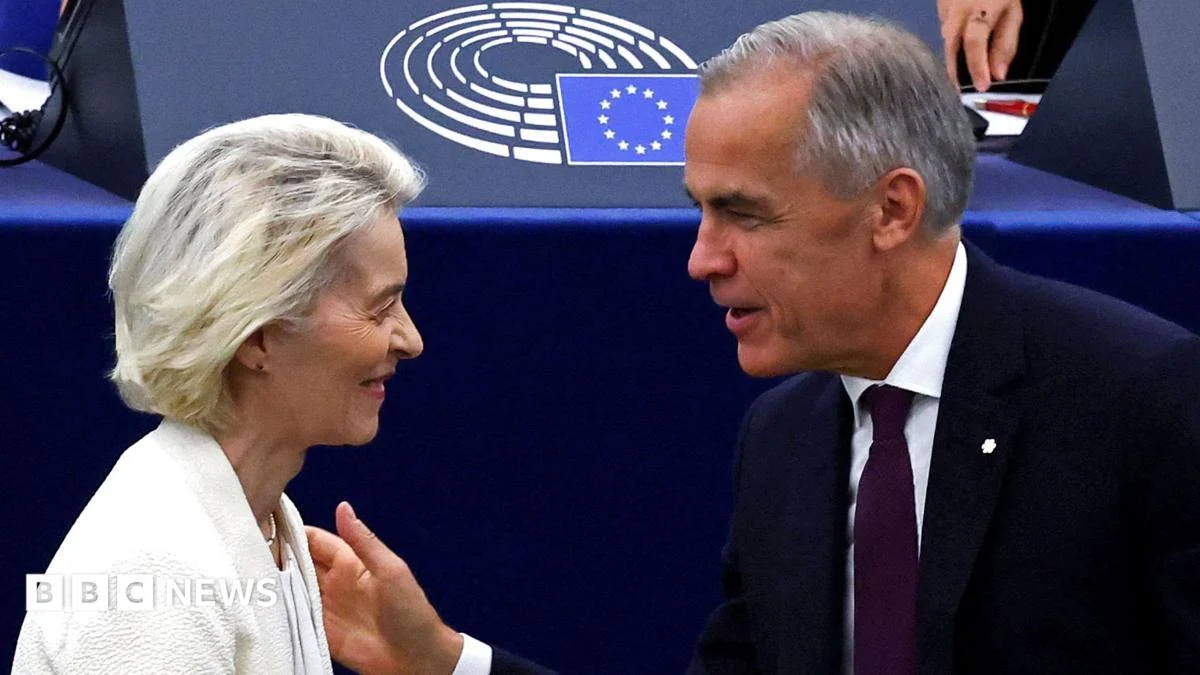
The head of the European Union backed a proposal for Canada to become an associate member of the bloc, a move that drew swift criticism from U.S. President Donald Trump, who threatened to cut trade ties with the EU in response.
The proposal, reported by BBC News, signals growing momentum behind deeper economic integration between the EU and Canada. Trump, known for his contentious relationship with Canadian leadership, responded with immediate trade threats.
KEY FACTS
- Canada proposed as associate member of the EU
- Trump threatened to cut trade with the EU
- Proposal supported by EU chief
- Trump has clashed with Canada’s PM
What Does Associate Membership Mean?
Associate membership typically allows non-EU countries to participate in certain EU programs and agreements without full voting rights. This could include access to parts of the single market, participation in research initiatives, or cooperation on trade standards. For Canada, such an arrangement would formalize a relationship already strengthened by the Comprehensive Economic and Trade Agreement (CETA), which was signed in 2016.
While CETA focused primarily on reducing tariffs and boosting trade, associate membership would extend institutional cooperation beyond commerce. This broader framework might encompass climate policy, digital governance, and security coordination. The specifics of the proposal remain unclear, but it reflects Europe’s interest in deepening ties with key partners amid shifting global dynamics.
Why Did Trump Respond With Trade Threats?
President Trump’s reaction underscores ongoing tensions between the U.S. and Canada. Historical disputes include trade imbalances, energy policies, and border security. By threatening to cut trade with the EU, Trump may be attempting to influence the negotiations or signal displeasure with any perceived preferential treatment toward Canada.
This approach aligns with Trump’s broader strategy of using economic leverage to shape international alliances. His administration previously imposed steel and aluminum tariffs on Canada, citing national security concerns. Critics argue such tactics strain diplomatic relations and complicate multilateral cooperation, particularly within Western democracies facing shared challenges.
Who Is Affected by This Development?
Beyond Canada and the EU, this development impacts businesses engaged in transatlantic trade. Companies relying on cross-border supply chains could see new opportunities or disruptions depending on how the associate membership evolves. Farmers, manufacturers, and tech firms are among those watching closely for shifts in regulatory alignment or market access.
Additionally, policymakers in both North America and Europe must navigate domestic political pressures. In Canada, public opinion remains divided over economic integration versus sovereignty. Meanwhile, EU members will need consensus to move forward, adding layers of complexity to already delicate negotiations.
What We Know — and What We Don’t
Verified by the source:
- EU chief supports Canada associate member plan
- Trump threatened to cut EU trade
- Trump has clashed with Canada’s prime minister
Still unconfirmed:
- Details of the associate membership framework
- Timeline for formal discussions or implementation
- Names of EU officials involved in the proposal
Why It Matters
This potential shift in transatlantic relations occurs during a period of global realignment. With rising nationalism and protectionism, closer EU-Canada ties represent one path toward strengthening democratic alliances. At the same time, U.S. opposition introduces uncertainty into longstanding partnerships, highlighting the fragility of multilateral trust in today’s political climate.
What To Watch
Moving forward, stakeholders should monitor whether EU institutions formally adopt the associate membership concept and how the Trump administration follows through on its trade threats. Officials have yet to provide detailed responses, leaving room for rapid developments.