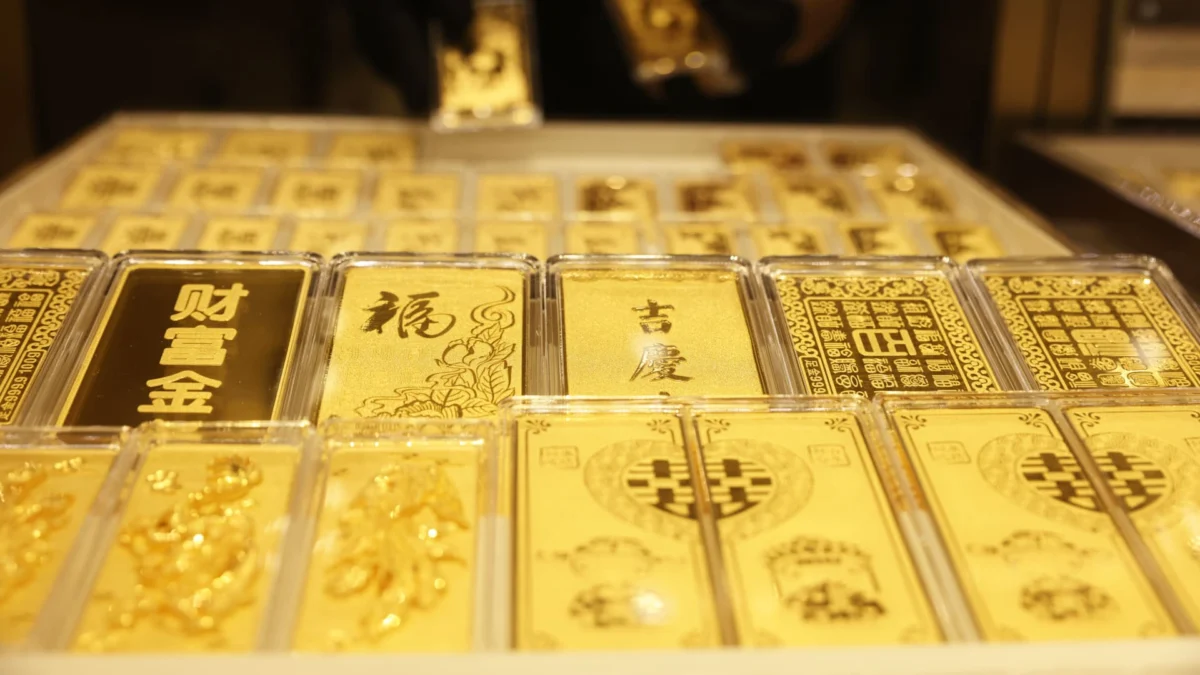
Lede: China is buying gold at record levels as Beijing seeks to reduce reliance on the U.S. dollar while households look for safer places to park savings. The push comes amid mixed economic signals and global uncertainty, fueling demand for the precious metal. Gold imports into China have jumped sharply, marking the highest volume ever recorded according to recent market data.
The surge reflects two major forces: a strategic move by the Chinese government to diversify foreign-exchange reserves away from the dollar, and ordinary households choosing gold over other assets as a store of value. Together, these factors have created an unusual convergence of state-level policy and personal finance behavior, both pointing toward the same conclusion — confidence in traditional currencies may be waning.
Key Facts
- Gold imports hit record levels in China recently.
- Beijing aims to reduce dollar dependence through reserve diversification.
- Households are turning to gold as a savings safe haven.
- Recent market conditions have amplified both trends.
What drives this demand?
China’s central bank has been quietly shifting portions of its massive foreign-exchange reserves out of U.S. Treasurys and into other assets, including gold. This strategy serves multiple purposes: it hedges against potential dollar weakening, reduces exposure to Western financial systems, and boosts the international appeal of the yuan. At the same time, Chinese consumers — many of whom face limits on overseas investment and limited trust in banks — see physical gold as one of the few stable stores of wealth available to them.
For households, gold offers portability, liquidity, and cultural resonance. In China, gold has long symbolized prudence and security, especially among older generations who remember periods of high inflation and currency instability. Jewelry sales remain strong, but increasingly buyers are also purchasing gold bars and coins for long-term storage rather than adornment alone.
How does this affect markets?
Record inflows into China — the world’s largest gold consumer — tighten global supply chains for the metal. Refineries scramble to meet quality standards preferred by Chinese buyers, while futures markets react to shifting inventory forecasts. Higher import volumes tend to support spot prices globally, particularly when sourced from key producers like Russia, Australia, and Canada.
Beyond pricing, the trend signals broader shifts in monetary posture. When major economies accumulate gold reserves collectively, it weakens the dominance of any single currency system. For investors watching from outside Asia, China’s actions offer clues about future demand patterns and geopolitical alignments that could reshape commodity trading over time.
What We Know — and What We Don’t
Verified by the source:
- China’s gold imports reached record highs.
- The increase includes official purchases and private-sector buying.
- Dollar diversification is cited as part of state policy motivation.
- Household savings preferences are influencing demand.
Still unconfirmed:
- Exact timing or volume figures were not provided.
- No breakdown of public vs. private sector shares was given.
- Specific policy documents referencing gold targets were not named.
- Impact on future price movements remains speculative.
Why It Matters
China’s growing appetite for gold affects everyone who holds dollars, trades commodities, or follows central-bank behavior. As one of the largest economies in the world moves further from the greenback, smaller nations often follow suit. This quietly reshaping global finance landscape highlights why tracking such flows matters even beyond short-term profits.
What To Watch
Market watchers should monitor whether upcoming policy announcements reinforce continued accumulation or signal caution. Any shift in tone from policymakers regarding reserves could quickly ripple through global gold markets.
Explore more economy and markets coverage. Also see our trading and crypto insights.
China’s record gold buying driven by dollar diversification goals and household savings fears.