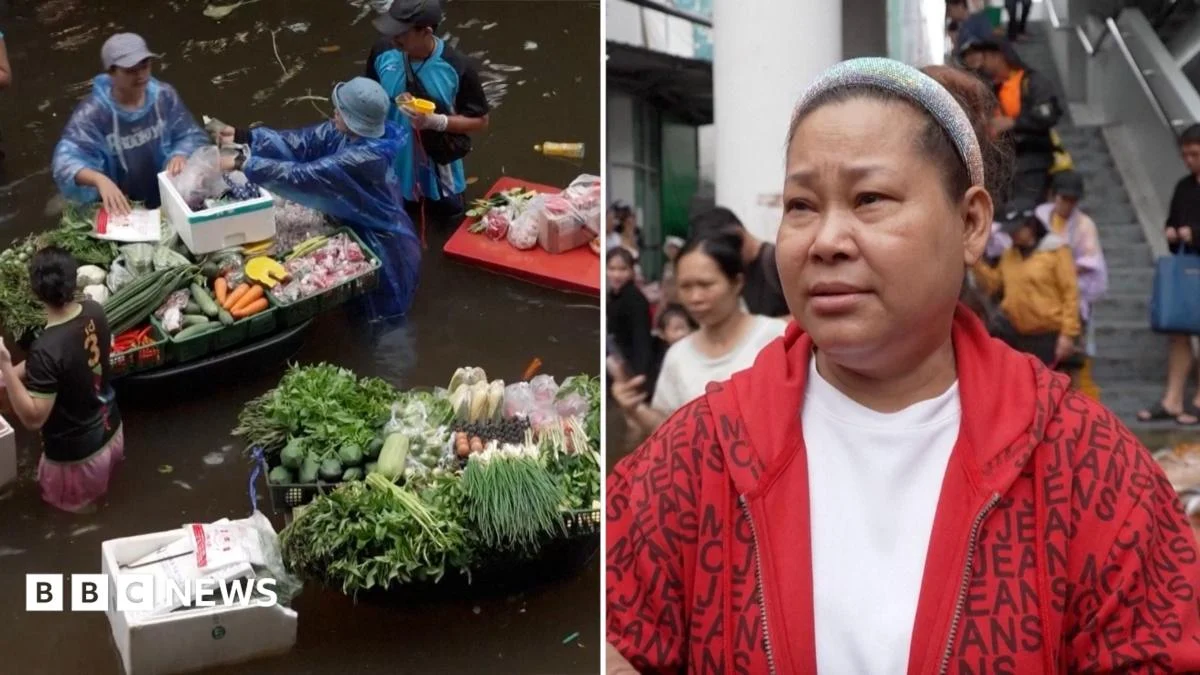
During seasonal flooding in Bangkok, vendors have taken to selling everyday items like fish and vegetables from floating platforms and foam boxes, creating a makeshift floating market as waters rise. Buyers navigate the floodwaters on foot or by paddling, moving between stalls to complete their shopping.
This informal adaptation highlights how locals continue daily life and commerce despite challenging conditions. The floating market arose organically, without formal organization, as residents responded directly to rising water levels affecting their neighborhood access to basic goods.
Key Facts
- Sellers waded through floodwaters to sell produce from floating platforms and foam boxes.
- Produce included fish and vegetables.
- Buyers walked or paddled between makeshift stalls.
- Groceries were purchased by shoppers navigating flood conditions.
How Did This Floating Market Appear?
The floating market emerged as a spontaneous response to localized flooding. Rather than halting trade, vendors adapted existing methods of transport and display. Floating platforms and sealed containers like foam boxes allowed perishable goods such as fish and vegetables to remain accessible even when ground-level access became impossible.
Traditional wet markets in Bangkok often operate near waterways, making this shift relatively feasible. The use of foam boxes suggests efforts to maintain product quality despite immersion risks. No formal coordination appears to have preceded the market’s formation; it developed as individuals independently recognized a shared need among their neighbors.
This phenomenon mirrors historical patterns across Southeast Asia where communities adapted economies around monsoon cycles. While modern infrastructure aims to reduce such disruptions, seasonal flooding still occurs due to heavy rainfall and drainage limitations in dense urban areas.
Who Is Affected by These Flood Conditions?
Flood-prone neighborhoods in Bangkok experience disrupted supply chains during high-water periods, limiting residents’ ability to purchase fresh food locally. Those dependent on daily wages may struggle when mobility drops sharply, especially if public transit halts or roads become impassable for extended periods.
Informal vendors face dual challenges: maintaining inventory safety while ensuring customer access. Some buyers reportedly paddled between stalls, indicating variable depth and current strength within the affected zone. Children and elderly individuals were not specifically mentioned but are typically vulnerable during similar emergencies elsewhere in the region.
Local authorities have not announced official aid programs targeting either group directly. However, past responses included deploying sandbags and offering temporary market relocations. Whether coordinated relief supported this floating arrangement remains unconfirmed at present.
What Happens Next for Bangkok’s Flooded Neighborhoods?
Seasonal rains usually subside by late year, which likely eases immediate pressure on these temporary trading hubs. Authorities might inspect water levels more closely now that spontaneous commerce has drawn attention. Long-term flood mitigation plans could incorporate lessons learned from adaptive behaviors like using sealed containers for preservation purposes.
Media coverage from outlets such as BBC News brought wider visibility to the situation. Increased observation may prompt NGO involvement focused on emergency preparedness training. Alternatively, officials might relocate informal vendors once conditions normalize, though no statements confirm intent yet.
Larger climate trends suggest similar events could recur unless drainage improvements accelerate. Community feedback collected informally here may influence future policy decisions regarding resilient commerce strategies during natural disasters.
What We Know — and What We Don’t
Verified by the source:
- Products sold included fish and vegetables.
- Vendors used floating platforms and foam boxes for display/storage.
- Buyers accessed goods by walking or paddling through floodwaters.
Still unconfirmed:
- Exact duration or timing of flooding incident.
- Number of participating vendors or total shopper volume.
- Official government response or planned mitigation measures.
- Neighborhood name or geographic specificity beyond Bangkok location.
Why It Matters
Understanding how cities adapt informally during natural disruptions helps policymakers prepare better resilience frameworks. This floating market exemplifies grassroots innovation under stress—an insight relevant globally amid increasing climate uncertainty. More rigorous documentation would strengthen evidence-based planning efforts moving forward.
What To Watch
Monday forecasts indicate tapering rainfall across central Thailand, potentially lowering flood risks temporarily. Official updates from municipal offices regarding vendor relocation plans or emergency provisions are pending release soon.