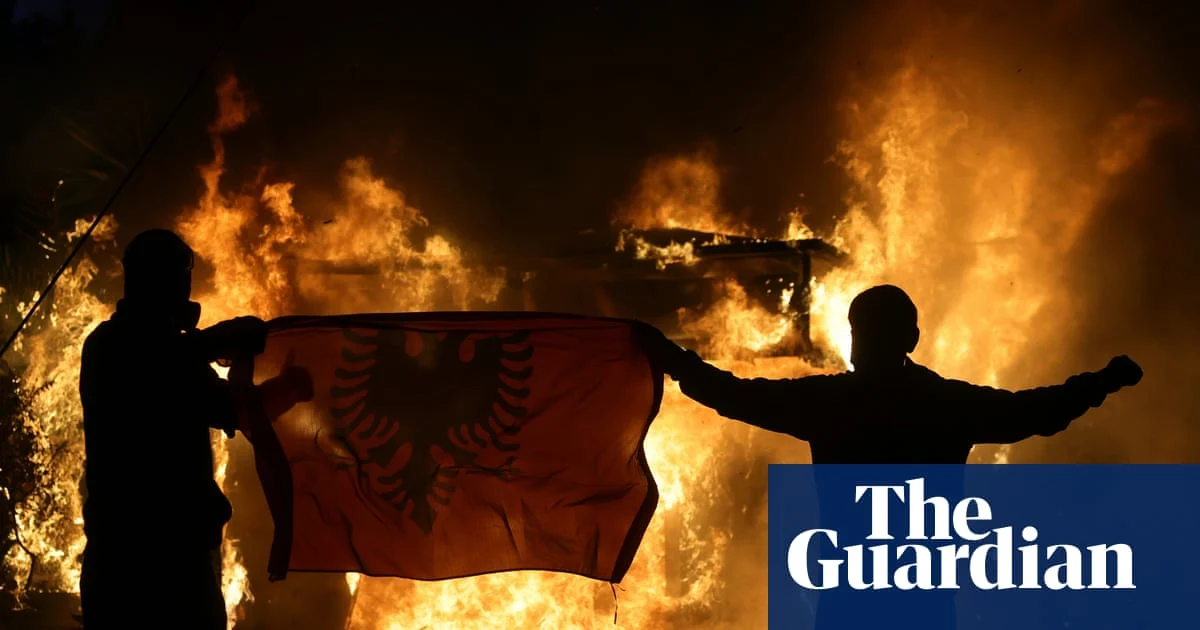
Albania’s prime minister, Edi Rama, has said he will not resign despite ongoing student-led protests that have turned violent in the capital, Tirana.
The demonstrations, initially sparked by plans for a Trump family-backed resort, have drawn thousands of students who now lead a movement that has rattled the government since June. Rama dismissed calls for his resignation, arguing that leadership changes should come through democratic elections.
KEY FACTS
- Edi Rama vows not to resign over student-led protests.
- Protests began over a Trump family-backed resort proposal.
- Clashes have convulsed Tirana for three consecutive days.
- Students took control of the anti-government demonstrations.
- Demonstrations have been ongoing since June.
HOW DID WE GET HERE?
The protests began earlier this year after the Albanian government proposed a resort backed by members of the Trump family. What started as a localized opposition effort evolved into broader discontent over governance and transparency. By June, public gatherings had grown in size and intensity.
In recent days, student groups assumed leadership of the movement, organizing mass demonstrations that have disrupted traffic and commerce in the Albanian capital. Security forces and demonstrators clashed repeatedly, resulting in injuries and property damage.
Rama’s insistence on remaining in office reflects his belief that electoral legitimacy supersedes street pressure. His government won re-election in 2021, a fact he emphasized when responding to protest leaders.
WHO IS AFFECTED?
The unrest primarily impacts residents of Tirana , where daily life has been disrupted by barricades, road closures, and frequent confrontations between police and protesters. Local businesses report losses amid reduced foot traffic and vandalism.
Broadly, the movement draws support from students, civil society activists, and opposition figures who argue that the proposed resort project symbolizes corruption and foreign influence. Critics of the project say it threatens environmental protections and undermines national sovereignty.
Government officials maintain that the development will boost tourism and economic growth. They have rejected accusations of impropriety, calling the protests politically motivated.
WHAT HAPPENS NEXT?
Negotiations between protest leaders and government representatives remain stalled. No formal dialogue has been announced, though pressure continues to mount from both domestic and international observers.
Europe Now, the civic group supporting the student-led protests, has outlined demands including early elections and an independent inquiry into alleged police brutality. For his part, Rama has signaled no intention to reverse course, suggesting instead that opponents await the next scheduled vote.
WHAT WE KNOW — AND WHAT WE DON’T
Verified by the source:
- Prime Minister Edi Rama stated he will not resign.
- Student-led protests are centered in Tirana .
- The movement originally opposed a Trump family-backed resort.
- Clashes occurred over at least three consecutive days.
- Protests have continued since June.
Still unconfirmed:
- Casualty figures from the clashes.
- Specific terms of the proposed resort agreement.
- Whether formal negotiations will begin.
- Exact number of participants in the protests.
WHY IT MATTERS
The standoff reflects deeper tensions in Albania regarding democratic accountability, foreign investment, and youth engagement in politics. As one of Europe’s youngest nations, Albania faces growing expectations for transparent governance and responsive leadership.
WHAT TO WATCH
Watch for whether protest leaders accept dialogue offered by the government or escalate actions further. The situation remains fluid, and developments could shape the trajectory of Albania’s domestic policy landscape.