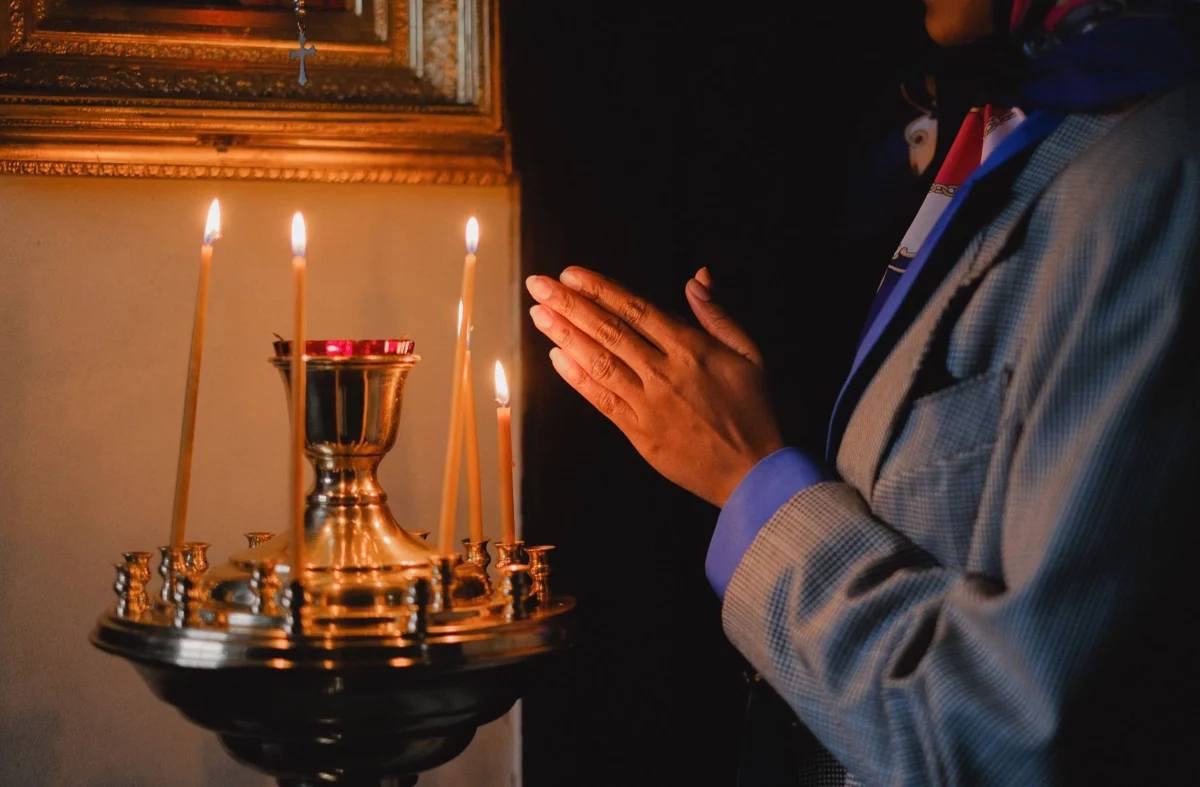
President Volodymyr Zelensky spearheaded a national prayer on Sunday, bringing together bishops and parish priests from the war‑scarred Donetsk and Luhansk oblasts. The moment, broadcast to over 15 million Ukrainians, marked the first time clergy from active combat zones have joined the president on the same stage.
At 10:00 a.m. Kyiv time, the solemn ceremony unfolded in the historic St. Michael’s Square. Zelensky, dressed in a simple black suit, opened with a short remark: “Our prayers are the armor of a free Ukraine.” He then invited Father Mykhailo Hnatiuk, who serves a frontline parish in Avdiivka, to read a Psalm.
Three other priests—Father Oleksandr Kotliar from the besieged city of Mariupol, Father Petro Savchenko from a makeshift chapel in Bakhmut, and Father Andriy Koval from a subterranean worship space in Kramatorsk—joined the president. Each described the daily sounds of artillery as a “chant of perseverance.”
Why does this matter?
The national prayer does more than lift spirits; it signals a unified moral front against Russia’s invasion. Analysts note that religious symbols have become a rallying point for civilian resistance, especially in regions where the Ukrainian army cannot maintain a constant presence.
What does the prayer mean for the war effort?
Ukrainian military officials, speaking on condition of anonymity, said the ceremony reinforces morale among troops stationed near the front. “When our soldiers hear that their chaplains stand shoulder‑to‑shoulder with the president, it strengthens resolve,” one officer told a Kyiv‑based outlet.
The event also challenges Russia’s narrative that Ukraine is a fractured, secular state. By showcasing clergy from occupied territories, Zelensky counters Moscow’s claims that the conflict is purely political.
For ordinary Ukrainians, the broadcast offered a rare moment of collective solace. In a poll released by the Kyiv International Institute of Sociology, 68 % of respondents said the prayer made them feel more united, up from 52 % in the previous month.
International observers are watching closely. The European Union’s foreign policy chief, while not issuing a formal statement, posted on social media: “Solidarity in faith and freedom.”
Beyond the immediate emotional lift, the ceremony may have diplomatic ramifications. Countries that value religious freedom could see the event as a sign that Ukraine remains a pluralistic democracy, potentially easing future aid discussions.
Critics warn that politicising religion risks deepening societal divides, especially among Ukraine’s sizable non‑Orthodox minorities. Human rights NGOs have urged the government to keep the separation of church and state intact.
Nevertheless, the national prayer underscored a powerful narrative: a nation under siege can still gather, pray, and hope together.
What happens next?
In the days ahead, Zelensky’s office hinted at a series of regional prayer services aimed at displaced communities in western Ukraine. The president also promised to meet with religious leaders from the Ukrainian Greek Catholic Church and the Protestant community to broaden the outreach.
As the war drags on, the ability of a president to harness faith as a unifying force may become a crucial piece of Ukraine’s resilience puzzle.