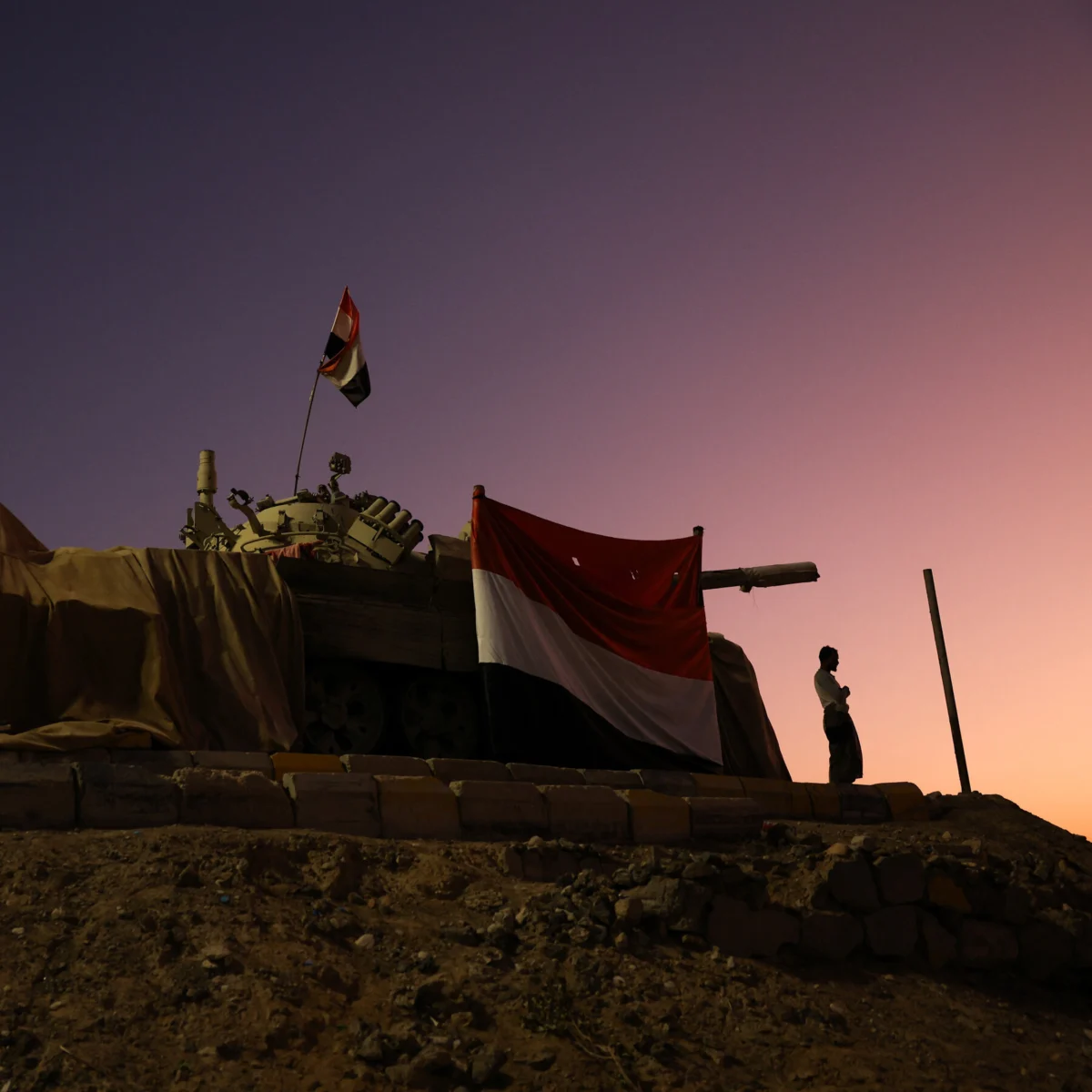
Fighting has intensified in Yemen’s oil-rich Marib Province as Iranian-backed Houthi fighters advance toward the regional capital, clashing with Saudi-backed government forces. The escalation marks a significant development in the Yemen conflict, which has drawn in regional and international actors and left millions displaced. According to reports, the battle near Marib underscores the strategic importance of the province, which hosts critical energy infrastructure and serves as a key stronghold for Yemen’s internationally recognized government.
Key Facts
- Houthi fighters are advancing on Marib Province.
- Fighting involves Iranian-backed Houthis and Saudi-backed government forces.
- Clashes are centered near oil-rich Marib Province.
- The conflict continues to draw in regional actors.
What Happens Next?
The trajectory of the Yemen conflict now hinges on whether Houthi forces can sustain their momentum toward Marib city. Capturing the provincial capital would mark a major strategic victory and could shift the balance of power in Yemen’s protracted civil war. For Saudi-backed government forces, holding Marib is essential not only for territorial control but also for maintaining access to vital oil facilities and supply routes. Regional analysts note that increased Houthi pressure may prompt further military support from Saudi Arabia and the United Arab Emirates. At the same time, humanitarian conditions in the area are expected to deteriorate as fighting displaces more civilians and disrupts essential services. The international community continues to call for renewed peace negotiations, though progress remains stalled. Whether a renewed push for diplomacy can keep pace with battlefield realities will shape the next phase of this brutal war.
Who Is Affected?
The Yemen conflict has already displaced over four million people, and renewed fighting near Marib compounds an ongoing humanitarian crisis. Local residents face shuttered schools, damaged hospitals, and shortages of clean water and food. Aid organizations report that access to northern governorates is increasingly difficult, limiting emergency assistance. For the Houthis, holding ground near Marib signals momentum in their campaign to expand control beyond their northern strongholds. For the Saudi-led coalition, defending Marib reinforces a strategic buffer zone around key infrastructure. Broader regional stability depends on preventing a full collapse of Yemen’s state institutions, which could fuel further fragmentation and extremism.
What Happens Next?
The Yemen conflict now turns on control of Marib city and its surrounding districts.
What We Know — and What We Don’t
Verified by the source:
- Clashes are occurring near Marib Province.
- Houthi fighters are Iranian-backed.
- Government forces are Saudi-backed.
- Marib Province is oil-rich.
Still unconfirmed:
- Exact timing and scale of recent advances.
- Current casualties or territorial control changes.
- Potential response from the Saudi-led coalition.
Military observers say the next few weeks could determine whether the front lines around Marib stabilize or shift decisively. For now, residents and aid groups brace for further disruption as the Yemen conflict enters another volatile chapter.
Why It Matters
The Yemen conflict affects global energy markets, regional security, and millions of civilians caught in a war with no clear end. Escalation near Marib raises risks of broader confrontation involving regional powers.
What to Watch
Observers will monitor whether Houthi forces press their advantage toward Marib city and how the Saudi-led coalition responds militarily or diplomatically.