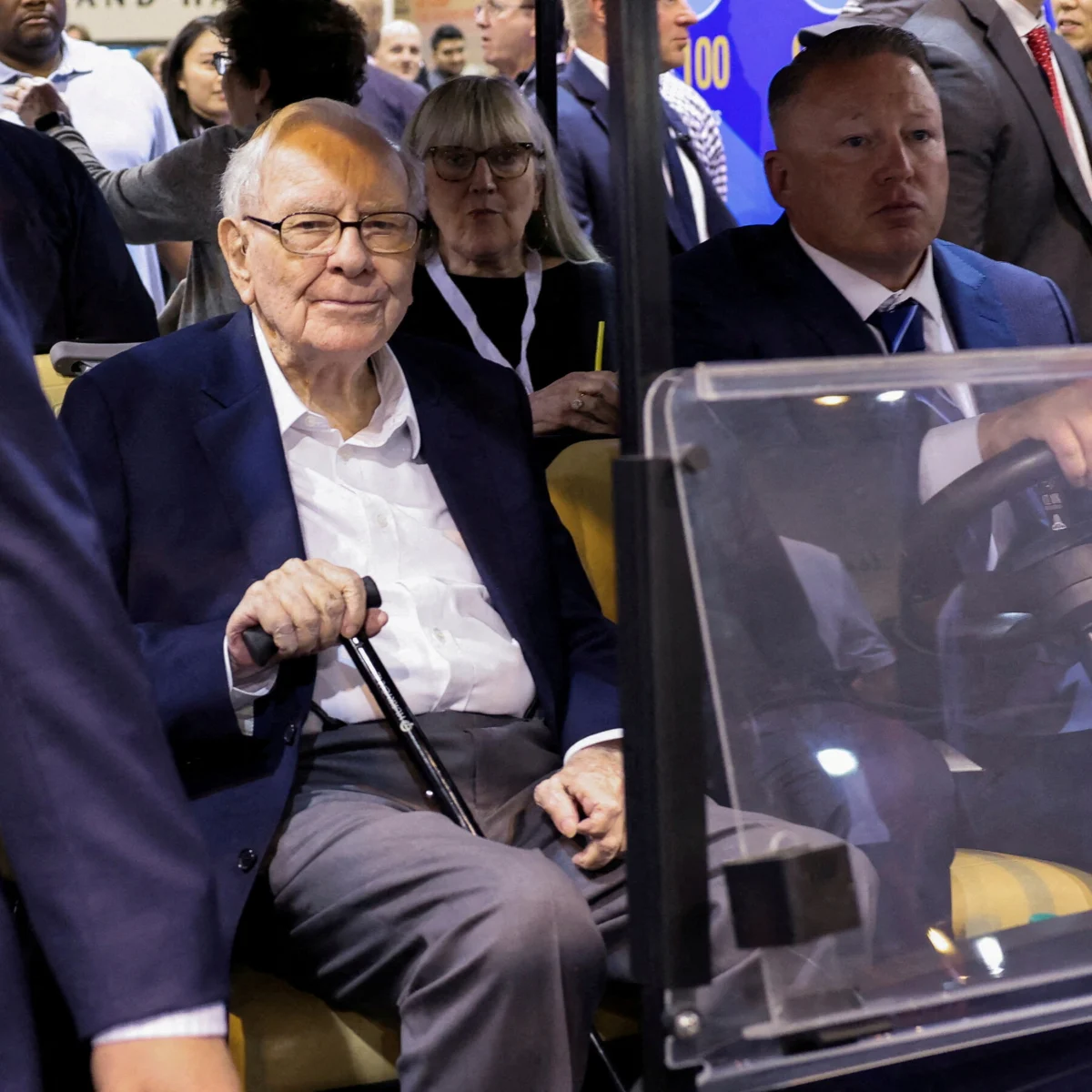
Warren Buffett has stepped down as chairman of Berkshire Hathaway, naming his son to succeed him, marking a historic leadership transition at one of the world’s most influential investment firms.
In a letter to shareholders, the 96-year-old described the decision with characteristic candor, saying, ‘Father Time always wins.’ The move signals the end of an extraordinary six-decade tenure during which Buffett transformed Berkshire Hathaway from a struggling textile company into a global conglomerate and investing powerhouse.
Key Facts
- Buffett steps down as chairman of Berkshire Hathaway.
- His son was named to replace him as chairman.
- Buffett is 96 years old.
- A letter to shareholders explained the transition.
What happens next for Berkshire?
The transition follows a planned succession strategy that Buffett has long discussed publicly. As chairman, his son will oversee the company’s massive portfolio of subsidiaries and investments. However, the day-to-day management of Berkshire Hathaway continues to rest with CEO Ted Weschler and other executives who have worked closely with Buffett for years. Investors will be watching closely to see whether the company maintains its market performance and strategic direction in the absence of Buffett’s direct oversight.
Berkshire Hathaway is a multinational conglomerate based in Omaha, Nebraska. It owns dozens of companies outright, including Geico, BNSF Railway, and Dairy Queen, and holds significant stock stakes in major corporations like Apple, Bank of America, and Coca-Cola. The firm is known for its value investing philosophy and decentralized management model, both pioneered under Buffett’s leadership.
Who is affected by the change?
Shareholders, employees of Berkshire’s many subsidiaries, and institutional investors are the primary stakeholders affected by the shift in leadership. The company’s stock price has historically been sensitive to news about Buffett’s health and involvement, so markets may react to the announcement in the near term.
Analysts have noted that while Buffett’s influence will clearly diminish without him in the chairman’s role, the institutional framework he built—including a strong board and seasoned executive team—is designed to ensure continuity. Still, few investors have matched Buffett’s track record of generating outsized returns over such an extended period, making this transition a pivotal moment for one of America’s most admired investment engines.
What we know — and what we don’t
Verified by the source:
- Buffett stepped down as chairman of Berkshire Hathaway.
- His son was named as his replacement.
- Buffett is 96 years old.
- The announcement was made in a letter to shareholders.
Still unconfirmed:
- The identity of the son, including his full name and prior role at Berkshire.
- Whether the change affects CEO responsibilities or company strategy.
- The specific timing of the transition and when the letter was sent.
Why it matters
Buffett’s departure represents the close of a defining chapter in modern finance. His long-standing presence provided stability and confidence to investors worldwide. With his reduced role, the market will assess how well Berkshire can sustain its reputation and performance beyond its most iconic figure.
What to watch
Market reactions to the leadership change and whether Berkshire’s operational leadership remains consistent with prior strategy.
Explore more business news in our Economy and Markets section or follow developments in corporate governance under Politics.