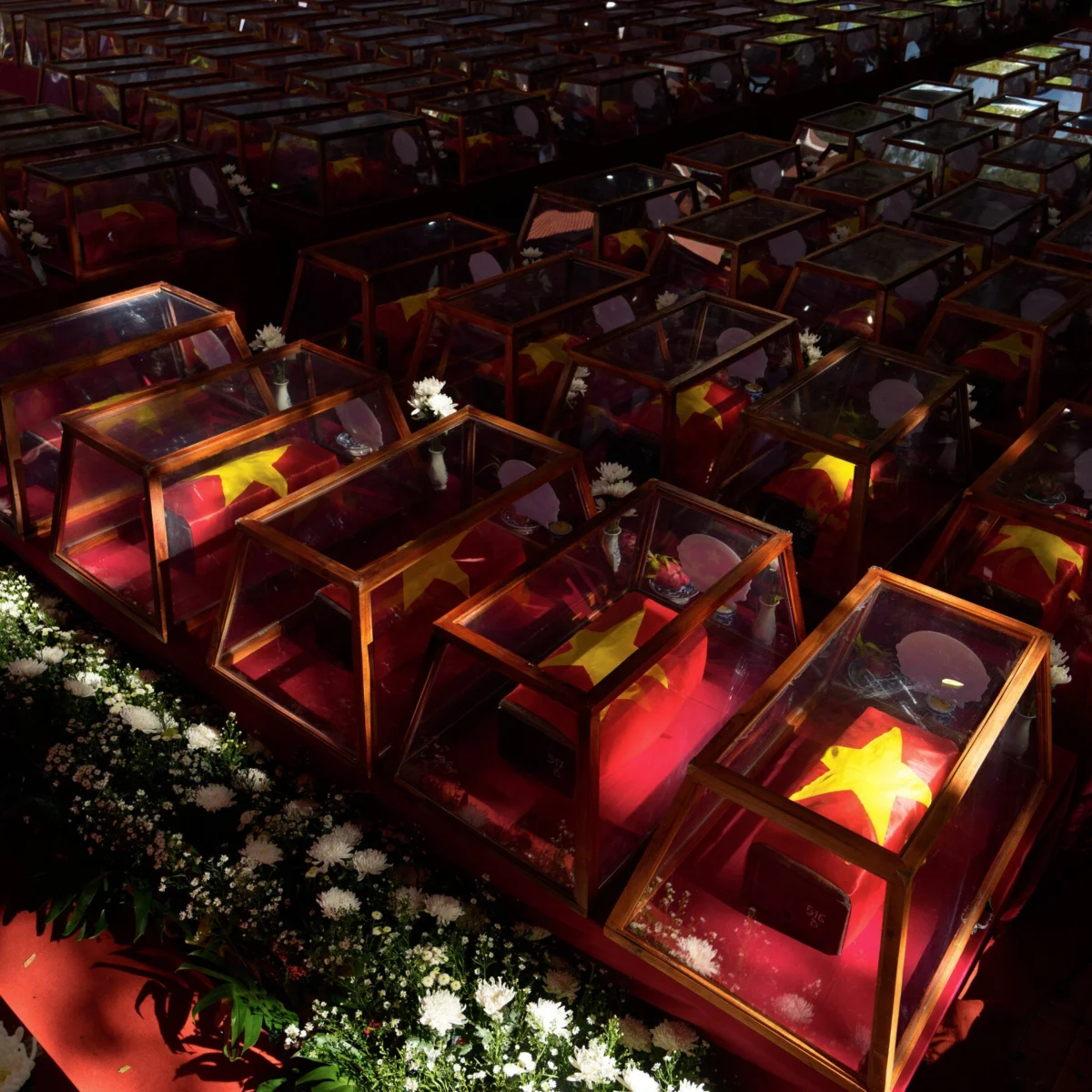
A 500-day campaign to locate and identify Vietnam’s war dead has recovered hundreds of bodies, yet many families remain without full closure.
The effort, aimed at resolving decades-old losses, has succeeded in uncovering remains but struggles to return every set of remains to a family able to grieve and remember.
For some, the exhumations reopen old wounds rather than healing them, highlighting how the legacy of the war continues to affect communities long after hostilities ended.
Key Facts
- A 500-day campaign recovered war dead bodies in Vietnam.
- Hundreds of bodies were unearthed during the campaign.
- Not every recovered set of remains allows families full closure.
- The campaign focuses on identifying fallen soldiers from the war.
What Happens Next for the Exhumed Remains?
Authorities continue working to match recovered remains with records and family DNA samples. Each identification requires painstaking laboratory work and cross-referencing of archives that were scattered or lost during the conflict.
The 500-day timeline imposes pressure on teams that must balance speed with accuracy. Rushing identifications risks returning the wrong remains to families, while delays prolong uncertainty for those still searching.
Community leaders on both sides report mixed reactions. While some families express gratitude for any return of remains, others question whether exhumation disrupts graves that had begun to rest in peace. The tension reflects broader disagreements about how best to honor the dead without rekindling political or emotional divides.
Who Is Affected by the Recovery Efforts?
The primary subjects are the unidentified war dead themselves and their surviving relatives, many now elderly. These families often lack documentation proving a relative’s fate and welcome any official update, even when remains cannot yet be confirmed.
Local communities near former battlefield sites also feel the impact. Exhumations can disturb land use patterns and stir memories best left alone. Some residents support transparency and national reconciliation, while others fear reopening trauma tied to the conflict.
Archaeologists and forensic specialists operate under difficult conditions, retrieving bones that may have degraded over decades. Weather, terrain, and shifting borders complicate searches. Despite advances in DNA analysis, identification depends heavily on pre-war records that were destroyed or never properly archived.
How Did We Get Here?
The current campaign builds on earlier, sporadic attempts to account for missing personnel from the conflict. Those efforts often stalled due to lack of funding, limited technology, or political gridlock between former enemies.
Recent diplomatic engagement allowed new access agreements, enabling joint teams to work together in areas previously restricted. The 500-day framework represents a concentrated push to maximize results before funding or permissions expire.
Still, progress varies widely. Some units return quickly to families, while others sit in storage awaiting further analysis. The uneven pace fuels frustration among advocates pushing for faster, more transparent outcomes.
What We Know — and What We Don’t
Verified by the source:
- A 500-day campaign was launched to find and identify fallen soldiers.
- Dozens or hundreds of bodies have been recovered so far.
- Recovery alone does not guarantee all families receive identifiable remains.
Still unconfirmed:
- The exact number of total identifications completed.
- Which government agency leads coordination.
- Whether international forensic standards are fully applied.
- If additional funding will extend the campaign beyond 500 days.
Why It Matters
This effort touches on unresolved grief affecting an entire generation. Returning war dead to families helps societies close chapters on past tragedies, even as debate continues over the best way forward. Related regional updates appear in our war-geopolitics coverage.
What To Watch
Further identifications may clarify whether the campaign meets its stated goals. Updates are expected as more remains become usable for comparison against archival records. Explore additional context in our economy-markets section for related developments.
The recovered remains underscore how the war dead still shape present-day diplomacy and remembrance efforts.