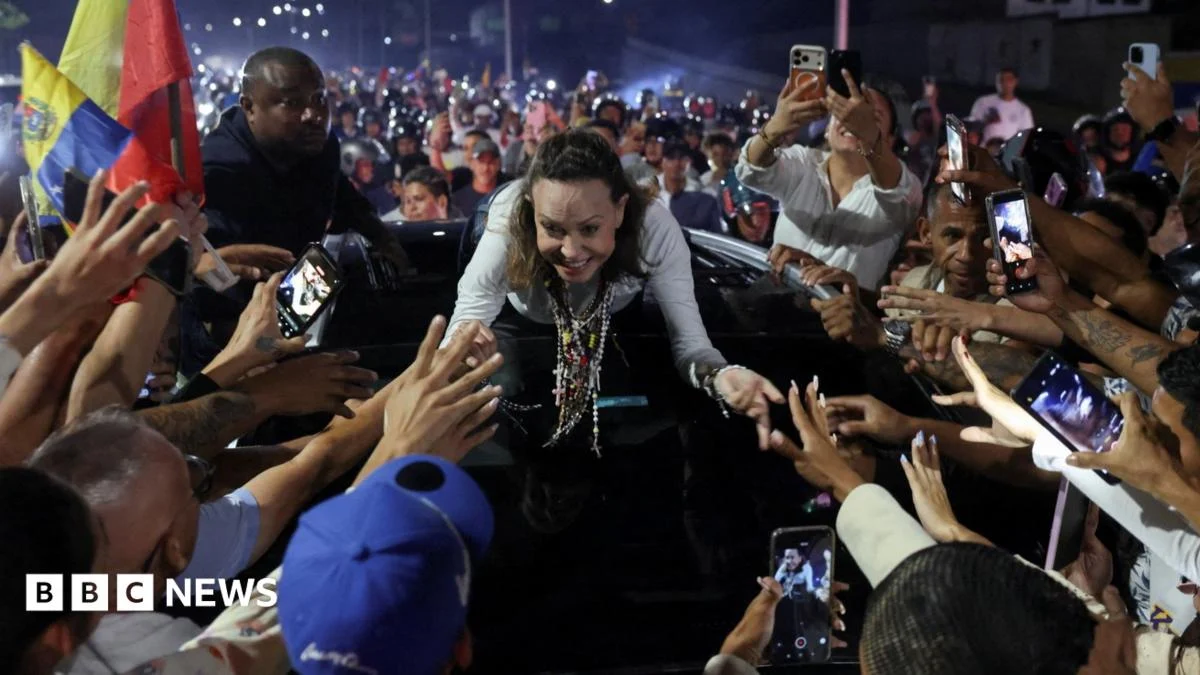
María Machado, a prominent Venezuelan opposition leader, has returned to Venezuela after spending more than ten months in exile. Her departure followed an escape from the country using a speedboat, as reported by BBC News.
Crowds gathered to welcome her return, signaling continued public interest in her political activities despite the risks associated with opposition politics in Venezuela. The circumstances surrounding her reentry and the government’s response remain unclear.
KEY FACTS
- María Machado spent over 10 months outside Venezuela.
- She left Venezuela by speedboat during her time in exile.
- Crowds welcomed her upon her return to the country.
- She is identified as a Venezuelan opposition leader.
- The event was covered by BBC News.
How did we get here?
Understanding the context of Machado’s exile requires recognizing the pressures faced by high-profile opposition figures in Venezuela. Political dissidents often face restrictions on travel, surveillance, or legal action, prompting some to leave the country temporarily or permanently. Escaping via unconventional means such as a speedboat suggests an urgent or tightly controlled departure.
Her return marks a notable moment in Venezuelan domestic politics, where opposition leaders navigating between public engagement and personal safety remain focal points for both domestic audiences and international observers. The fact that crowds welcomed her underscores ongoing polarization and public sentiment toward the opposition movement.
While details about the specific timeline of her escape, destinations during exile, or diplomatic involvement are not detailed, the use of such methods typically reflects limited formal alternatives available to those seeking to exit under constrained conditions.
What happens next?
The immediate consequences of Machado’s return will likely depend on how authorities respond. In past instances involving prominent exiles returning to Venezuela, outcomes have varied depending on political climate, legal standing, and broader negotiations between opposition groups and the government.
Public appearances by opposition figures can sometimes lead to renewed scrutiny, arrests, or renewed dialogue depending on internal and external pressures. At this stage, it is unclear whether her return signifies a shift in policy allowing greater opposition participation or represents an isolated incident driven by individual circumstances.
International attention may increase, particularly if further developments involve large-scale demonstrations or official responses. Monitoring subsequent statements or actions by Venezuelan officials could clarify whether this represents a temporary adjustment or part of a longer-term trend affecting political dynamics within the country.
WHAT WE KNOW — AND WHAT WE DON’T
Verified by the source:
- María Machado is described as a Venezuelan opposition leader.
- She returned to Venezuela after being absent for over ten months.
- During her absence, she escaped using a speedboat.
- People gathered to welcome her return.
- BBC News reported these events.
Still unconfirmed:
- The exact dates of her departure or arrival.
- Countries visited while in exile.
- Number of people involved in organizing her escape.
- Official statements from Venezuelan government regarding her return.
- Potential legal implications for Machado upon reentry.
Why It Matters
This development highlights the volatile landscape of political opposition in Venezuela, where leaders must balance visibility with safety. For citizens and international observers alike, the movement of key opposition voices reflects evolving tensions within a deeply divided society. See related coverage in politics and war-geopolitics.
What To Watch
Further public appearances by Machado or statements from Venezuelan authorities could signal changes in the political climate. Continued crowd mobilization may prompt either renewed dialogue or heightened restrictions on dissent.