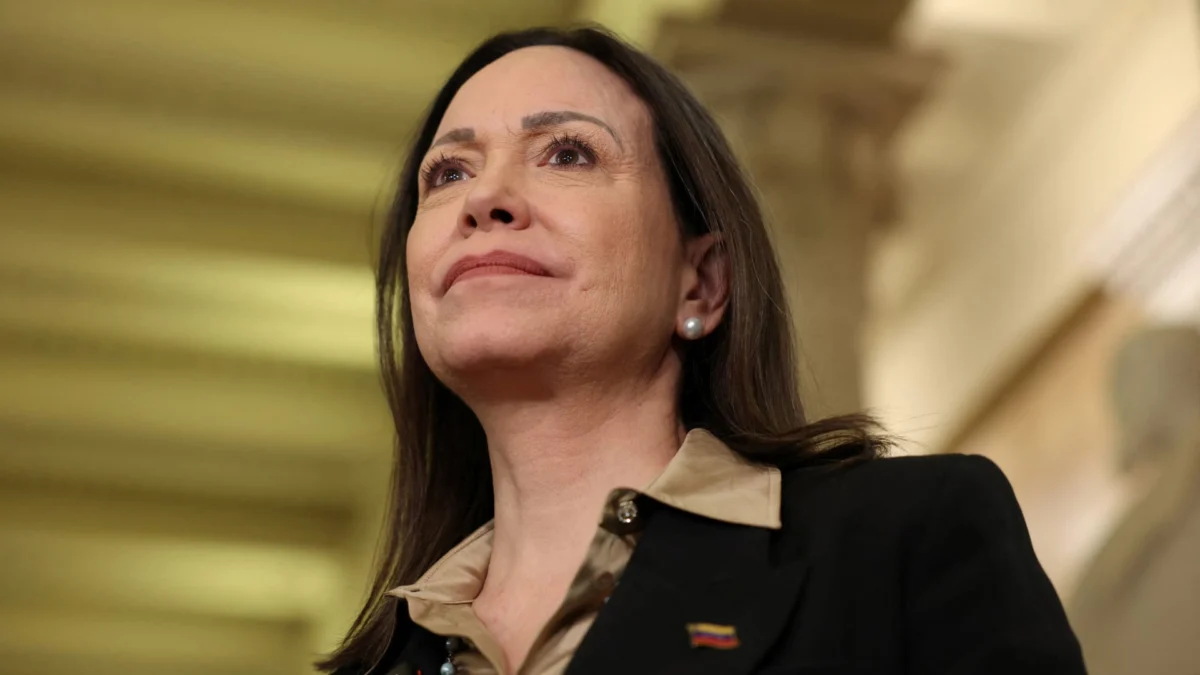
Lede
Venezuela’s opposition leader has returned from exile after months abroad, a development confirmed by a fellow opposition figure who said she would arrive “very soon.” The return comes amid renewed scrutiny of Venezuela’s democratic institutions and governance.
Opposition leader returns to Venezuela following an extended period overseas, marking a significant moment for the country’s political opposition movement. As doubts deepen over the state of democracy in Venezuela, the homecoming has drawn both domestic and international attention.
Key Facts
- Venezuela’s opposition leader Machado has returned after months in exile.
- Opposition figure Gonzalez confirmed the return via social media platform X.
- Gonzalez stated Machado would be next to her “very soon.”
- The return occurs as concerns grow over Venezuela’s democratic credibility.
The Story
What happens next?
The political implications of Machado’s return remain unclear, but her presence in Venezuela may signal renewed opposition activity. Given the ongoing tensions between the government and opposition forces, her movements and statements could shape public discourse and policy debates.
Venezuela’s political landscape has been marked by instability and contested elections, prompting concerns from global observers. The return of a prominent opposition leader may influence upcoming dialogues or negotiations, either between domestic parties or with international mediators.
Opposition figure Gonzalez’s confirmation of Machado’s arrival suggests coordination among opposition members, despite recent challenges. Whether this signals a unified front or internal disagreements among opposition leaders remains to be seen.
Who is affected?
Machado’s return impacts Venezuela’s political environment, where citizens and institutions face ongoing economic hardship and governance challenges. The opposition movement, along with government supporters, will likely respond to her reentry and statements.
Internationally, countries monitoring Venezuela’s democratic progress may reassess their diplomatic positions or policy responses. Regional allies and global powers often tie engagement to democratic benchmarks, which are now under fresh evaluation.
Domestic audiences, including voters disillusioned by years of political stalemate, may view Machado’s return as a symbol of resistance or hope. Her next actions will play a role in shaping public perception and future electoral dynamics.
What We Know — and What We Don’t
Verified by the source:
- Machado returned to Venezuela after being in exile for months.
- Gonzalez confirmed Machado’s arrival publicly via social media.
- Gonzalez said Machado would join her “very soon.”
Still unconfirmed:
- The exact reason for Machado’s return or departure.
- Specific reactions from the Venezuelan government.
- Details about exile duration or travel logistics.
- No independent confirmation from additional sources.
Why It Matters
The return of a notable opposition figure highlights continuing uncertainty around democratic norms in Venezuela, a nation long associated with economic volatility and political strain. For global readers, such developments influence perceptions of stability in a key South American economy linked to oil markets and regional diplomacy.
What To Watch
Future statements or public appearances by Machado may offer clarity on opposition strategy. Observers will also await potential responses from government officials or international bodies regarding democratic progress.
For further context, explore our economy and markets coverage or follow updates in war and geopolitics for developments affecting regional stability.