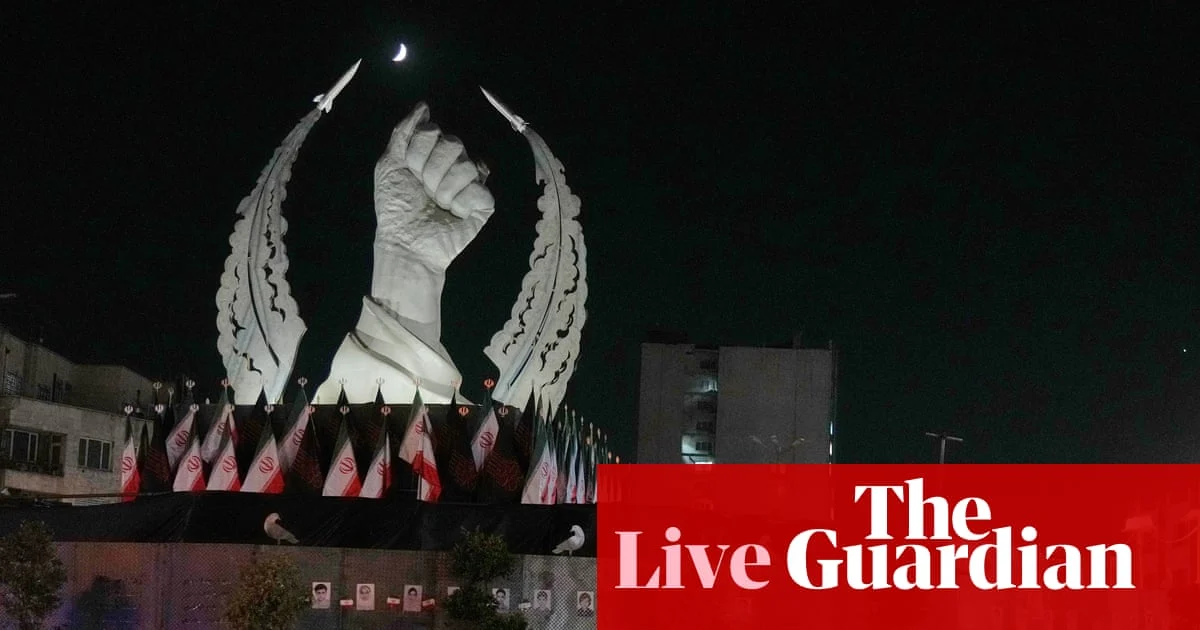
The United States carried out its ninth consecutive night of strikes against Iran following the deaths of US troops, according to The Guardian. A preliminary deal to end the war has collapsed as the two sides fight a deadlock over the Strait of Hormuz, and the US says another service member was killed. Israel has warned that Tehran’s attacks are coming close.
The live report from The Guardian places the latest fighting inside a wider Middle East crisis that shows no sign of easing. The collapse of the preliminary deal removes a short-lived path to de-escalation and returns both sides to open military confrontation. A vessel is reported on fire in the Strait of Hormuz off Oman, adding a maritime dimension to the conflict that already spans air and ground operations.
Key Facts
- US strikes Iran for a ninth night after US troop deaths.
- A preliminary deal to end the war has collapsed.
- The US says another service member was killed.
- A vessel is on fire in the Strait of Hormuz off Oman.
- Israel warns Tehran’s attacks are coming close.
THE STORY
How did we get here?
The current phase of fighting follows a breakdown in efforts to halt the war between the United States and Iran. A preliminary deal aimed at ending the conflict has collapsed, according to The Guardian, leaving the two countries locked in a dispute over the Strait of Hormuz. That waterway is a narrow passage between Iran and Oman through which a large share of the world’s seaborne oil moves, making any disruption a matter of global economic concern. The ninth night of US strikes indicates a sustained campaign rather than a one-off response, and the reported death of another US service member shows the human cost continues to rise on the American side.
Who is affected?
The parties directly affected include US and Iranian forces engaged in strikes and counter-pressure around the Strait of Hormuz. Israel is also part of the picture, warning that Tehran’s attacks are coming close, which suggests regional spillover beyond the bilateral US-Iran conflict. Maritime operators face new danger after a vessel was reported on fire eight nautical miles northwest of Kumzar in Oman’s far north, on the southern edge of the strait, per the UK’s Maritime Trade Operations agency citing military authorities. The Guardian reports the agency received the incident report, but the cause and extent of the fire are not detailed in the source.
What happens next?
The immediate question is whether the collapsed preliminary deal can be revived or whether the US and Iran will keep trading strikes. The Strait of Hormuz deadlock remains the central obstacle, and any further incident involving commercial shipping raises the risk of broader confrontation. Israel’s warning that Iranian attacks are coming close points to possible further regional escalation. Readers tracking war and geopolitics should expect continued volatility until a verified ceasefire framework re-emerges.
What We Know — and What We Don’t
Verified by the source:
- US strikes Iran for a ninth night after US troop deaths.
- A preliminary deal to end the war has collapsed.
- The US reports another service member killed.
- A vessel is on fire in the Strait of Hormuz off Oman per UK MTO.
Still unconfirmed:
- The cause of the vessel fire and any casualties aboard.
- Whether the collapsed deal can be restarted.
- The exact scope of Israel’s warning about Tehran’s attacks.
- Total US or Iranian losses beyond the one new service member.
WHY IT MATTERS
The collapse of a ceasefire bid and continuing US strikes Iran raise the risk of a wider regional war that could disrupt global energy shipping through the Strait of Hormuz. Even readers far from the Middle East feel the consequences through fuel prices and allied security commitments. The reported maritime fire shows how quickly a land and air conflict can threaten commercial sea lanes that economies depend on every day.
WHAT TO WATCH
Watch for any official statement on the vessel incident and whether negotiators signal a return to talks. Further strikes or shipping attacks would confirm the deadlock is holding. More context sits in our war and geopolitics archive.