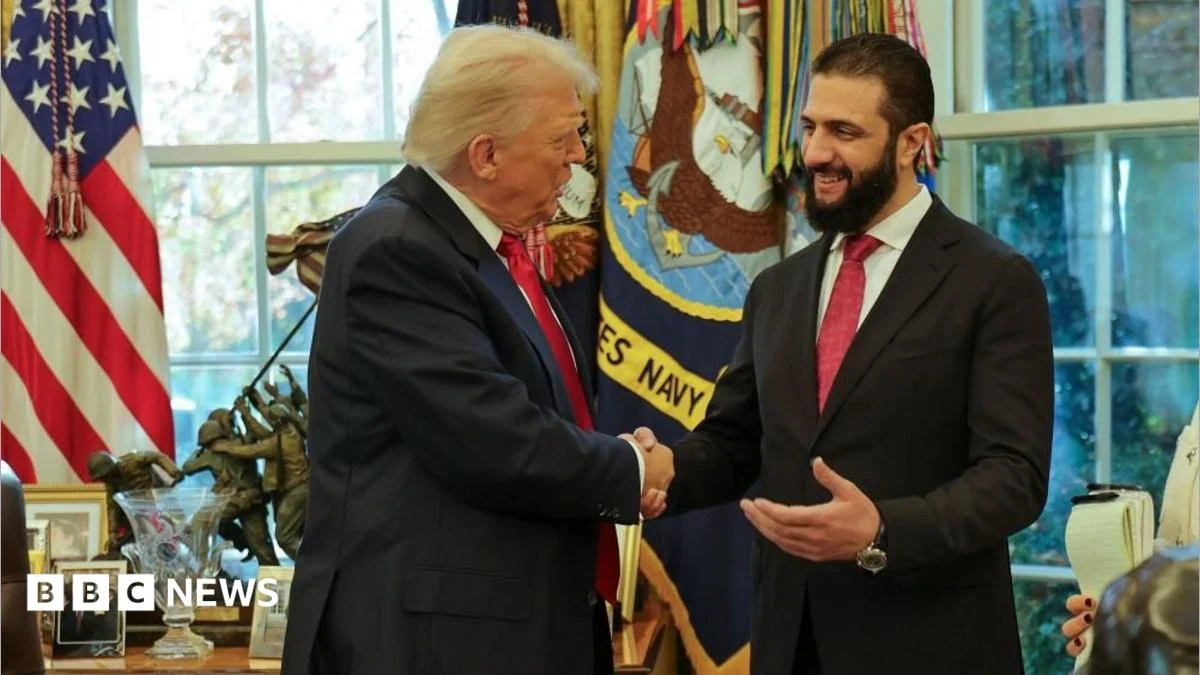
The United States has removed Syria from its list of state sponsors of terrorism, a significant policy shift under the Trump administration. This move comes as the administration embraces Syria’s new president, former al-Qaeda-linked militant Ahmed al-Sharaa.
The decision marks a notable change in US foreign policy toward Syria, which has been designated as a state sponsor of terrorism since 1979. The delisting could pave the way for improved diplomatic and economic relations between the two countries.
KEY FACTS
- The US has removed Syria from its list of state sponsors of terrorism.
- The Trump administration has embraced Syria’s new president, Ahmed al-Sharaa.
- Al-Sharaa is a former al-Qaeda-linked militant.
What does this mean for US-Syria relations?
The removal of Syria from the terrorism sponsors list signals a potential thaw in relations between the two nations. This decision could lead to eased sanctions and increased diplomatic engagement, though the long-term impact remains uncertain.
The move also reflects the Trump administration’s willingness to engage with former adversaries, as demonstrated by its approach to other geopolitical hotspots. However, critics may question the timing and implications of embracing a leader with ties to al-Qaeda.
Who is Ahmed al-Sharaa?
Ahmed al-Sharaa, Syria’s new president, is a former militant with links to al-Qaeda. His rise to power represents a significant shift in Syria’s political landscape, which has been dominated by the Assad regime for decades.
Al-Sharaa’s background and connections could complicate Syria’s international relations, despite the US decision to delist the country. His leadership will likely be closely monitored by global powers and regional actors alike.
WHAT WE KNOW — AND WHAT WE DON’T
Verified by the source:
- Syria has been removed from the US list of state sponsors of terrorism.
- The Trump administration has embraced Syria’s new president, Ahmed al-Sharaa.
Still unconfirmed:
- The specific reasons behind the timing of this decision.
- How other nations will respond to Syria’s delisting and al-Sharaa’s presidency.
- The potential economic and diplomatic consequences of this policy change.
WHY IT MATTERS
This development could significantly alter the geopolitical landscape in the Middle East. Syria’s removal from the terrorism list may open doors for reconstruction aid and foreign investment, while also potentially reshaping regional alliances. The move also raises questions about counterterrorism strategies and the criteria for designating state sponsors of terrorism.
WHAT TO WATCH
Observers will be watching for reactions from Congress, US allies, and regional powers to this policy shift. The implementation of any changes in sanctions and the nature of future US-Syria relations will also be key indicators of this decision’s impact.